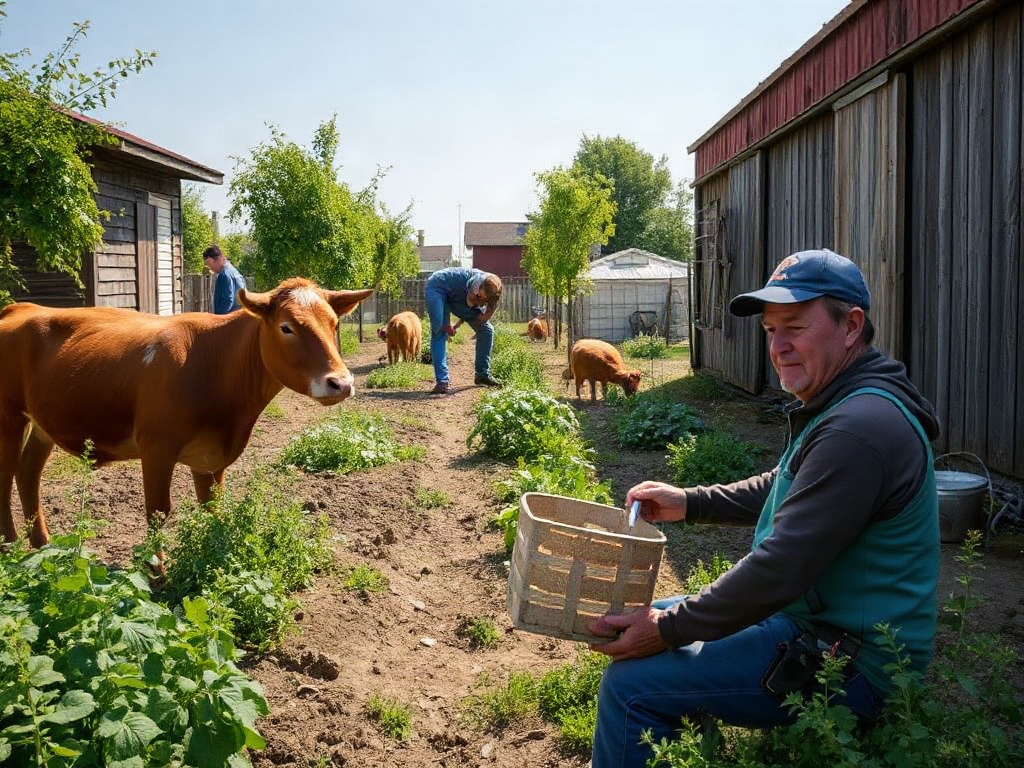
Seasonal farming tasks beyond the vegetable garden should follow a year-round chore calendar that coordinates livestock care, orchard work, pasture recovery, water systems, buildings, and stored supplies. Winter favors equipment repair, record review, pruning, and freeze protection; spring shifts attention to fencing, birthing areas, pollinator habitat, and drainage. Summer requires close monitoring of water, shade, parasites, hay, and wildfire fuel, while autumn centers on harvest storage, breeding decisions, storm preparation, and winter feed. Schedule work by local weather and animal condition rather than calendar dates alone, and inspect safety-critical systems before cosmetic or optional projects.
Winter: Protect Animals, Water Systems, and Equipment
Winter work begins with protecting the systems that cannot be allowed to fail: drinking water, feed storage, shelter ventilation, electrical service, and safe access to animals. A frozen hydrant or blocked barn aisle creates an immediate welfare problem, while deferred paintwork usually does not. Rank chores according to the consequences of failure, then keep backup water containers, thawing tools, spare bedding, and several days of accessible feed where snow or ice will not block them.
Cold-weather livestock care requires more than closing every opening in a barn. Animals need protection from wind and wet bedding, but tightly sealed housing traps moisture and ammonia. Condensation on roofing, persistent odor at animal height, coughing, or damp coats indicate that ventilation is inadequate. Open high vents or protected outlets without creating a draft across resting areas. Bedding should be added or replaced before it becomes saturated; a dry lying surface preserves insulation far better than simply raising the indoor temperature.
Water deserves at least two checks daily during freezing conditions. Heated buckets, tank heaters, and heat tape must be installed according to their instructions and inspected for damaged cords, loose connections, and chewing. Never assume an energized heater is working because its indicator light is on. Confirm that water is liquid and accessible, and use ground-fault protection where required. On a property with a distant pasture, carrying warm water after a line freezes is a poor substitute for insulating vulnerable pipe sections and maintaining a backup shutoff plan.
Dormant months also create a useful maintenance window. Service mowers, sharpen hand tools, grease hinges, clean feeders, inventory veterinary and first-aid supplies, and order common wear parts before spring demand begins. Orchard pruning may fit this period for many deciduous fruit trees, but timing varies by species and climate. Heavy pruning during severe cold or pruning spring-flowering shrubs before bloom may remove productive wood, so use species-specific extension guidance rather than treating every woody plant alike.
Records turn winter maintenance into better decisions. Compare stored hay with actual consumption, note which paddocks lost ground cover, and identify recurring freeze points or roof leaks. A practical winter sequence is safety inspection first, animal systems second, machinery reliability third, and expansion projects last. The common failure is spending mild days on a new structure while a deteriorating gate latch, overloaded outlet, or exposed water line remains unresolved.
Spring: Restore Infrastructure and Manage Rapid Growth
Spring exposes winter damage while concentrating labor into a short period. Walk boundaries before animals return to distant paddocks, checking posts, braces, wire tension, gates, culverts, and areas where runoff cut beneath fencing. Testing an electric fence at the energizer is not enough; vegetation, cracked insulators, poor grounding, and damaged connections can reduce power farther down the line. Test several points along the fence and correct the fault rather than adding another charger to a poorly maintained circuit.
Mud control should focus on water movement and traffic, not repeated loads of loose material. Roof runoff directed into a gateway quickly overwhelms gravel, and feeding in the same location churns soil into a contaminated holding area. Redirect clean water with gutters or shallow diversions where appropriate, stabilize high-use lanes, and rotate feeders when ground conditions permit. Keep animals off saturated pasture until plants are established enough to resist hoof damage. Turning out early may reduce feeding labor for a few days but can weaken forage stands and lengthen the recovery period.
Spring is also a demanding season for births, young stock, poultry, and bees. Prepare clean birthing or brooding spaces before expected dates, verify that heat sources are securely mounted, and separate extension cords from bedding and water. Observe mothers and offspring for normal feeding and movement instead of relying on a quick head count. Beekeepers should assess colony food reserves and brood conditions using practices suited to local temperatures; opening hives unnecessarily during cold, windy weather can add stress without yielding useful information.
Fruit trees, berry patches, windbreaks, and perennial herbs need early attention as growth resumes. Inspect trunks for rodent damage, renew mulch without piling it against bark, remove broken branches, and watch bloom timing before applying anything that could expose pollinators. The seasonal plan for Seasonal farming tasks beyond the vegetable garden should coordinate orchard spraying, grazing, hive placement, and poultry movement so that one enterprise does not create risk for another.
Use a compact spring inspection order:
- Control runoff: Clear blocked drains and move water away from buildings, lots, and manure storage.
- Restore containment: Repair perimeter fences before subdividing paddocks.
- Prepare animal areas: Clean shelters, test water delivery, and stage supplies before births or arrivals.
- Protect recovering ground: Delay grazing where roots and soil cannot yet withstand traffic.
Signs of progress include firm gateways, even pasture regrowth, dependable fence voltage, and dry resting areas. Persistent pooling, bare travel lanes, escaping animals, or repeated bedding saturation show that the underlying drainage or traffic problem remains.
Summer: Secure Water, Forage, Shade, and Fire Readiness
Summer priorities are governed by heat, water demand, forage maturity, and the speed at which small problems worsen. Check troughs for flow and cleanliness during the hottest part of the day, not only during a cool morning round. A float valve may work when demand is low but fail to refill fast enough when an entire group drinks. Measure refill performance under real use, remove algae and sediment as appropriate, and keep an alternative water source ready for pump or power failure.
Shade and airflow must match the animals using them. A small shelter can technically hold a flock or herd yet still create crowding, stagnant air, and competition. Watch whether timid animals are pushed into full sun and whether resting animals cluster around one narrow opening. Natural tree shade can be effective, but concentrated use compacts roots and creates bare soil. Portable structures spread pressure more evenly, although they require secure anchoring and regular movement.
Pasture decisions should be based on residual plant cover and recovery, not the date printed on a rotation chart. Growth slows during drought and accelerates after rain, so fixed-length rotations can either waste forage or graze plants too closely. Move animals before repeated close grazing depletes leaf area, and lengthen recovery when heat or moisture stress reduces regrowth. Mowing ungrazed stems may improve uniformity in some paddocks, but cutting every field short during dry weather removes shade from the soil and sacrifices emergency forage.
Haymaking adds a separate timing problem. More mature forage usually yields greater volume but often declines in feeding quality, while earlier cutting requires a dependable drying window. Store only adequately cured hay and monitor new stacks for unusual heat or odor. Wet hay can spoil and may create a fire hazard. Keep stacks away from ignition sources, allow inspection access, and avoid assuming that a dry outer bale proves the center of the lot is safe.
Dry vegetation around barns, fuel tanks, access lanes, and fence chargers also warrants attention. Remove accumulated combustible debris, maintain equipment so hot bearings or exhaust do not contact dry material, and keep emergency vehicles from being blocked by implements or stacked supplies. Local fire agencies provide the appropriate guidance for defensible space and burn restrictions, which vary by location.
Summer monitoring works when declining water flow, falling body condition, parasite pressure, or poor pasture recovery is noticed before it becomes a crisis. A weekly review of Seasonal farming tasks beyond the vegetable garden should therefore adjust grazing, hay reserves, and workloads to current conditions rather than preserving a schedule that weather has made obsolete.
Autumn: Store the Harvest and Prepare for Winter
Autumn converts summer production into winter security. Estimate forage and bedding needs using the animals actually being carried through winter, expected feeding duration, storage losses, and a reasonable weather reserve. Counting bales without noting bale size, quality, or spoilage produces false confidence. Inspect hay for mold, moisture damage, weeds, and contamination, then assign the best-quality lots to animals with higher nutritional demands. A veterinarian or qualified livestock nutrition adviser can help when body condition, pregnancy, growth, or questionable feed complicates the ration.
Fruit, nuts, honey, firewood, and animal products each require suitable storage rather than a single generic storeroom. Apples need different temperature and humidity conditions from onions or cured firewood. Honey containers must be food-safe and protected from moisture, while feed needs defense against rodents and rain. Label containers with contents and dates, leave aisles for inspection, and use older sound stock before newer supplies. Stacking everything tightly may maximize floor space, but it hides leaks, pests, and heating in stored materials.
Before hard freezes, drain or protect seasonal water lines, disconnect hoses, service hydrants, clean gutters, inspect roofs, and confirm that snow or storm runoff has a safe route. Move plows, shovels, traction material, generators, and fuel to locations reachable during bad weather. Operate backup equipment under load rather than assuming it will start months later. Fuel storage, generator placement, transfer switches, and carbon-monoxide hazards require compliance with manufacturer instructions and applicable local rules.
Pastures benefit from restraint at the end of the growing season. Grazing every paddock to the ground for a tidy appearance leaves less plant cover over winter and can expose soil to erosion. Preserve adequate residual growth, rest damaged areas, and identify where temporary exclusion or reseeding may be needed. Manure should be handled according to site drainage, soil conditions, and local requirements; spreading on frozen, saturated, or runoff-prone ground can move nutrients away from the intended field.
Autumn is the point to decide what not to carry into winter. Repair or retire unreliable equipment, cull unusable supplies, and evaluate whether livestock numbers fit available shelter, labor, and feed. Expansion based on a productive summer can become expensive once daylight shortens and purchased feed replaces pasture. A written calendar for Seasonal farming tasks beyond the vegetable garden should record cutoff dates for water-system protection, feed purchasing, health checks, storm preparation, and orchard cleanup, while leaving room for local frost and rainfall changes.
Frequently Asked Questions
Which non-garden task should be scheduled first each season?
Prioritize any task whose failure threatens animals, water, containment, fire safety, or stored feed. Cosmetic repairs and expansion projects should wait until those systems are dependable.
Should seasonal chores follow fixed calendar dates?
Use dates as reminders, then adjust for frost, rainfall, forage growth, animal condition, and local hazards. Field conditions often matter more than the week shown on a calendar.
How often should fences and water systems be inspected?
Check animal water during routine daily care and after freezes, heat, storms, or power interruptions. Inspect active fencing regularly and perform a full boundary walk before changing pastures or adding animals.
What records make seasonal planning easier?
Record feed use, rainfall, grazing dates, pasture recovery, repairs, animal events, harvest amounts, and recurring failures. These notes reveal realistic supply needs and the locations that repeatedly demand labor.
How can a small homestead handle overlapping seasonal work?
Group chores by location, prepare supplies before the busy period, and separate urgent maintenance from optional improvements. Reducing livestock numbers or delaying a new enterprise may be wiser than overloading available labor.
Conclusion
A useful farm calendar follows risk and biological timing rather than treating every month as a fixed checklist. Begin each season by securing water, feed, shelter, fencing, and safe access; then address pasture, orchards, storage, machinery, and future improvements. Watch the property for evidence that the plan is working: dry bedding, reliable water flow, recovering forage, sound stored feed, clear access lanes, and fewer repeat repairs.
Walk the farm now and list failures that would become dangerous or expensive under the next likely weather shift. Assign each task a deadline, required materials, and a backup option. Revisit that list after major storms, animal changes, drought, or an unusually early freeze. A shorter schedule built around actual capacity will protect the farm more effectively than an ambitious calendar that leaves critical jobs unfinished.