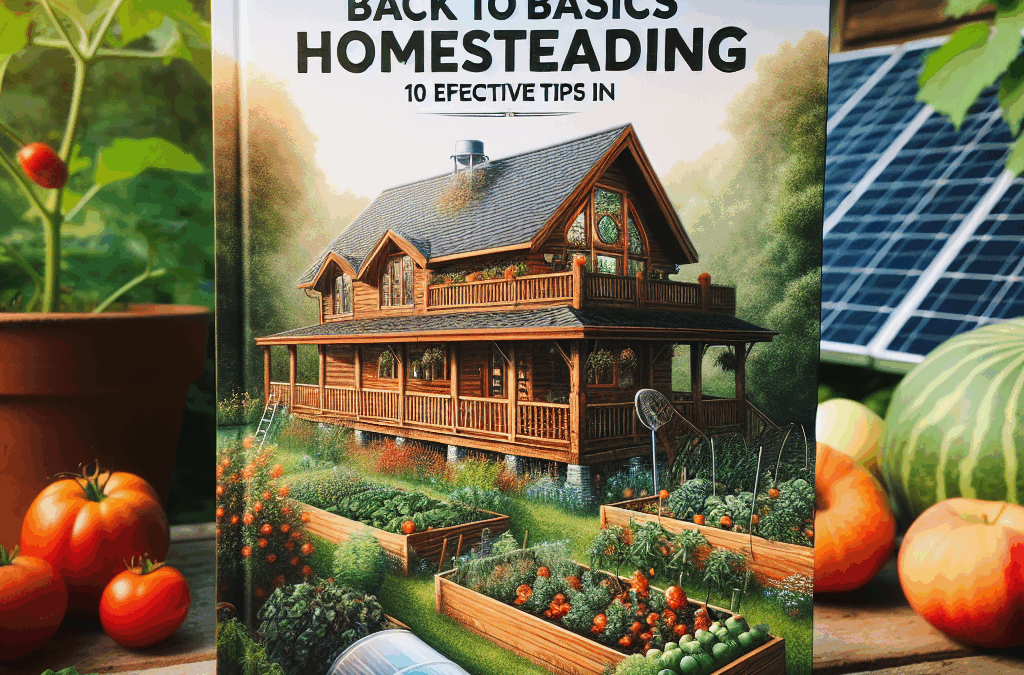
If you’re looking to embrace a more sustainable, self-sufficient lifestyle, then back to basics homesteading is the way to go. In 2025, this movement continues to grow, emphasizing simplicity, sustainability, and independence. Whether you’re just starting out or looking to refine your skills, this guide will give you 10 effective tips to succeed in back to basics homesteading this year.
Table of Contents
- 1. Know Your Land
- 2. Start Small
- 3. Grow Your Own Food
- 4. Raise Livestock and Poultry
- 5. Implement Sustainable Water Systems
- 6. Preserve Your Harvest
- 7. Use Natural Soil Management
- 8. Utilize Renewable Energy Sources
- 9. Build a Self-Sufficient Home
- 10. Embrace Community and Barter
1. Know Your Land
Understanding Your Soil and Climate
One of the foundational steps in back to basics homesteading is understanding the land youâre working with. Your soil type, pH level, and climate influence what you can grow and raise. Conduct simple soil tests (available at garden centers or DIY kits) to determine nutrient levels and acidity. Knowing this will help you select the right plants and crops suited for your environment in 2025.
Similarly, understanding your local climate zones helps you plan accordingly. For example, if you live in a region with a short growing season, selecting hardy, quick-maturing crops can make a big difference. Local weather patterns also guide you in planning water systems and annual planting schedules, essential components of back to basics homesteading.
Real-world example: a homesteader in northern Maine discovered their soil was acidic and amended it with natural lime, boosting their vegetable yields by 30% within one season. Learning your land’s specifics is key to sustainable success in 2025.
Mapping Your Property
Creating a detailed map of your property not only helps with planning but also ensures you utilize your space efficiently. Mark zones for gardens, animal pens, water sources, and fruit trees. Consider sun exposure and wind patterns for optimal placement.
This mapping process also aids in managing resources sustainably, reducing waste, and planning future expansions. In 2025, tech tools like drone imaging and mapping apps can provide high-resolution insights, even for small plots, helping you optimize your homestead.
Pro tip: Label your zones clearly and revisit your map seasonally to adapt to changes in growth or land conditions, which is essential for back to basics homesteading success.
2. Start Small
The Benefits of a Phased Approach
Beginning your back to basics homesteading journey by starting small is both practical and rewarding. It minimizes initial costs and allows you to learn as you grow. For instance, grow a manageable vegetable patch or keep a few chickens rather than overcommitting right away.
Starting small helps you build confidence, reduce overwhelm, and adapt your plans based on experience. Many successful homesteaders in 2025 began with simple projects like composting or herb gardening before expanding into larger livestock or food production.
Research shows that phased approaches lead to higher sustainability and long-term successâan essential principle for back to basics homesteading in 2025.
Practical Steps to Get Started
- Choose a few high-yield, easy-to-grow crops such as tomatoes, lettuce, or herbs.
- Start with a small flock of chickens for eggs and pest control.
- Build basic infrastructure like compost bins or rainwater collection systems.
By focusing on manageable projects, youâll develop skills and confidence vital for expanding your homestead sustainably. Remember, the journey to back to basics homesteading is a marathon, not a sprint.
3. Grow Your Own Food
Choosing the Right Crops for 2025
Growing your own food is at the heart of back to basics homesteading, especially in 2025 when food security remains a priority. Focus on resilient, nutrient-dense crops suited to your climate and soil conditions. Consider heirloom varieties, which are often more adaptable and flavorful than commercial hybrids.
In 2025, urban homesteaders are also experimenting with container gardening and vertical farms to maximize limited space. Community-supported agriculture (CSA) models are thriving, encouraging local production and sharing resources.
Tip: Develop a seasonal planting calendar that aligns with your local climate zone, ensuring a continuous harvest throughout the year.
Implementing Organic and Permaculture Methods
Back to basics homesteading emphasizes organic practicesâusing compost, manure, and compost teas to naturally enrich soil. Permaculture principles, like plant guilds and companion planting, enhance biodiversity and reduce pest issues.
Research indicates that these methods improve soil health over time, making your farm more resilient to climate variations in 2025. For example, planting nitrogen-fixing cover crops in off-season times can maintain soil fertility without chemical inputs.
Actionable tip: Keep a gardening journal to track what works best for your soil and climate, allowing you to refine your sustainable practices annually.
4. Raise Livestock and Poultry
Selecting the Right Animals
Livestock and poultry are vital for sustainable back to basics homesteading. Choose breeds suited for your climate, needs, and spaceâheritage breeds often perform better in low-input systems than commercial ones. For example, heritage hens generally lay more eggs over their lifetime and are hardier.
In 2025, more homesteaders are integrating livestock with permaculture practices to create a self-sustaining system. Cattle, goats, and sheep can provide milk, meat, and fiber while manure fertilizes your soil naturally.
Real-world example: a homestead in Vermont raised Ossabaw pigs, a heritage breed, which thrived on pasture and helped control weeds naturally.
Animal Care and Ethical Practices
Keeping animals ethically is crucial for sustainable homesteading. Proper housing, rotation grazing, and disease prevention are essential components of animal welfare. Supporting local and regenerative practices can also boost your farmâs productivity and ecological health.
Invest in predator-proof enclosures and health care plans to minimize losses and ensure your animals thrive in their environment. In 2025, integrating technology like low-cost sensors helps monitor animal health in real time.
Tip: Always research your chosen species thoroughly before raising them to ensure compatibility with your land and resources.
5. Implement Sustainable Water Systems
Rainwater Harvesting and Storage
Water sustainability is key in back to basics homesteading. Installing rainwater harvesting systems can provide a reliable water source, reducing dependency on municipal supplies or wells. Collecting rainwater from roofs into barrels or cisterns is simple and effective.
In 2025, advances in filtration and storage technology make these systems more affordable and efficient. Properly sizing your storage tanks ensures you have enough water during dry spells, supporting your garden, animals, and household needs.
Pro tip: Incorporate overflow systems and first-flush diverters to keep your water clean while conserving resources.
Natural Water Conservation Techniques
Mulching, contour planting, and swale designs help conserve water in your landscape naturally. Using native plants reduces watering needs and supports local ecosystems. These methods align perfectly with the back to basics ethosâworking with nature rather than against it.
In 2025, integrating drip irrigation and soil moisture sensors further optimizes water use, saving your resources and money. Such techniques contribute significantly to a sustainable and resilient homestead.
Quick tip: Regularly check and maintain your water systems to prevent leaks and contamination, ensuring your homestead remains water-wise.
6. Preserve Your Harvest
Traditional and Modern Preservation Methods
Preserving food is essential for self-sufficiency in back to basics homesteading. Techniques like canning, drying, fermenting, and freezing have stood the test of timeâand in 2025 theyâve become more efficient with new tools and technology.
Fermentation, such as making sauerkraut or kefir, supports gut health and preserves nutrients naturally. Modern vacuum sealers and dehydrators make storage easier and long-lasting while maintaining flavor and nutrition.
Real-world example: A homesteader in Oregon now uses solar-powered dehydrators to preserve organic herbs and fruits year-round.
Organizing a Preservation Schedule
Developing a preservation calendar helps manage harvest fluctuations and optimize storage. Label jars and bags with date and contents, and rotate stock for freshness. Learning to batch-process different foods streamlines your workflow.

In 2025, community food preservation groups are thriving, sharing knowledge, bulk buying supplies, and reducing costsâall essential for affordable back to basics homesteading.
Tip: Always prioritize safe food handling and storage techniques to prevent spoilage and ensure your food stays nutritious and flavorful.
7. Use Natural Soil Management
Composting and Soil Enrichment
Healthy soil is the backbone of a successful homestead. Composting kitchen scraps, yard waste, and manure creates rich organic matter that naturally fertilizes your land. Incorporate layers of green and brown materials for optimal decomposition.
In 2025, vermicomposting (using worms) is gaining popularity as a fast, efficient way to produce compost. This eco-friendly process reduces waste and boosts soil fertility naturally.
Tip: Test your soil regularly to understand its needs and adjust your compost inputs accordingly for maximum effectiveness.
Cover Crops and Mulching
Plant cover crops like clover, vetch, or rye during off-seasons to protect soil from erosion, add nitrogen, and suppress weeds. Mulching around plants conserves moisture and adds organic matter as it decomposes.
Implementing these practices aligns with the back to basics concept by improving soil health naturally, reducing reliance on chemical inputs in 2025.
Pro tip: Use local, sustainable materials for mulchâstraw, wood chips, or compostâto enhance eco-friendliness.
8. Utilize Renewable Energy Sources
Solar and Wind Power for Homesteads
Harnessing renewable energy in 2025 is more accessible than ever. Installing solar panels or small wind turbines allows your homestead to produce clean energy, reducing costs and environmental impact.
Many homesteaders are now integrating off-grid systems, solar water heaters, and battery storage to make their farms energy-independent. This approach aligns perfectly with the back to basics philosophy of self-sufficiency.
Real-world example: Installing a solar-powered water pump enables an off-grid farm in Colorado to irrigate crops year-round seamlessly.
Energy Efficiency and Conservation
Simple measures like LED lighting, energy-efficient appliances, and passive solar home designs further reduce your energy footprint. Conduct energy audits regularly to identify areas for improvement.
By creatively combining various renewable systems, you can create a resilient and sustainable homestead ready for future challenges in 2025 and beyond.
Tip: Check local regulations and incentives to maximize your renewable energy investment.
9. Build a Self-Sufficient Home
Passive Solar Design and Natural Insulation
Design your home for maximum efficiency using passive solar principlesâlarge south-facing windows, thermal mass, and natural insulation like straw bale or hempcrete. This reduces heating and cooling needs significantly.
In 2025, eco-friendly building materials and techniques make it easier and more affordable to create sustainable, resilient homes rooted in the back to basics approach.
Example: A homestead in Vermont built a straw bale house that maintains comfortable indoor temperatures all year with minimal supplemental energy.
DIY Construction and Local Materials
Building your own home or upgrading existing structures with local, natural materials supports sustainability and community resilience. Using cob, clay, stone, or reclaimed wood reduces environmental impact and costs.
Online courses and local workshops in 2025 help empower homesteaders to take on these projects confidently. As part of back to basics homesteading, DIY building fosters independence and connection to your land.
Pro tip: Consult local building codes and experts before starting major construction projects.
10. Embrace Community and Barter
The Power of Local Networks
Back to basics homesteading thrives on community support. Sharing tools, seeds, knowledge, and labor reduces costs and builds resilience. Join local homesteading groups, farmers markets, or online forums in 2025.
Barter systems can provide essentials like eggs, crafts, or services, fostering relationships and reducing reliance on cash. This approach aligns with sustainable living by promoting resourcefulness and cooperation.
Real-world example: A community in Tennessee established a seed exchange and tool library, saving members hundreds of dollars and strengthening bonds.
Building Knowledge and Skills
Learning from neighbors and experts accelerates your homesteading skills. Attend workshops, read books, and participate in online courses focused on permaculture, animal care, or renewable energy.
Sharing your knowledge in return creates a vibrant, self-reliant community rooted in the back to basics philosophy for 2025.
Tip: Document your lessons learned and share successes to inspire others on their homesteading journey.
Frequently Asked Questions
Q1: What is back to basics homesteading?
Back to basics homesteading is a lifestyle that emphasizes self-sufficiency, sustainability, and working harmony with nature. It involves growing your own food, raising animals responsibly, and utilizing renewable resources.
Q2: How can I start back to basics homesteading in 2025?
Begin by assessing your land and resources, start small with manageable projects like vegetable gardening or raising chickens, and gradually expand your skills through community and online resources. Focus on sustainable practices for long-term success.
Q3: Why is sustainable water management important in back to basics homesteading?
Sustainable water management ensures your homestead remains resilient against droughts or water restrictions. Implementing rainwater harvesting, efficient irrigation, and conservation techniques helps maintain a reliable water supply while protecting the environment in 2025.
Q4: What are the main benefits of back to basics homesteading?
Benefits include food security, lower living costs, reduced environmental impact, greater independence, and a healthier lifestyle rooted in simplicity and sustainability.
Q5: How does one incorporate renewable energy into a homestead?
Installing solar panels, small wind turbines, or micro-hydro systems can provide clean, renewable energy. Combining efficiency measures like LED lighting and passive solar design further reduces dependence on traditional utilities in 2025.
Conclusion
Embracing back to basics homesteading in 2025 offers a rewarding path toward sustainability, independence, and resilience. With these 10 effective tipsâranging from understanding your land to building communityâyou can create a self-sufficient lifestyle that thrives in todayâs changing world. Remember, the key to success in back to basics homesteading is patience, learning, and adapting. Start small, stay persistent, and enjoy the journey toward a more sustainable life.