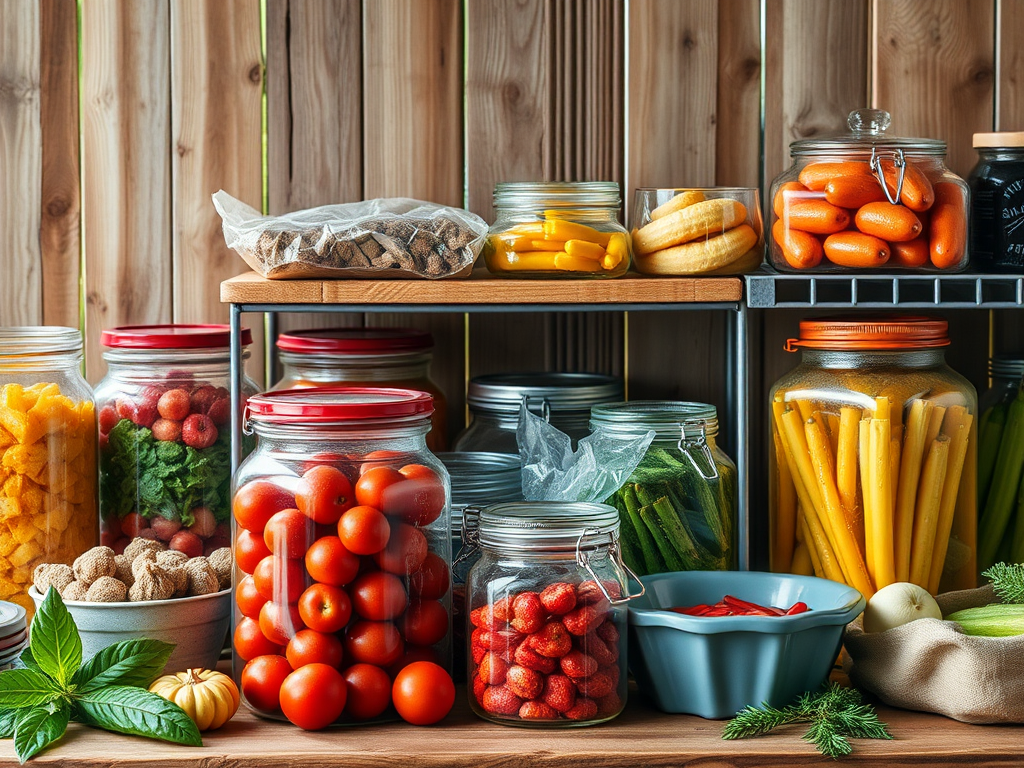
To create a sustainable food storage system, prioritize methods such as canning, dehydrating, and freezing to extend the shelf life of your food while reducing waste. Assess your available food sources and select preservation techniques that suit each type, like canning for high-acid foods or freezing for fruits and vegetables. Ensure that you maintain optimal storage conditions—cool, dark, and dry environments are ideal. Regularly inspect your stored food for spoilage and practice stock rotation to keep your supplies fresh and safe for consumption.
Understanding Food Preservation Methods
Food preservation is essential for maintaining the quality and safety of your stored food. Various methods exist, including canning, dehydrating, freezing, and fermenting, each with its unique advantages. Canning involves sealing food in jars and heating them to kill bacteria, while dehydrating removes moisture to inhibit spoilage. Freezing preserves food by slowing down enzyme activity, and fermenting creates a beneficial environment for probiotics. Understanding these methods allows you to select the best one for your needs.
For instance, canning is great for high-acid foods like tomatoes, while freezing is ideal for vegetables and fruits that may lose texture when canned. Dehydrating is particularly useful for herbs and some fruits, allowing for long-term storage without preservatives. Selecting the right method based on the type of food you want to preserve is crucial for achieving the best results.
Choosing the Right Storage Environment
The environment in which you store your food significantly affects its longevity. Temperature, humidity, and light exposure are critical factors. Ideal storage conditions typically involve cool, dark, and dry places. For instance, root cellars provide a natural environment for storing root vegetables, maintaining consistent temperatures and humidity levels.
Using airtight containers can also help protect food from pests and moisture. Glass jars, vacuum-sealed bags, and food-grade buckets are excellent choices. Additionally, consider the shelf life of the food you are storing. Foods with longer shelf lives, such as grains and legumes, can be stored for years, while others, like dairy products, require more immediate use.
Common Mistakes in Food Storage
Many people make mistakes food storage that can lead to waste and spoilage. One common error is not labeling containers with dates, making it difficult to track freshness. Another mistake is overcrowding storage spaces, which can restrict airflow and contribute to spoilage.
Failing to check for signs of spoilage regularly also leads to wasted food. Implementing a first-in, first-out (FIFO) system can help manage your food supply effectively. This method ensures that older items are used before newer ones, reducing the risk of spoilage.

Practical Tips for Sustainable Storage
To enhance your sustainable food storage system, consider the following practical tips. First, prioritize local and seasonal produce to minimize your carbon footprint. Using a community-supported agriculture (CSA) program can provide fresh, local foods that are often at their peak quality.
Second, invest in high-quality storage solutions that are reusable and durable. Glass containers, metal tins, and silicone bags can be eco-friendly alternatives to single-use plastics. Lastly, educate yourself on food preservation techniques through workshops or online resources to improve your skills and efficiency.