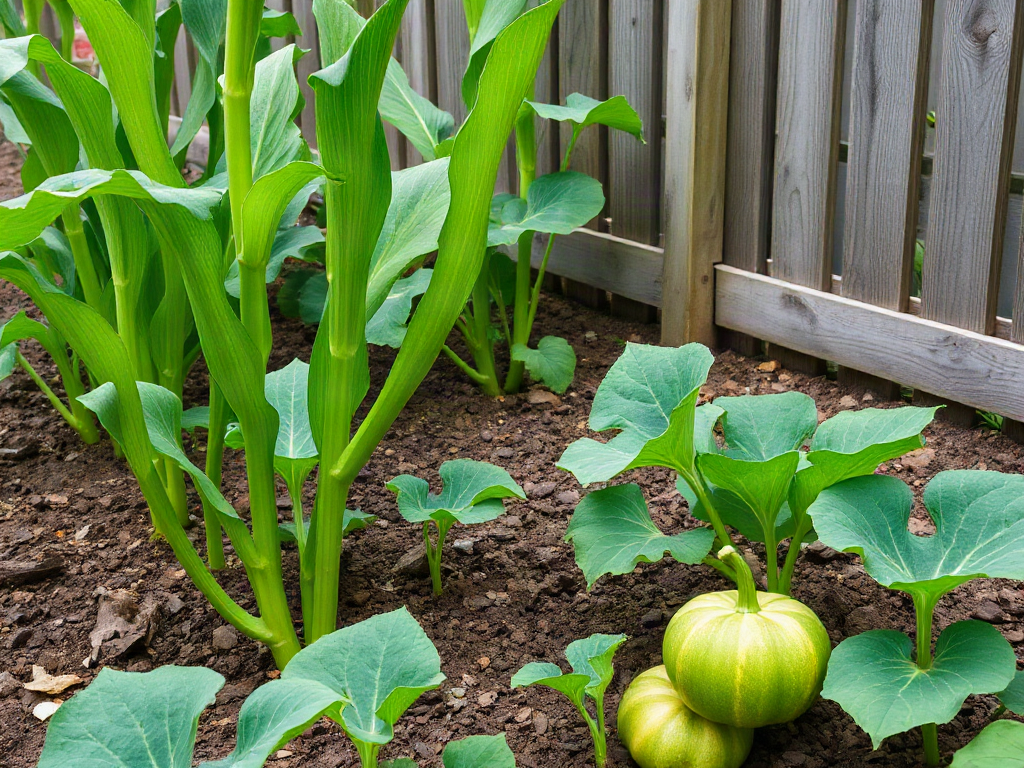
Three sisters planting for small homestead gardens combines corn, climbing beans, and squash in one carefully spaced bed, using the corn as a living trellis, beans for vertical production, and squash leaves to shade soil. Give each crop enough room, plant corn in a block for pollination, wait until it is established before adding beans, and place squash around the edges rather than in the center. The method can produce several foods from limited ground, but crowded plants, weak corn, poor sunlight, and dry soil commonly reduce results. Choose compact or moderately vigorous varieties and treat the planting as a coordinated system rather than three crops placed randomly together.
What the Three Sisters Method Does in a Small Garden
Three sisters planting is a companion planting arrangement built around three crops with different growth habits: corn grows upright, beans climb, and squash spreads across the soil. In a small homestead garden, that combination can place food production at several heights instead of reserving separate rows for each crop. The design is useful when ground is limited, but it is not a magic shortcut for poor soil, inadequate water, or insufficient sunlight.

Corn supplies a natural support for pole beans once the stalks are strong enough. Beans occupy vertical space and may contribute nitrogen to the soil through their root association with bacteria, although that benefit should not be treated as an immediate fertilizer supply for the same season. Squash forms a living mulch that shades soil, slows evaporation, and may make it harder for some weeds to establish. Its broad leaves can also make harvesting and inspecting the bed more difficult.
A compact garden might use a roughly 4-by-4-foot mound or bed area, but the final footprint depends on the squash variety and local growing conditions. Bush squash stays more contained than a vigorous vining type. A small corn block is generally more dependable than a single row because corn pollinates through wind, and clustered plants improve the chance that ears fill evenly.
Think of the arrangement as a managed partnership rather than an automatic benefit. The crops still compete for light, nutrients, and moisture. A bed beside a fence may look ideal for beans, yet the fence can cast afternoon shade or restrict airflow. Before planting, compare this design with separate rows: individual rows are easier to weed, irrigate, and harvest, while a three-crop bed makes better use of vertical and horizontal space.
For related planning ideas, see Three sisters planting for small homestead gardens alongside your local crop calendar and available garden space.
Planning Bed Size, Varieties, and Planting Timing
Successful small-bed planning begins with the mature size of every plant, not the size of the seedlings. Select corn that reaches a sturdy height in your growing season, pole beans that are productive without becoming excessively heavy, and squash suited to the space. A highly vigorous pumpkin can overwhelm a small plot, while a compact winter squash or summer squash may be easier to direct around the bed.
Use fertile, well-drained soil with steady access to moisture. Corn is especially demanding because it produces substantial leafy growth before setting ears. Incorporate finished compost before planting if the soil needs organic matter, but avoid pushing nitrogen too aggressively; excessive leafy growth can delay reproductive development and make the corn less stable. A simple soil test is more useful than guessing from plant color.
Timing matters because the crops do not develop at the same speed. Plant corn only after the soil has warmed enough for reliable germination. Sow it in a block rather than a long, narrow line. Once the corn is several inches tall and firmly rooted, add beans so young vines do not outpace the stalks. Squash can be planted at the same time as the beans or shortly afterward, depending on the variety and weather.
- Corn: Use a compact block with enough plants for wind pollination, rather than one isolated stalk.
- Beans: Choose pole beans that can climb corn, and avoid planting so many vines that stalks lean.
- Squash: Favor a restrained variety when the bed borders paths, fences, or other crops.
Seed packets provide mature height, spread, and days-to-harvest information that should guide the layout. For example, a short-season garden may need an early corn variety and a squash that can finish before cool weather. A gardener with a long season can use a larger squash, but must still leave access paths. Planting every seed on the same day may seem efficient; staging the crops usually produces a better balance because corn needs a head start while beans need a firm support.
Planting and Managing Corn, Beans, and Squash
Prepare the bed so water reaches the root zone evenly, then plant corn in a compact grouping with enough spacing for air movement and ear development. Exact distances vary by variety, but crowded corn tends to become thin and unstable. After emergence, remove weak or poorly placed seedlings rather than allowing every plant to compete. A strong, evenly spaced block is more useful than a dense patch of spindly stalks.
When the corn is established, place bean seeds close enough to the stalks for easy climbing but not directly against the stem where roots and seedlings may be disturbed. Several bean plants around a sturdy corn plant can become too heavy, particularly after rain. Guide young vines toward the stalks if necessary. If the corn is short, weak, or exposed to strong wind, provide a separate trellis instead of expecting it to carry the beans.
Place squash near the outer portion of the bed and direct its runners away from young corn. Keeping the crown from the wettest part of the mound reduces the chance of stem problems, while placing the leaves over open soil captures the intended shading benefit. Mulch can supplement, but not replace, the squash canopy. Organic mulch also prevents soil from splashing onto leaves and helps maintain more even moisture.
Water deeply when the upper soil begins to dry, paying particular attention during corn tasseling, bean flowering, and squash fruit development. Drip irrigation or a soaker hose is easier to manage than spraying through dense foliage. Feed plants according to soil needs rather than on a fixed schedule. Pale leaves, stalled growth, blossom problems, or weak stalks may signal water or fertility issues, but symptoms can overlap, so inspect soil moisture and root-zone conditions before adding fertilizer.
A practical inspection routine takes only a few minutes. Check that corn remains upright, beans are climbing rather than smothering stalks, squash runners are not blocking paths, and leaves show no spreading disease or heavy pest pressure. Harvest beans frequently to maintain production, pick summer squash while tender, and monitor corn maturity by checking ears rather than relying only on calendar dates. Dense foliage is a benefit only while the gardener can still reach the plants.

Record what worked in the bed: variety names, planting dates, irrigation frequency, and where the runners traveled. That information makes the next planting more precise than simply copying a diagram from another climate.
Common Failures and Better Alternatives
The most common failure is treating the three crops as equal partners from the first day. Young beans can climb faster than corn can support them, and squash can spread across seedlings before they establish. Staggering the planting solves part of that problem. Another frequent mistake is using one corn plant or a thin row, which leaves pollination vulnerable and provides little structural support.
Overcrowding creates a chain reaction: leaves remain wet longer, harvesting becomes awkward, roots compete for water, and weak corn may bend under bean vines. More plants do not automatically produce more food in a small bed. If the squash covers the entire area before corn flowers, trim or redirect runners only when necessary, and avoid repeatedly cutting healthy foliage because leaves power fruit development.
Variety mismatch is another source of disappointment. Large pumpkins, aggressive beans, and tall corn may perform well in a spacious field but overwhelm a compact homestead plot. A gardener who wants predictable access may prefer a corn-and-bean pairing on a trellis with squash planted separately. That alternative loses some of the classic visual arrangement but improves control, especially for children, older gardeners, or anyone using hand watering.
Do not assume the planting eliminates weeds, irrigation, or crop rotation. Squash shade suppresses some weeds but does not stop weeds at the bed edges. Dense growth can hide cucumber beetles, squash bugs, or stalk damage until the problem is advanced. Remove diseased plant material promptly and avoid saving seed from hybrids unless the resulting traits are acceptable. Rotate the bed when possible, particularly if soil-borne disease or recurring pest problems have affected related crops.
Use this priority order when space is tight:
- Reserve the sunniest location and confirm that water can reach it.
- Choose varieties by mature spread and support needs.
- Build a pollination-friendly corn block.
- Delay beans until corn is sturdy.
- Keep squash on the perimeter and preserve a harvest path.
Signs the system is working include upright corn, beans reaching the stalks without forming a heavy tangled mass, squash covering soil without burying neighboring plants, and harvest access remaining practical. Signs to change the design next season include repeated lodging, incomplete ears, dry soil beneath the canopy, or squash taking over more space than the harvest justifies. A separate trellis-and-row arrangement may then be the more productive small-garden choice.
For planting dates, crop spacing, soil testing, and variety selection, consult your state university extension service, local master gardener program, or regional agricultural department. These sources can adjust general three sisters planting advice for local frost dates, rainfall, disease pressure, and recommended cultivars.
Frequently Asked Questions
What are the three crops in a three sisters garden?
The traditional combination is corn, pole beans, and squash. Corn provides support, beans climb vertically, and squash spreads across the soil.
How much space does a small three sisters bed need?
A compact bed may begin around 4 by 4 feet, but the required area depends mainly on the squash variety and its mature vine spread.
Should beans be planted at the same time as corn?
Usually, wait until corn is several inches tall and firmly rooted. This gives the stalks time to develop before supporting climbing vines.
Can bush beans replace pole beans?
Bush beans can grow in the same general bed, but they do not provide the vertical use of space that makes pole beans part of the classic arrangement.
Why is my three sisters planting overcrowded?
Vigorous varieties, excessive plant numbers, and insufficient spacing commonly cause crowding. Reduce plant density, redirect squash runners, or use a separate trellis next season.
Conclusion
A small three sisters bed works best when its limitations are planned as carefully as its advantages. Give corn a sunny, well-watered block, select beans that match the stalk strength, and keep squash on the outside where its leaves can shade soil without blocking access. Staggering crops, monitoring moisture, and choosing restrained varieties usually matter more than copying a traditional mound exactly. Inspect the planting often enough to catch leaning corn, tangled vines, hidden pests, or runners entering paths. If the combination becomes difficult to harvest or consistently produces weak plants, a separate trellis for beans and a dedicated squash area may serve the garden better. Treat the first season as a measured trial, record the varieties and spacing, and refine the layout around the conditions of your own homestead.