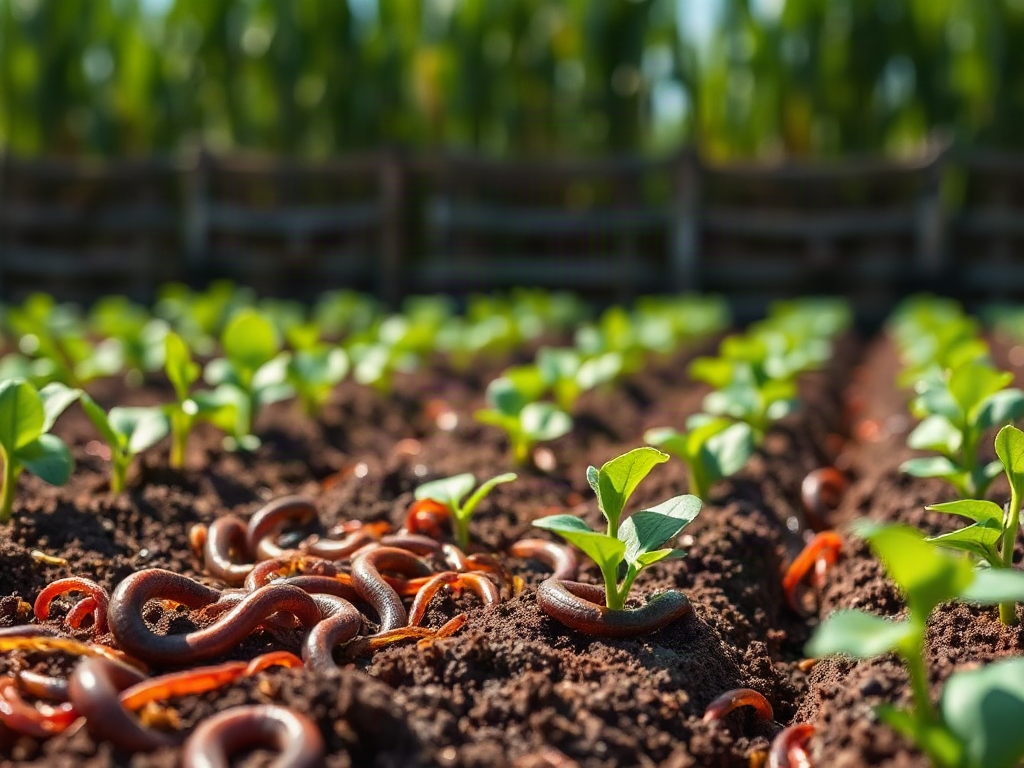
Diversified farming versus single-crop production is best decided by matching land capacity, labor availability, cash-flow needs, and dependable buyers rather than assuming either system is universally better. Diversification spreads weather, pest, and market risk across several enterprises, but it increases scheduling, equipment, storage, and sales complexity. Single-crop production simplifies field operations and may lower per-unit costs, yet one crop failure or lost market can threaten most of the season’s income. Small farms should compare enterprise margins, peak labor dates, rotation needs, and confirmed sales channels before expanding, then test additions at a scale that will not overburden existing operations.
How the Two Production Models Work
Diversification and specialization organize the farm around different operating priorities. A diversified property may combine vegetables, berries, laying hens, hay, or another compatible mix of enterprises. Single-crop production concentrates acreage, labor, equipment, and marketing on one primary commodity. The distinction concerns commercial dependence as much as biological variety: a farm can rotate several cover crops yet still depend financially on one sale crop.
A specialized system gains efficiency through repetition. Fields can be prepared on similar dates, the same equipment can serve most acreage, and workers repeat a narrower set of tasks. A grower producing only processing pumpkins, for example, can select machinery, spacing, harvest procedures, and contracts around that crop. Larger and more uniform lots may also suit wholesale buyers better than small quantities of many products.
The tradeoff is concentrated exposure. A poorly timed storm, serious disease outbreak, labor shortage at harvest, or buyer cancellation affects a large share of expected revenue at once. Crop rotation can reduce some biological pressure, but rotation alone does not protect cash flow if the farm continues selling only one principal product.
A diversified operation separates those exposures when its enterprises respond differently to conditions. Early greens may produce spring income, summer vegetables may serve a farm stand, and eggs may provide steadier weekly sales. A dry period, however, could still affect every enterprise if they share the same irrigation source. Genuine risk spreading requires more than a long product list; enterprises should differ in harvest timing, biological vulnerabilities, inputs, or markets.
Diversity can also create useful connections. Poultry manure may contribute to a managed fertility program after appropriate handling, cover crops can protect ground between vegetable rotations, and lower-grade produce may have an approved secondary use. These relationships must be planned rather than assumed. Livestock exclusion periods, food-safety concerns, fencing, and nutrient loading can make an apparently tidy integration difficult.
A common mistake is treating diversification as automatic resilience. Adding five crops that all require transplanting in the same week and harvesting during the same month can intensify the farm’s weakest labor period. The useful comparison is therefore not “many products versus one product,” but whether each added enterprise improves the farm’s calendar, resource use, and customer fit. That distinction should anchor any evaluation of Diversified farming versus single-crop production.
Risk, Revenue, and Cost Tradeoffs
Financial resilience depends on how revenue sources behave under pressure, not simply how many appear in the farm plan. Diversification may soften a weak price or low yield in one enterprise, while specialization may produce a stronger margin when volume, machinery, and a reliable sales agreement align. Neither approach guarantees profit.
Single-crop operations can reduce unit costs by purchasing inputs in volume, limiting equipment types, standardizing packaging, and moving larger lots through fewer transactions. The advantage becomes meaningful when the crop has adequate acreage, consistent yields, suitable machinery, and a buyer capable of taking the volume. Without those conditions, specialization may create excess equipment costs or leave the grower dependent on an informal market that cannot absorb the harvest.
Diversified farms often trade field efficiency for multiple sales opportunities. A mixed market garden might earn retail prices from salad greens, tomatoes, herbs, and roots, but every item brings its own seed order, production schedule, harvest standard, washing method, packaging, and display needs. Gross sales can look impressive while small batches and repeated handling consume the margin. Enterprise records should assign direct inputs, packaging, market fees, paid labor, and a reasonable value for owner labor to each product.
Cash-flow timing deserves separate attention. A single annual crop may require months of spending before one concentrated payment arrives. Several enterprises can stagger income, but they can also create continuous input purchases and leave little time for maintenance. A homestead selling seedlings in spring, produce in summer, and stored roots in autumn may achieve a smoother sales calendar, provided those seasons do not compete for the same greenhouse space or management attention.
Market concentration is another hidden risk. Ten vegetables sold through one restaurant are biologically diverse but commercially tied to one customer. Conversely, one crop sold under several dependable arrangements may have more market protection than the product count suggests. Buyers should be assessed for required volume, quality grade, delivery frequency, payment timing, packaging, and their record of following through.
The practical test is contribution margin and vulnerability together. Identify what each enterprise earns after costs that rise with production, then ask what event could interrupt those earnings. Warning signs include unsold inventory, repeated emergency discounting, owner labor that is never counted, or one buyer representing most receipts. Healthy signs include repeat orders, stable quality, manageable harvest hours, and enough margin to maintain equipment and soil fertility.
Land, Labor, and Management Constraints
Physical and human limits often decide the issue before market ambition does. Soil types, drainage, water supply, field shape, buildings, fencing, storage, and access determine which enterprises can operate reliably. A varied property may favor diversification because different areas suit different uses. Well-drained ground might carry vegetables, a damp lower field might remain in perennial forage, and a secure building could house a modest laying flock.
Uniform land can favor a concentrated enterprise, especially where one implement can cover contiguous acreage efficiently. Yet placing all ground in one crop may increase erosion, compaction, nutrient imbalance, or pest carryover if rotations and protective cover are neglected. Single-crop production should not mean planting the same field identically year after year. Planned rotations, resistant varieties where appropriate, sanitation, scouting, and cover periods remain important safeguards.
Labor is usually less flexible than acreage. Diversified production distributes work across more tasks, but it does not necessarily distribute it evenly. Strawberries, broilers, and early vegetables might all demand attention during the same spring window. A household with limited off-farm hours may be safer with fewer enterprises and clear routines than with a complex mix that requires daily observation, frequent harvests, and several market days.
Specialization reduces task switching but can produce a severe labor peak. A crop that must be harvested within a narrow quality window may require temporary help, specialized machinery, or a custom operator. Before choosing it, confirm who will do the work if weather compresses a ten-day task into four workable days. Assuming family or neighbors will be available is not a labor plan.
Management capacity includes knowledge and attention as well as hours. Livestock adds daily welfare duties, feed inventory, fencing checks, health observation, and manure management. Perishable vegetables add irrigation decisions, repeated picking, rapid cooling, and strict postharvest handling. Combining them may use resources well, but mistakes become more likely when recordkeeping and routines do not keep pace.
Equipment compatibility provides a useful filter. An added enterprise is easier to justify when it uses existing irrigation, cultivation tools, wash space, or transport without blocking the principal operation. It is harder to justify when it requires a dedicated tractor attachment, cooler, building, and delivery route for modest projected sales. Readers comparing Diversified farming versus single-crop production should map peak weeks and shared infrastructure before comparing projected annual revenue.
A Practical Farm-Planning Decision Process
A sound decision begins with current constraints and verified demand, then moves to a limited production test. Product enthusiasm is not evidence that customers will buy the expected quantity at a workable price. Speak with prospective buyers, document their specifications, and distinguish casual interest from an order, contract, or consistent sales history.
Build an enterprise budget for the existing operation and each proposed addition. Include seed or breeding stock, fertility, feed, pest management, packaging, fuel, market fees, hired labor, losses, and equipment use. Estimate owner hours by month rather than only by year. This exposes collisions that annual totals hide, such as three enterprises each requiring 100 hours during the same harvest period.
A compact decision check keeps expansion grounded:
- Confirm the outlet: Identify the buyer, expected quantity, quality standard, delivery terms, and realistic price range.
- Map limiting resources: Compare water, suitable acreage, storage, equipment, transport, and labor during peak weeks.
- Separate the risks: Favor additions with different production cycles or customers rather than enterprises exposed to the same failure.
- Run a small trial: Produce enough to measure yield, labor, loss, and buyer response without threatening the core operation.
- Review records: Expand only when repeat sales and a credible margin justify more acreage or infrastructure.
Consider a vegetable grower thinking about adding laying hens. Eggs may offer recurring sales and manure for a controlled nutrient plan, but hens also require daily care, predator protection, feed storage, cleaning, and a reliable outlet every week. A small flock can reveal actual labor and customer demand. Buying a large coop before testing those assumptions turns diversification into a fixed-cost burden.
The same discipline applies to specialization. A grower considering expanding one vegetable from a quarter-acre trial to several acres should verify harvest capacity, cooling space, transport, buyer volume, and a fallback outlet. Field production may scale faster than washing, packing, or sales. Expansion is failing when waste rises, quality slips, or the owner spends more time finding buyers than managing the crop.
Choose diversification when additional enterprises make productive use of underused resources, reach credible markets, and reduce exposure without overwhelming the calendar. Choose greater specialization when one enterprise has proven demand, repeatable production, compatible acreage, and clear efficiency gains. A hybrid arrangement is often practical: maintain one anchor enterprise while testing one or two complementary products. Reassess after a complete production cycle using records rather than memory.
Frequently Asked Questions
Is diversified farming always less risky than producing one crop?
No. It reduces risk only when enterprises differ in weather sensitivity, production timing, inputs, or buyers. Several products sharing the same water source, harvest window, and customer can still fail together.
Can a small homestead benefit from single-crop production?
Yes. A focused enterprise can simplify tools, skills, scheduling, and marketing when suitable land and dependable demand are available. Rotation and backup sales plans are still needed.
How many enterprises should a diversified farm operate?
There is no ideal number. Add only as many as available labor, infrastructure, management attention, and confirmed markets can support without weakening established production.
What records are most useful when comparing the two systems?
Track yield, saleable quantity, price, direct inputs, packaging, losses, buyer volume, and labor by month. Enterprise-level records reveal whether a product contributes income or merely adds activity.
What is the safest way to diversify an existing operation?
Test one complementary enterprise at limited scale, use existing infrastructure where possible, confirm a sales outlet, and review a full production cycle before purchasing dedicated equipment or expanding acreage.
Conclusion
The better production model is the one that fits the farm’s actual bottlenecks and dependable markets. Start by identifying peak labor weeks, water and storage limits, equipment capacity, buyer requirements, and the margin produced by each enterprise. Diversification is worthwhile when new products use resources at different times and create genuinely separate income channels. Specialization is sensible when repeat demand and operational efficiency outweigh the consequences of concentrated exposure.
Avoid changing the whole farm on projected sales alone. Keep enterprise records, test changes at manageable scale, and define in advance what success will look like: repeat orders, controlled losses, acceptable labor demands, and enough margin to maintain the operation. Expand only after those signals appear through a complete production cycle.