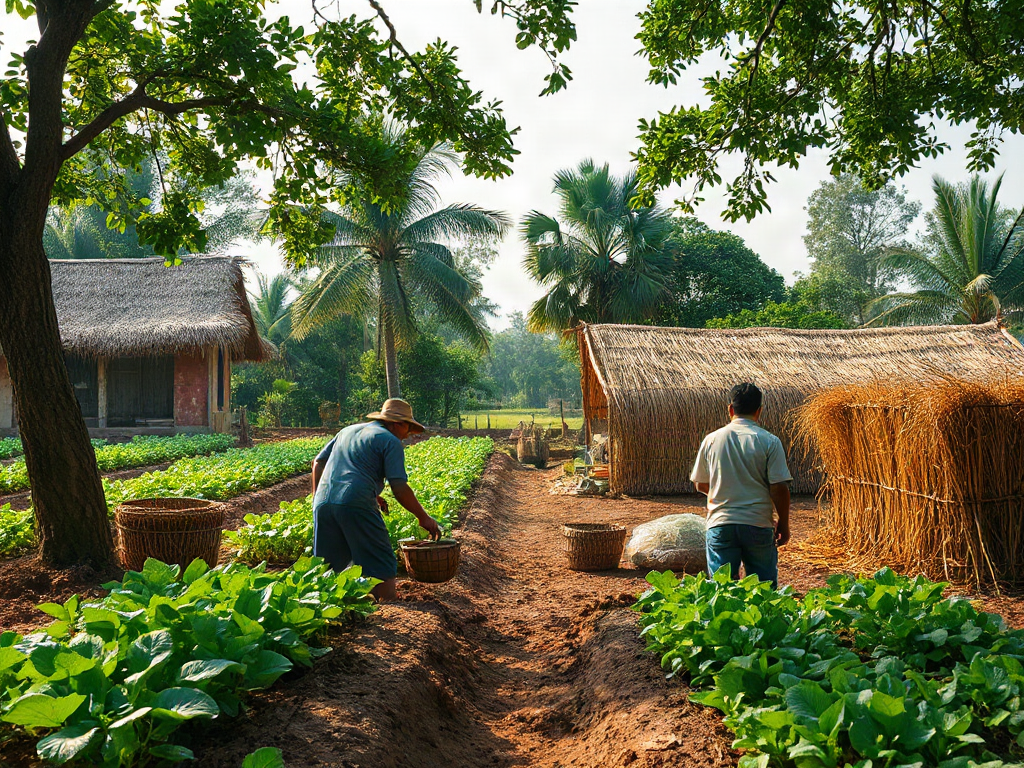
Ancient Mayan farming lessons for modern homesteads center on matching food production to local water, soil, slope, and woodland conditions rather than forcing every acre into one system. Practical applications include growing complementary crops in a milpa-inspired polyculture, slowing runoff with terraces or contour barriers, capturing rain for dry periods, and maintaining useful trees around annual plantings. These practices spread risk and keep soil covered, but they must be adapted to climate, crop compatibility, and available labor. Homesteaders should test a small plot first, monitor moisture and harvests, and avoid treating diverse Maya land-management traditions as a single fixed recipe.
Treat the Landscape as a Patchwork
Maya food production developed across varied environments, including seasonal tropical lowlands, wetter forest zones, hills, and areas with thin or difficult soils. Archaeological and environmental research points to a range of responses rather than one universal “Mayan method”: household gardens, managed woodland, terraces, raised or drained fields, annual cropping areas, and water-storage works all appeared in different places and periods. The useful lesson for a homesteader is to assign each part of the property a job suited to its physical limits.
Begin by observing where water collects, where summer soil dries first, which slopes erode, and where frost, shade, or wind changes growing conditions. A low pocket that remains wet after storms may suit moisture-tolerant plants, a pond margin, or an overflow basin better than root crops vulnerable to rot. A sunny, well-drained area near the house is usually more valuable for frequently harvested vegetables. Steeper ground may be better kept under perennial roots and canopy than repeatedly tilled.
This patchwork approach differs from laying out identical rows across every available opening. Uniform beds simplify cultivation, but they can place thirsty crops on dry ridges or leave bare soil in runoff paths. Dividing land by function may look less orderly, yet it reduces the need to correct a poor site with repeated irrigation, imported soil, or erosion repairs. On a small property, even a few distinct zones—a kitchen garden, staple-crop patch, orchard understory, wet-season catchment, and protected woodland edge—can create useful redundancy.
Make a simple base map during both wet and dry conditions. Mark slope direction, roof runoff, existing trees, compacted tracks, shallow soil, and areas that stay productive with little intervention. Then choose the least disruptive use for each zone. Before removing woodland or leveling uneven ground, ask whether existing roots, leaf litter, shade, or natural drainage already provide a service that would be expensive to replace.
A common mistake is to interpret historical land use as proof that every site should be cultivated intensively. Maya communities altered landscapes, but the forms and consequences of that management varied. Modern acreage, rainfall patterns, tools, and household needs are different. Use Ancient Mayan farming lessons for modern homesteads as design clues, then let direct observation determine where annual cultivation is actually justified.
Adapt the Milpa Principle Without Copying It Blindly
A milpa is better understood as a place-based cropping system than as a decorative mixture of corn, beans, and squash. In familiar forms, maize supplies a major staple, beans contribute food and may add biologically fixed nitrogen over time, while squash spreads across the ground and reduces exposed soil. Maya milpa traditions are diverse, however, and can include additional crops, fallow stages, managed regrowth, and relationships with surrounding woodland.
For a modern homestead, the transferable principle is functional diversity. Combine crops that use space, light, and harvest windows differently. A tall grain or sweet corn crop can occupy the upper layer, a compatible climbing bean can use vertical space, and a spreading winter squash can shade portions of the surface. The mixture may interrupt the rapid spread of some problems and can produce more than one food from the same area. It does not automatically eliminate weeds, fertility needs, insects, or crop competition.
Timing determines whether the combination cooperates or collapses. If vigorous pole beans are planted too early, they may pull down young corn. Dense squash can suppress weeds after establishment but may also smother small seedlings and conceal rodents or fruit damage. Corn planted too widely may fail to provide adequate support; planted too densely, it can shade beans and compete for moisture. In windy regions, ordinary sweet corn may be too weak to carry a heavy vine, so separate trellising or compact bean varieties are often safer.
A sensible trial is one modest block rather than the entire staple garden. Compare it with a nearby single-crop row under similar soil and watering. Record sowing dates, irrigation, weeding time, pest damage, and usable harvest by crop. The mixture is earning its space if it keeps soil covered, produces several worthwhile foods, and does not demand more untangling or hand work than the household can supply. Sparse growth, pale corn, poor air circulation, or vines overwhelming their supports indicate that spacing, fertility, timing, or variety choice needs adjustment.
Crop rotation still matters. Legumes do not provide unlimited fertility to neighboring plants during the same season, and much of their nitrogen remains in plant tissue until residues and roots decompose. Removing every stalk and vine also exports nutrients. Compost, manure used with appropriate food-safety precautions, mulch, and soil-test-guided amendments may still be needed. The weak assumption to avoid is that diversity alone creates a self-fertilizing garden; diversity works best alongside deliberate soil stewardship.
Manage Rainfall Before Expanding Production
Water management was central to farming in Maya regions where rainfall could be abundant yet sharply seasonal. Different communities used approaches such as reservoirs, channels, terraces, and modified fields according to terrain and local hydrology. The modern lesson is not to reproduce an archaeological structure. It is to control the movement, storage, and release of water before increasing the area dependent on it.
Start at the roof and work downhill. Direct clean roof runoff into properly screened tanks or cisterns where local rules and roofing materials permit collection. Provide a stable overflow route that carries excess water away from foundations without cutting a gully through the garden. Farther downslope, contour-aligned vegetation, level spreaders, terraces, or shallow infiltration features may slow runoff. The appropriate choice depends on soil infiltration, slope stability, storm intensity, and what lies below the property.
Terracing deserves particular caution. A well-built terrace shortens a slope and can retain soil, but a poorly graded terrace may concentrate water, fail at the edge, or saturate unstable ground. Small contour beds reinforced with perennial vegetation are less ambitious than major earthworks and easier to inspect after storms. On steep, landslide-prone, or building-adjacent sites, drainage and retaining structures warrant qualified local design rather than guesswork.
A compact water-priority sequence keeps the project grounded:
- Measure demand: estimate which beds and young trees require water during the driest growing weeks.
- Reduce loss: repair leaks, improve organic surface cover, and group plants with similar moisture needs.
- Capture safely: size storage to roof area, rainfall pattern, structural support, and a controlled overflow path.
- Slow runoff: test modest interventions before excavating large basins or reshaping slopes.
- Inspect after storms: look for sediment deposits, scoured outlets, standing water, and leaning retaining edges.
Signs of improvement include slower runoff, less soil movement, more even moisture below mulch, and stored water lasting farther into a dry spell. Persistent puddles, sour-smelling saturated soil, mosquito breeding, eroded spillways, or water approaching a foundation signal failure rather than successful conservation. On clay soil, capturing more water may be less useful than directing excess water safely. On fast-draining soil, shade, wind protection, and organic surface cover may conserve moisture more economically than enlarging storage.
The durable idea within Ancient Mayan farming lessons for modern homesteads is that water infrastructure and crop choices belong in the same decision. A field that cannot be supplied through its critical growth stages is already too large, regardless of how much open land remains.
Build Fertility Through Cover, Organic Matter, and Trees
Long-term fertility depends on biological cover and nutrient cycling, not merely on adding fertilizer to an exposed bed. Evidence of Maya landscape management includes useful tree species, home gardens, fallow vegetation, and intensive field systems, with substantial variation among locations. For a homestead, this supports a layered strategy: protect soil from heavy rain and heat, return appropriate plant residues, retain beneficial perennial roots, and concentrate annual disturbance where it produces enough food to justify the labor.
Mulch moderates surface temperature and limits crusting, while living roots feed soil organisms and hold aggregates together. Compost returns decomposed organic material in a form that is easier to place around demanding crops. Perennial trees can supply shade, leaf litter, habitat, fruit, nuts, fuelwood, or wind reduction, depending on species and climate. These functions overlap, but they are not interchangeable. Thick mulch may preserve moisture while delaying spring warming; a tree may protect soil while competing with nearby vegetables for light and water.
A practical design might place sun-loving annual staples beyond the canopy, herbs and shade-tolerant crops along a bright edge, and perennial groundcover beneath established fruit trees. Prunings that are disease-free can be chipped for paths or decomposed before use. Fallen leaves can remain under compatible trees unless they create a disease or rodent problem. Bare pathways should be covered or planted, especially where roof overflow or foot traffic begins moving sediment.
Avoid equating historical fallow cycles with simply abandoning a depleted modern bed. Fallow works through regrowth, root activity, biomass accumulation, and time. A compact homestead may not have enough land to rest a field for an extended period. Cover crops offer a shorter alternative, but species must fit the season and be terminated before they become weeds. Where year-round cover is impractical, rotating heavy-feeding crops with legumes or lower-demand crops, adding tested compost, and minimizing unnecessary tillage can preserve more of the same function.
Check progress rather than assuming dark mulch means fertile soil. Useful signs include better infiltration without prolonged saturation, crumbly structure, active root growth, reduced splash erosion, and stable yields without escalating inputs. Declining vigor, exposed subsoil, compacted layers, runoff carrying dark sediment, or repeated nutrient symptoms call for investigation. A laboratory soil test can distinguish low nutrients from unsuitable pH or salinity; adding more compost without diagnosis may worsen excess phosphorus or salts.
The largest misconception is that a “forest garden” is maintenance-free. Young trees need protection, pruning, and water; densely layered vegetation can hide damage and complicate harvests. Add one perennial layer at a time, preserve access lanes, and verify mature size before planting. The best adaptation is not the most crowded system but the one whose canopy, roots, residues, and harvest demands remain manageable through several seasons.
Frequently Asked Questions
Did all ancient Maya farmers use the same agricultural system?
No. Farming differed by region, period, rainfall, soils, terrain, and community needs. Milpas, terraces, waterworks, household gardens, managed woodland, and modified fields were used in different combinations.
Can I plant corn, beans, and squash together in any climate?
The combination needs adaptation. Select locally suitable varieties, stagger planting so corn establishes before climbing beans, allow room for squash, and use separate supports if the corn cannot carry vines.
Does planting beans beside corn remove the need for fertilizer?
No. Beans fix nitrogen through root-associated bacteria, but that nitrogen is not an immediate or unlimited supply for corn. Soil testing, residue return, compost, and rotation may still be necessary.
What is the safest Mayan-inspired water practice to try first?
Map runoff and correct simple losses first. Safe roof-water storage with screened inlets and controlled overflow is often more predictable than reshaping slopes, provided local rules and roofing materials allow it.
How can I tell whether a diversified growing area is working?
Track usable harvest, watering, weeding time, soil cover, erosion, and crop health. A productive mixture should deliver multiple useful yields without chronic crowding, moisture stress, or unmanageable labor.
Conclusion
The strongest historical lesson is disciplined adaptation. Map the property before altering it, reserve annual beds for suitable ground, and match crops to water that can actually be supplied. Test a milpa-inspired combination on a manageable scale, recording labor and usable harvest rather than judging it by appearance. Protect exposed soil with mulch, living roots, or carefully selected perennial cover, but account for competition and maintenance.
Begin with one growing season of observation and one limited trial. Mark wet and dry zones, establish safe runoff routes, compare a mixed planting with a conventional row, and inspect soil movement after heavy rain. Expand only where the results show steadier moisture, acceptable workload, healthy crops, and reliable food production. That measured process respects the diversity of Maya land management without pretending an ancient system can be transferred unchanged to a modern property.