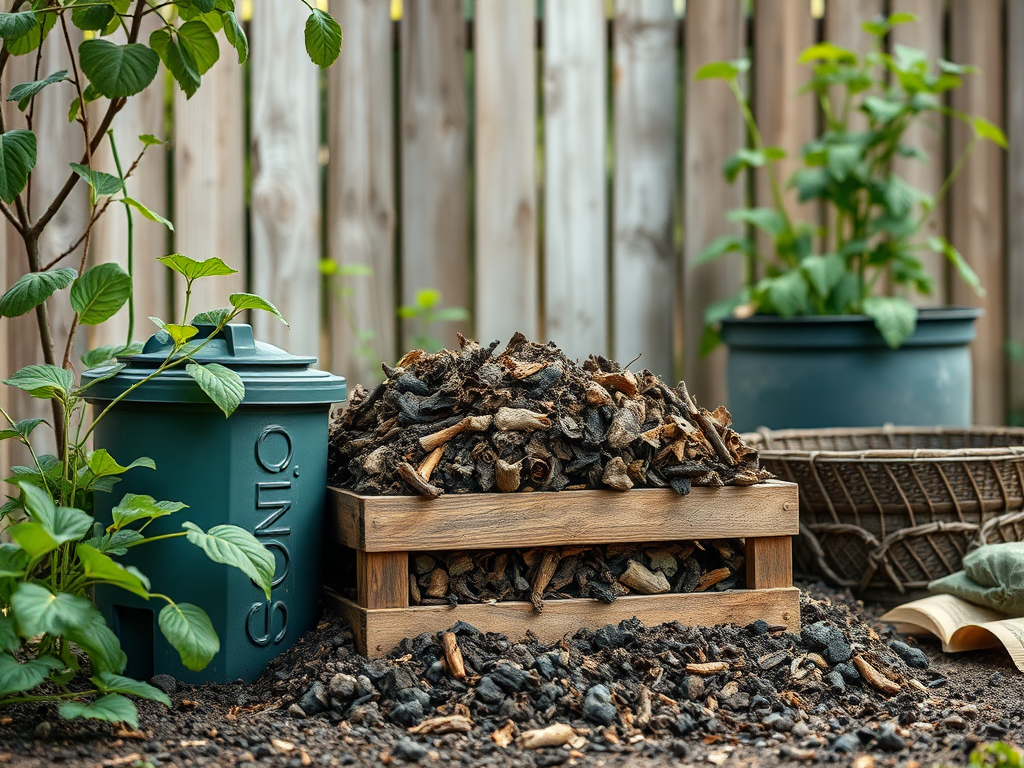
Successful composting at home involves following essential steps such as selecting the right materials, maintaining proper moisture levels, and turning the compost regularly. Start by choosing a mix of green materials (like kitchen scraps) and brown materials (like dried leaves). Ensure the compost is kept moist but not soggy, and turn it every few weeks to aerate and speed up the decomposition process. These practices lead to nutrient-rich compost that benefits your garden.
Choosing the Right Materials for Composting
To create successful compost at home, it’s vital to select the appropriate materials. Composting materials are categorized into two types: greens and browns. Greens include nitrogen-rich items such as vegetable scraps, coffee grounds, and grass clippings, while browns consist of carbon-rich materials like dried leaves, cardboard, and straw. A balanced mix of these materials is essential for effective decomposition.

When layering your compost, aim for a ratio of approximately 2:1 browns to greens. This ratio helps to maintain the right balance of nutrients and promotes microbial activity, which is crucial for breaking down organic matter. Avoid using meat, dairy, and oily foods as they can attract pests and create odors. Instead, focus on plant-based materials to ensure a healthy composting process.
Maintaining Moisture and Aeration
Moisture plays a critical role in the composting process. The ideal moisture level should be similar to a damp sponge—not too wet and not too dry. To maintain this balance, monitor your compost regularly. If it appears dry, add water or moist materials like fresh grass clippings. Conversely, if it’s too wet, incorporate more browns to help absorb excess moisture.
Aeration is equally important as it allows oxygen to reach the microorganisms responsible for decomposition. Turning your compost pile every few weeks helps to aerate it and speeds up the breakdown of materials. You can use a pitchfork or compost aerator to mix the contents, ensuring air is distributed evenly. This process not only enhances decomposition but also helps to prevent unpleasant odors.
Turning and Monitoring the Compost
Turning your compost is a key aspect of successful composting at home. Regularly turning the pile helps to mix the materials, aerate the compost, and distribute moisture evenly. Aim to turn your compost every 2-4 weeks, depending on the size of the pile and the speed of decomposition. The more frequently you turn it, the faster you will produce compost.
Monitoring the temperature of your compost can also provide insights into its progress. A well-maintained compost pile can reach temperatures between 130°F to 160°F (54°C to 71°C), which indicates that the microbes are actively breaking down materials. If the temperature drops, it might be time to turn the pile or add more nitrogen-rich greens. Keep an eye on the smell as well; a healthy compost should have an earthy scent rather than a foul odor.
Common Mistakes to Avoid
Even with the right approach, common mistakes can hinder your composting efforts. One frequent error is not achieving the correct carbon-to-nitrogen ratio. If your compost is too rich in greens, it may become smelly and slimy. Conversely, a compost pile that is too high in browns may take longer to decompose. Always strive for a balanced mix.
Another common mistake is neglecting to turn the compost regularly. Without aeration, the compost can become compacted, leading to slow decomposition and unpleasant odors. Additionally, overloading the compost with large chunks of materials can impede airflow. Instead, chop or shred larger items before adding them to the compost to facilitate faster breakdown.
Frequently Asked Questions
What materials should I avoid in my compost?
Avoid adding meat, dairy, oils, and processed foods, as they can attract pests and create odors.
How often should I turn my compost?
Turn your compost every 2-4 weeks to maintain aeration and speed up decomposition.
What is the ideal moisture level for compost?
The moisture level should be similar to a damp sponge—not too wet and not too dry.
How long does it take to create compost?
Composting can take anywhere from 3 months to a year, depending on factors like material type, temperature, and maintenance.
Can I compost yard waste?
Yes, yard waste such as leaves, grass clippings, and small branches are excellent for composting.
Conclusion
Successful composting at home involves careful selection of materials, maintaining appropriate moisture and aeration, and regular monitoring and turning of the compost pile. By avoiding common mistakes and following these essential steps, you can create nutrient-rich compost that greatly benefits your garden. Start your composting journey today and contribute to a more sustainable lifestyle.
Further Reading
Authoritative Sources
- EPA Safe Pest Control
epa.govOfficial information for safer pest-management decisions.
- USDA NRCS Soil Resources
nrcs.usda.govOfficial soil health, conservation, and water-management information.
- USDA National Agricultural Library
nal.usda.govAgricultural and plant-science research resources.
- Cooperative Extension Gardening Resources
extension.orgResearch-based gardening, soil, plant-care, and home-growing education.