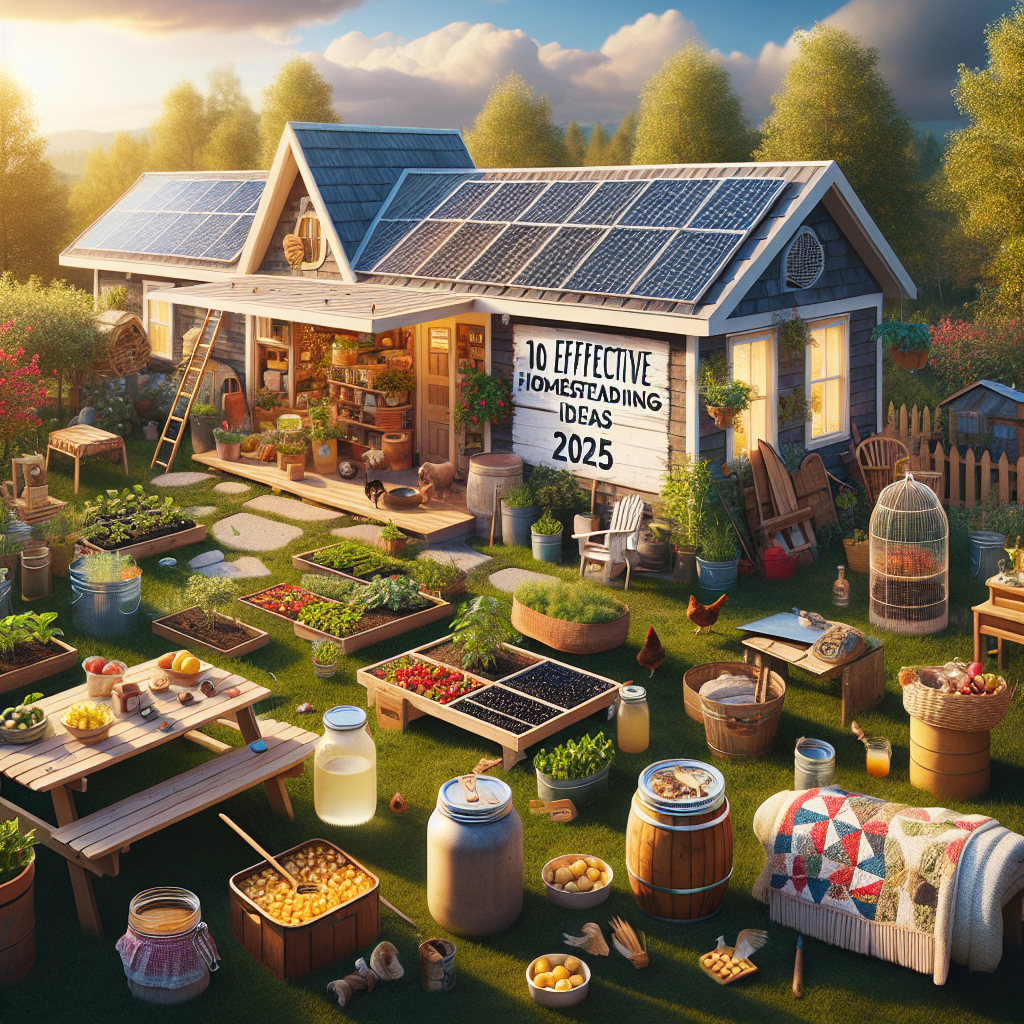
- Simplify Your Homestead Essentials
- Embrace Sustainable Gardening Practices
- Raising Livestock Made Easy
- Food Preservation Techniques
- Renewable Energy Options
- Water Conservation Strategies
- Homestead Automation
- Join or Build a Homesteading Community
- Continuous Learning & Skill Development
- Mindful Homestead Living
1. Simplify Your Homestead Essentials
Focus on Minimalism
In 2025, embracing minimalism is essential for successful simple homestead living. Removing excess tools, supplies, and decorations helps you focus on what truly mattersâself-sufficiency and peace. Start by decluttering your existing setup, keeping only essential equipment that you regularly use. This reduces maintenance efforts and saves you money in the long run.

For example, choose multipurpose tools instead of specialized ones to cut down on clutter. A good-quality garden fork can serve multiple functions, replacing several single-use tools. Minimalism also extends to daily routines, encouraging you to prioritize activities that support your homesteading goals without unnecessary distractions.
By simplifying, you’ll find it easier to maintain your homestead, reduce stress, and create a more sustainable lifestyle. In 2025, more homesteaders are realizing that less truly is more.
Prioritize Needs Over Wants
In a world inundated with options, focusing on necessities is crucial in simple homestead living. Ask yourself, what do I genuinely need to sustain my family? Cutting down on non-essential items allows you to allocate resources more efficiently. For instance, instead of buying every new gardening gadget, invest in durable, quality tools that last for years.
This mindset also guides land use decisions: allocate space for crops, animals, and infrastructure that meet your primary needs rather than aesthetic or luxury purposes. Itâs about creating a functional, manageable homestead tailored to your specific climate, soil, and family requirements.
In 2025, many successful homesteaders have shifted towards necessity-focused planning, resulting in lower costs and increased resilience.
2. Embrace Sustainable Gardening Practices
Use Organic Methods
Organic gardening remains a cornerstone of simple homestead living in 2025. Avoid chemical pesticides and fertilizers, opting instead for composting, crop rotation, and natural pest control. Organic methods improve soil health and yield better, tastier produce over time.
For example, planting marigolds around vegetable beds naturally deters pests, reducing the need for chemical treatments. Composting kitchen scraps and yard waste not only enriches your soil but also reduces waste sent to landfills, contributing to overall sustainability.
Research indicates that organic gardening can lead to a 20-30% increase in soil fertility after several seasons, which benefits your homestead in the long run.
Utilize Permaculture Principles
Permaculture design emphasizes working with nature to create resilient, self-sustaining ecosystems. Incorporate key principles like zoning, perennial planting, and water catchment. For example, planting perennial vegetables reduces the need for annual replanting and soil disturbance.
Design your garden layout to maximize sunlight and natural windbreaks, reducing energy needs. By observing natural patterns, you can reduce inputs and maintenance while boosting productivity.
Many homesteaders in 2025 are adopting permaculture to create low-maintenance, productive landscapes that support simple homestead living.
3. Raising Livestock Made Easy
Choose Low-Maintenance Animals
Selecting animals that require minimal care is a smart move for simple homestead living. Chickens, for example, are great for eggs and pest control with relatively low upkeep. Similarly, goats can provide milk and weed control without complex shelter needs.
Research shows that certain breeds are more suited for small-scale, low-input setups. Look for hardy breeds that thrive in your climate with minimal supplemental feeding or medical care.
Start small and expand as you gain experience. This way, raising livestock becomes a sustainable, rewarding part of your homestead routine, not an overwhelming chore.
Implement Eco-Friendly Animal Care
Use sustainable practices like rotational grazing to prevent overgrazing and maintain healthy pastures. Compost animal manure to create effective fertilizers instead of relying on synthetic options. This improves soil health and reduces waste.
Design your animal housing to maximize natural ventilation and insulation, lowering heating and cooling costs. Use locally sourced or recycled materials for building structures to enhance your eco-friendly approach.
Adopting these methods can save money, benefit the environment, and ensure your animals are happy and healthy, aligning perfectly with simple homestead living principles in 2025.
4. Food Preservation Techniques
Master Canning and Freezing
In 2025, effective food preservation is vital to maintaining a year-round supply of homegrown produce. Canning, whether by water bath or pressure, allows you to store fruits, vegetables, and even meats safely.
Freezing technology has advanced, making it easier to preserve larger quantities with minimal quality loss. Using vacuum-sealing methods, you can extend freezer life and prevent freezer burn.
Invest in quality jars, lids, and freezer supplies. Developing these skills can save money and reduce reliance on store-bought, processed foods, making your homestead more self-sufficient.
Fermentation and Drying
Fermentation not only preserves food but can also enhance nutrition and flavor. Think kimchi, sauerkraut, or fermented beveragesâthese are simple to make and support gut health.
Dehydrating herbs, fruits, and vegetables is another low-tech preservation method that requires minimal investment and energy. Solar dehydrators are gaining popularity among homesteaders for their efficiency.
By incorporating these preservation techniques, you can enjoy fresh-tasting, chemical-free foods year-round, key for simple homestead living in 2025.
5. Renewable Energy Options
Solar Power for Homesteads
In 2025, solar energy remains the most accessible renewable power source for homesteaders. Installing solar panels reduces electricity bills and lowers environmental impact.
Modern solar technology is more efficient and affordable. Consider investing in off-grid systems or grid-tied setups with battery storage for energy independence.
Many options are scalableâstart small with a dedicated system for your essential needs and expand as your homestead grows.
Wind and Micro-Hydro Technologies
If your property has consistent wind or nearby streams, small wind turbines or micro-hydro systems can supplement your energy supply. These options are more site-specific but often provide sustainable power 24/7.
Properly assessing your land’s resources can qualify you for grants or incentives in 2025, making renewable energy upgrades more affordable.
Integrating these systems maximizes independence and reduces reliance on the grid, resonating with the principles of simple homestead living.
6. Water Conservation Strategies
Implement Rainwater Harvesting
Collecting rainwater is a proven method to reduce dependence on municipal water supplies. In 2025, innovative storage solutions make harvesting easier and more efficient than ever.
Install gutters, downspouts, and storage tanks to capture seasonal rain. Purify and filter rainwater for household use or irrigation, depending on local regulations.
This sustainable approach conserves water and lowers utility bills, a perfect fit for simple homestead living.
Use Water-Efficient Appliances & Techniques
Incorporate low-flow showerheads, dual-flush toilets, and drip irrigation to reduce water usage. Practice watering gardens early in the morning or late in the evening to minimize evaporation.
Mulching around plants also helps retain soil moisture, reducing the need for frequent watering. These small adjustments add up to significant water savings over time.
Sustainable water management is foundational in keeping your homestead resilient and eco-friendly in 2025.
7. Simple Automation
Automate Basic Tasks
Technology in 2025 makes automation accessible and simple. Automate watering systems, lighting, or even feeding schedules with affordable smart devices to save time and effort.
Use timers, sensors, and apps to monitor and control systems remotely, ensuring your homestead remains efficient without constant oversight.
This approach empowers you to focus on cultivation and animal care while maintaining a manageable routine.
Advantages of Automation
Automation improves consistency, reduces waste, and enhances sustainability. It also minimizes human error, making tasks more reliable and predictable.
Most importantly, it aligns with the principles of simple homestead living by creating a well-organized, low-stress environment that supports self-sufficiency in 2025.
Explore user-friendly, off-the-shelf solutions suited for small-scale operation to get started easily.
8. Join or Build a Homesteading Community
Share Resources and Knowledge
Networking with local homesteaders or online communities provides valuable support, shared tools, and knowledge exchange. In 2025, social media and forums make it easier than ever to connect with like-minded individuals.
Organize coop projects, seed exchanges, or skill-sharing workshops. These activities boost efficiency and morale, making simple homestead living more enjoyable and sustainable.
Having a network can help you troubleshoot problems faster and stay motivated on your journey toward self-sufficiency.
Community Resources and Barter Systems
Bartering goods and services cuts costs and fosters stronger local ties. For example, exchange extra eggs for homemade bread or shares of harvested produce.
Community-supported agriculture programs and local markets also promote sustainable economics. Joining such initiatives ties directly into the ethos of simple homestead living.
This collective approach enhances resilience and provides a safety net, especially during tough economic times in 2025.
9. Continuous Learning & Skill Development
Master Key Homesteading Skills
Constant learning is vital for thriving in simple homestead living. Focus on skills like gardening, animal husbandry, food preservation, and DIY repairs.
Utilize online courses, workshops, and books to keep up with the latest sustainable practices. In 2025, knowledge-sharing platforms are more accessible and comprehensive than ever.
Building competency in these areas reduces dependence on external supplies, making your homestead more self-sufficient and resilient.
Adapt to New Technologies and Trends
Stay informed about emerging tools, renewable energy solutions, and sustainable techniques. Experiment with innovations that fit your homestead lifestyle, always seeking improvements that save time and resources.
This adaptable mindset ensures you remain aligned with the best practices of simple homestead living in 2025.
Invest in education and skill development as ongoing priorities for long-term success.
10. Mindful Homestead Living
Focus on Well-Being and Sustainability
Living simply isn’t just about the practical; it’s about creating a fulfilling, balanced lifestyle. Practice mindfulness in your daily routines, appreciating natural cycles and your connection to the land.
In 2025, integrating meditation, journaling, or nature walks into your homestead routine enhances emotional well-being and fosters gratitude.
This holistic approach supports the core values of simple homestead living: sustainability, self-awareness, and harmony with nature.
Reduce Environmental Impact
Make intentional choicesâuse eco-friendly products, reduce waste, and simplify consumptionâto lessen your ecological footprint. Regularly assess your practices and adapt for greater sustainability.
A mindful approach enriches your homestead experience and ensures it remains viable for future generations.
By living consciously, you embody the true spirit of simple homestead living in 2025.
Frequently Asked Questions
1. What exactly is simple homestead living in 2025?
Simple homestead living in 2025 emphasizes sustainability, self-sufficiency, minimalism, and mindful use of resources to create a more resilient and fulfilling lifestyle away from modern consumerism.
2. How can I start simplifying my homestead today?
Begin by decluttering, prioritizing needs, learning basic skills, and embracing sustainable practices like organic gardening and rainwater harvesting. Small consistent steps lead to big changes.
3. What are the best renewable energy options for my homestead?
In 2025, solar power remains the most adaptable, with wind and micro-hydro systems suitable for specific locations. Combining these options can maximize energy independence.
4. How important is community support in simple homestead living?
Community support provides resource sharing, knowledge exchange, and emotional encouragement, making your homestead journey more effective and enjoyable.
5. Can I fully rely on a minimalist approach for a sustainable homestead?
Yes, focusing on essentials reduces complexity and costs while promoting sustainability. However, it requires ongoing assessment to adapt as needs change.
Conclusion
Practicing simple homestead living in 2025 is about streamlining your life, working harmoniously with nature, and creating a resilient, fulfilling lifestyle. These ten tips serve as a practical, inspiring guide to help you on your journey. Whether youâre just starting or refining your homestead, embracing sustainability, self-reliance, and mindfulness will ensure a prosperous and joyful experience. Remember, simplicity is the key to thriving in todayâs world, so make deliberate choices that support your ideals and well-being. Happy homesteading!