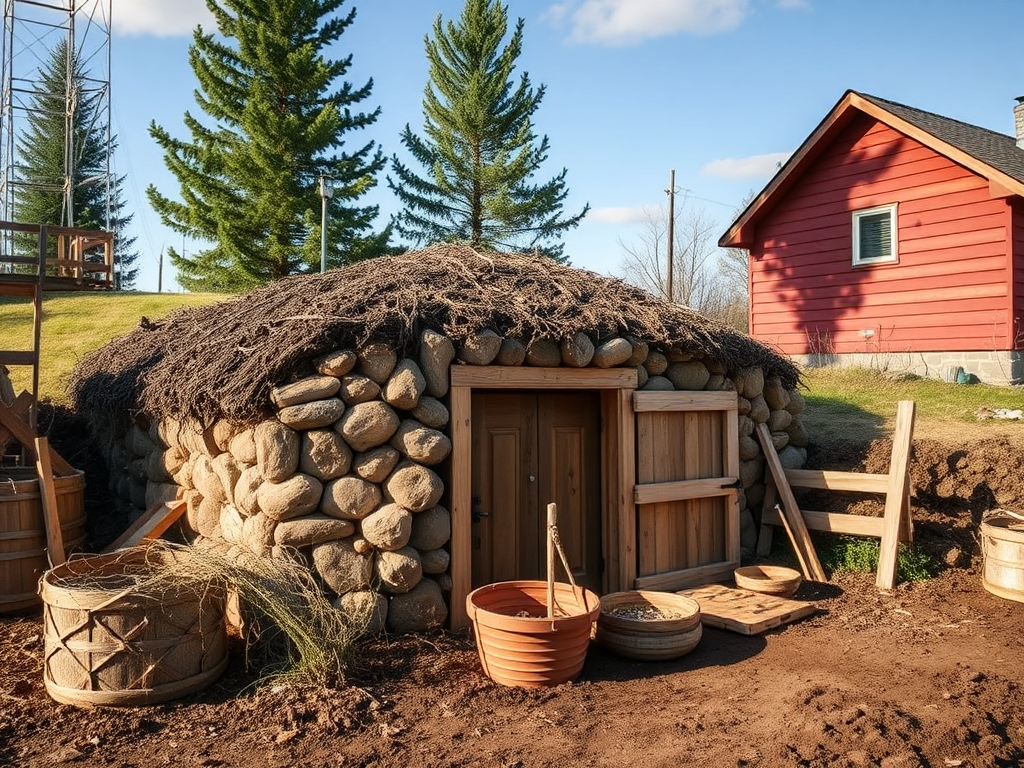
Key considerations for building a root cellar include selecting an appropriate location, understanding temperature and humidity control, and ensuring proper ventilation. These factors are crucial for creating an environment that preserves vegetables and fruits effectively. A well-built root cellar minimizes spoilage, extends storage life, and reduces food waste, making it an invaluable asset for homesteaders. Prioritizing these elements will help achieve optimal results in food preservation.
Choosing the Right Location
Choosing the right location for your root cellar is critical to its effectiveness. Ideally, it should be situated in a shaded area, away from direct sunlight, to maintain cooler temperatures. Look for a spot that is naturally insulated by the surrounding earth. A hillside or a basement are often ideal locations, as they can leverage the earth’s natural cooling properties.
One common mistake is placing a root cellar in a low-lying area prone to flooding. This can lead to water damage and spoilage of stored produce. Be sure to assess drainage in the area to avoid this issue. Additionally, ensure that the location is easily accessible throughout the year, especially during winter months when snow and ice can create barriers.
Understanding Temperature and Humidity Control
Temperature and humidity are key factors in the successful preservation of food in a root cellar. Most root vegetables, such as carrots and potatoes, thrive in temperatures between 32°F and 40°F (0°C to 4°C) with a humidity level of around 90%. If the temperature is too high, produce can rot; if too low, it may freeze.
To achieve the right conditions, consider insulating the walls and ceiling of your root cellar. Materials such as straw bales or foam insulation can help maintain stable temperatures. Additionally, incorporating a thermometer and hygrometer will allow you to monitor conditions and adjust as necessary. A common error is neglecting these measurements, leading to unfavorable storage conditions.
Design Features for Optimal Functionality
The design of your root cellar should enhance its functionality. Ensure that shelves are adjustable and made from materials that resist moisture, like untreated wood or metal. Having multiple levels of shelving can maximize storage space while allowing for easy access to stored items.
Consider incorporating a dirt floor, as this can help regulate temperature and humidity levels. Some homesteaders also choose to include a small entryway or airlock to minimize temperature fluctuations when accessing the cellar. A common pitfall is overcomplicating the design; simplicity often leads to better functionality.
Ventilation and Airflow Management
Proper ventilation is essential for preventing mold and ensuring that air circulates within the root cellar. Install vents that allow for airflow without letting in too much heat or moisture. A simple system can include two vents: one for intake and one for exhaust, positioned diagonally across from each other.
It’s important to regularly check for blockages in the vents that could disrupt airflow. A common misconception is that root cellars do not need ventilation; however, without it, stored produce can spoil quickly, leading to wasted food. Regular maintenance of the ventilation system is crucial to long-term success.

Frequently Asked Questions
What is the ideal temperature for a root cellar?
The ideal temperature for a root cellar is between 32°F and 40°F (0°C to 4°C).
How can I prevent moisture buildup in my root cellar?
Install proper ventilation systems and monitor humidity levels with a hygrometer.
Can I store fruits and vegetables together in a root cellar?
It's best to store them separately, as some fruits emit ethylene gas, which can accelerate spoilage of vegetables.
What materials are best for building a root cellar?
Natural materials like stone or earth are ideal, along with moisture-resistant shelving.
How often should I check my root cellar?
Check your root cellar regularly, at least once a week, to monitor temperature, humidity, and the condition of stored produce.
Conclusion
Building a root cellar requires careful consideration of location, temperature and humidity control, design features, and ventilation. Prioritizing these elements will ensure that your root cellar effectively preserves food, minimizes spoilage, and enhances your homesteading efforts. Start by assessing your environment and plan your design to meet the needs of the crops you wish to store. With the right approach, your root cellar can become a valuable asset for sustainable living.