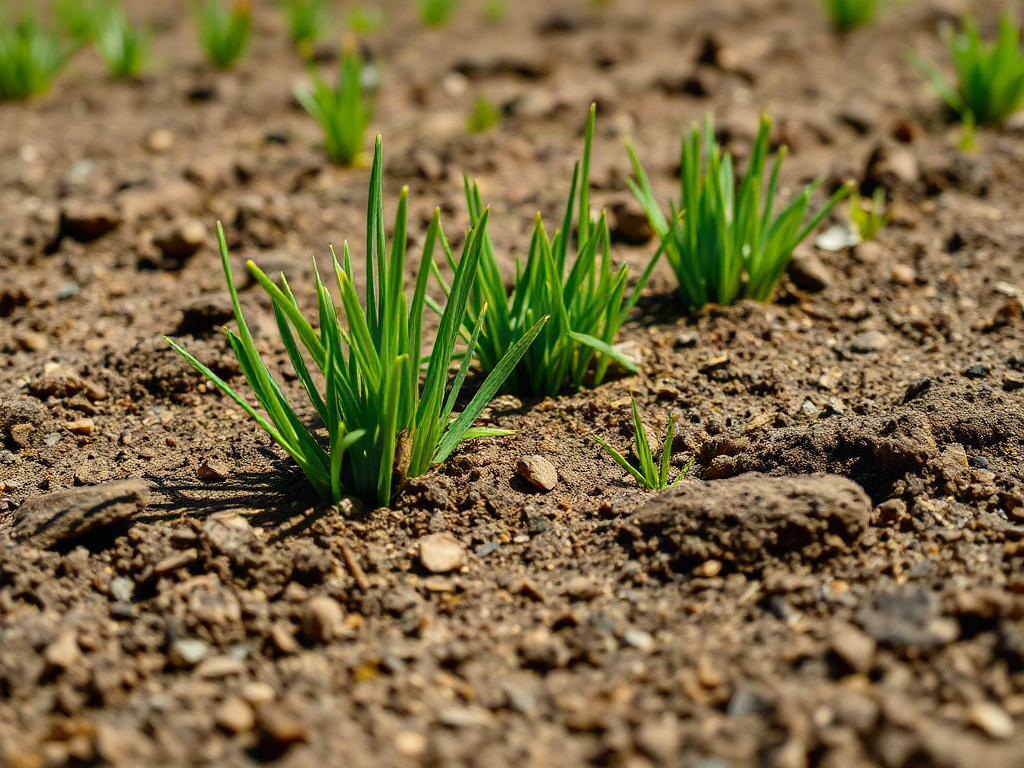
Selecting grass seed for bare homestead soil means matching the seed blend to your climate, sunlight, soil drainage, and intended use before buying. Cool-season grasses such as tall fescue suit many areas with cold winters, while warm-season grasses such as bermudagrass fit hot regions with longer growing seasons; regional blends can balance resilience and appearance. Test or observe the soil first, remove perennial weeds, loosen only compacted areas, and provide seed-to-soil contact without burying seed deeply. A cheap lawn blend may fail on droughty, shaded, or heavily used ground, so choose for site stress rather than the picture on the package.
Read the Bare Site Before Choosing Seed
Bare ground is not a single growing condition. A recently cleared paddock, a compacted driveway edge, a washed-out slope, and a shaded area beneath trees may all look brown while presenting very different challenges to grass seed. The first useful decision is to inspect the site rather than select a bag based only on color, price, or a familiar name.

Record how many hours of direct sun the area receives, whether water stands after rain, and how quickly the surface dries. Push a spade into several places. If the blade stops at a hard layer, roots may struggle even when germination is good. Rub a little moist soil between your fingers: gritty soil drains quickly, sticky soil may hold water, and pale, lifeless fill may contain little organic matter. A soil test can clarify pH and nutrient issues, but it cannot replace observing drainage and traffic.
Use the intended function to narrow the choice. Grass beside a barn may need tolerance for hooves and repeated disturbance; a lawn near the house may need a finer appearance; a slope may need quick cover and dependable rooting. Selecting grass seed for bare homestead soil becomes more precise when the question changes from “Which seed is best?” to “Which grass can survive this exact exposure and use?”
A common mistake is treating seed failure as a seed-quality problem when the actual cause is standing water, buried seed, aggressive weeds, or foot traffic. Correcting the site constraint usually matters more than switching between two similar varieties.
Match Grass Types to Climate and Use
Grass species are broadly divided into cool-season and warm-season types, and that distinction should guide the first purchase. Cool-season grasses generally grow most actively during cooler spring and fall weather. Tall fescue is often considered for areas needing deeper rooting and some drought tolerance, while Kentucky bluegrass can produce a dense lawn when moisture and establishment time are adequate. Perennial ryegrass germinates relatively quickly but may be less suitable as the only choice where long, severe heat or drought is expected.
Warm-season grasses grow most strongly during warm weather and may enter dormancy when temperatures fall. Bermudagrass can suit sunny, hot sites and recover from wear, but it is a poor fit for cold climates and usually performs badly in shade. Zoysiagrass may offer a dense surface in appropriate regions, although establishment can be slower. Local extension recommendations and seed labels are more useful than a national “all-purpose” claim because regional adaptation affects winter survival, summer growth, and maintenance.
Blends and mixtures can be practical, but they are not automatically superior. A blend combines varieties of one species, while a mixture combines different species. A mixture may spread risk across variable light or soil conditions, yet one aggressive grass can eventually dominate. For a sunny high-traffic lane, a durable regional blend may be sensible; for deep shade, a shade-tolerant mix may be preferable, though no grass performs well under dense canopy without enough light and moisture.
- Cold winters and moderate summers: investigate locally recommended cool-season grasses.
- Hot summers and mild winters: compare warm-season options suited to full sun.
- Mixed light or variable soil: consider a compatible regional mixture.
- Livestock or vehicle traffic: prioritize recovery and rooting over fine texture.
The package label should show species, varieties, germination information, weed-seed content, and the proportion of inert material. A decorative lawn mix is not necessarily appropriate for a working homestead. Selecting grass seed for bare homestead soil requires accepting tradeoffs: fast emergence may not equal long-term persistence, and a tough grass may look coarser than a premium turf variety.
Prepare Poor Ground for Reliable Germination
Seed needs contact with moist soil, oxygen, and suitable temperature. Preparation should create those conditions without turning the site into loose dust that crusts after rain. Remove perennial weeds before sowing, especially plants that can regrow from crowns or roots. On a small area, hand removal is feasible; on larger ground, repeated shallow cultivation or an appropriate weed-management approach may be needed. Avoid burying viable weed roots under a thin layer and assuming the problem has disappeared.
Compaction deserves attention because grass roots need pores through which air and water can move. Loosen only the compacted layer when possible, then rake the surface level. Incorporate finished compost carefully if the soil is very poor, but do not spread a deep blanket that leaves seed sitting above the mineral soil. Fresh manure is not a shortcut: it can contain weed seeds, be too strong for young seedlings, and create an uneven seedbed.
Slopes need a different approach from level ground. Heavy tillage can make erosion worse, and a hard rain may move both soil and seed downhill. On a modest slope, work across the grade, firm the surface, and use clean straw or another suitable erosion-control cover lightly. Steep or highly erodible ground may need a temporary cover crop, erosion-control blanket, or local conservation advice before permanent turf is attempted.
Do not apply lime or fertilizer simply because the land is bare. Lime changes acidity gradually and is useful only when a soil test supports it. Excess fertilizer can wash into waterways, encourage weak top growth, or feed weeds faster than grass. A practical sequence is to test when uncertainty is high, correct obvious compaction, establish a smooth seedbed, and then follow the selected seed’s label for nutrients.
The failure mode to watch for is a perfectly raked surface that is too fluffy. Seed settles into air pockets, dries at the roots, and washes away. A lightly firmed bed gives seed a stable contact layer while still allowing shallow root penetration.
Sow, Water, and Judge Establishment
Good sowing is shallow and even. Broadcast half the seed in one direction and the remainder at a right angle to reduce skips, particularly on a hand-seeded homestead patch. Rake gently so most seed is covered only by a thin layer of soil, then press or roll the surface enough to improve contact. Deeply buried grass seed may remain moist yet fail to emerge because the young shoot cannot reach light.
Watering should keep the upper seedbed consistently damp, not saturated. Short, gentle applications are safer than a heavy spray that creates channels and gathers seed in low spots. As seedlings appear, gradually shift toward deeper, less frequent watering when the species and weather allow. The surface should not be allowed to form a hard crust between irrigations. Wind, full sun, sandy soil, and exposed slopes can increase drying speed.

Timing is species-specific. Cool-season seed is commonly sown when soil and air conditions favor active growth in the cooler part of the year; warm-season seed needs dependable warmth. The best calendar date varies by region, elevation, and weather, so a local university extension calendar or seed label is more reliable than a fixed national date. Sowing just before a forecast of torrential rain is risky even if the season is otherwise suitable.
Judge progress by uniform emergence and root anchoring, not by a green haze alone. Gently tug a few seedlings after they have developed leaves; rooted plants should resist slight pressure. Thin strips often indicate uneven spreading, poor seed contact, runoff, birds, or a dry patch. A bare area that remains wet may need drainage correction rather than additional seed. Selecting grass seed for bare homestead soil also includes deciding when not to reseed: wait until the cause of failure is corrected.
Keep animals and unnecessary traffic off the area while seedlings are vulnerable. Mowing, if appropriate for the species, should begin only after plants have enough height and anchoring to tolerate it. Cutting too early can pull seedlings out; waiting too long can create rank, weak growth. Follow the label and observe whether the grass is rooting rather than relying on a rigid schedule.
Avoid Seed-Buying Mistakes That Waste a Season
The lowest-priced bag can be expensive when its blend is poorly matched to the site. Compare the percentage of desired seed with inert matter and examine the species list instead of judging by total weight. A bag labeled for sun will not solve shade, and a drought-tolerant claim does not mean a seedling can establish without moisture. Drought resilience usually depends on rooting, soil depth, and later management as well as genetics.
Buying one species for an entire property is another weak assumption. A sunny orchard lane, a damp low spot, and a shaded yard may deserve separate solutions—or a non-grass groundcover in the most difficult location. Grass under dense trees often loses to shade, root competition, and dry soil. In that setting, reducing the area, pruning selectively where appropriate, or using a different planting may be more realistic than repeatedly adding seed.
Budget decisions should account for rework. Spend first on a suitable seed label, soil preparation, and water access. Fancy coatings or colorants may improve handling, but they do not correct compaction or poor adaptation. Large homestead areas may be better established in manageable sections, allowing you to learn how a blend performs before purchasing enough for every bare patch.
Use this short buying check before opening the bag:
- Confirm the species fit the local season and winter conditions.
- Match the blend to sunlight, drainage, slope, and traffic.
- Check the label for desired seed content and regional recommendations.
- Set a realistic watering and protection plan for the first establishment period.
- Reserve extra seed for repair only after identifying why a patch failed.
Healthy establishment is not necessarily a perfectly uniform lawn. A working homestead may reasonably favor durable cover, erosion control, and reduced inputs over a single fine-textured species. That choice can lower mowing and reseeding demands, although it may produce a less formal appearance.
Frequently Asked Questions
Should bare homestead ground use a grass blend or one species?
A blend is useful when several compatible varieties address the same climate and use. One species may be simpler on a uniform site, but mixed light, soil, or traffic often justifies a carefully selected regional mixture.
Can grass seed grow in compacted soil?
It may germinate, but roots often remain shallow and seedlings dry or die under traffic. Loosen the compacted layer, level it, and firm the finished seedbed lightly before sowing.
How deeply should grass seed be planted?
Grass seed is generally placed very shallowly. Rake it into the surface and cover it lightly; deep burial is a common reason for weak or missing emergence.
Is straw helpful after seeding?
A light, clean layer can reduce erosion and surface drying, especially on exposed ground. Thick coverage can block light, hold excessive moisture, or introduce weed seed.
What should be done when only some areas germinate?
Compare the failed spots for runoff, shade, crusting, compaction, weeds, and watering coverage. Correct that local condition before reseeding instead of spreading more seed over the same failed surface.
Conclusion
Choose grass seed for the conditions the site will actually provide: seasonal temperature, sunlight, drainage, soil structure, and traffic. A suitable species or regional mixture still needs a weed-free, lightly firmed seedbed, shallow placement, steady moisture, and protection from early disturbance. Prioritize correction of compaction and runoff before increasing the seeding rate, and treat shade or standing water as design problems rather than faults that more seed can hide. Start with a manageable test area if the property has several soil types or exposures. Watch for even emergence and rooted seedlings, then adjust watering and management as the grass develops. A durable homestead surface may look less uniform than ornamental turf, but it can be the better result when it survives local stress with fewer repairs.