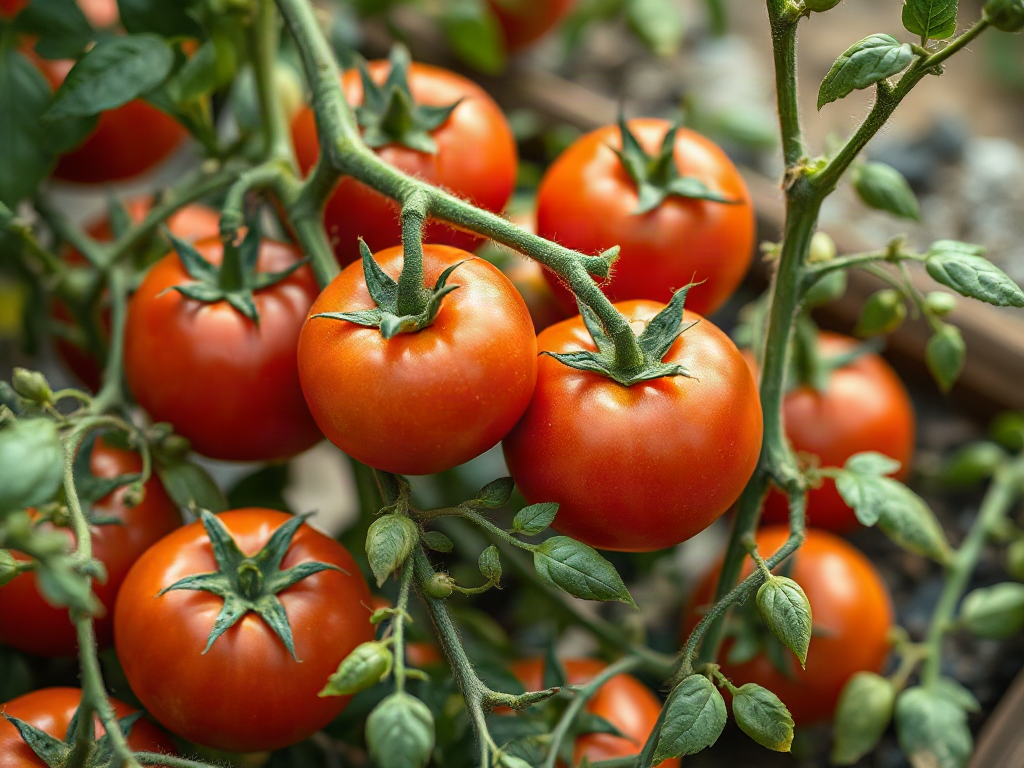
Tomato growing choices for a productive homestead should match your climate, available space, preservation plans, and willingness to provide support and daily care. Choose at least one dependable disease-resistant hybrid for reliable production, then add open-pollinated or heirloom varieties for flavor and seed saving. Determinate plants suit containers, short seasons, and concentrated harvests, while indeterminate plants offer a longer supply but require sturdy trellising, pruning decisions, and more frequent picking. Productive results depend on warm soil, consistent moisture, airflow, deep root development, and realistic spacing; crowding plants or watering them unevenly often causes cracking, blossom-end rot, and disease pressure.
Match Tomato Types to Homestead Goals
The most productive tomato selection is not necessarily the variety with the largest fruit or the longest catalog description. It is the plant that fits the homestead’s growing season, available structure, kitchen use, and tolerance for maintenance. A household that wants fresh slicers from July through September needs a different mix from one that wants a large canning harvest over two weeks.

Begin by separating tomatoes into growth habit and use. Determinate varieties usually remain more compact and set much of their crop within a relatively concentrated period. They are useful for raised beds with limited vertical space, containers, and preservation days when a predictable flush is helpful. Indeterminate varieties continue producing along an expanding vine when warmth and plant health permit. They can supply fresh fruit over a longer period, but the vines need substantial support and regular attention.
Fruit type matters just as much. Paste tomatoes such as Roma types have meaty flesh and fewer cavities, making them practical for sauce, drying, and salsa. Cherry and salad tomatoes often begin producing earlier and may keep a household supplied when larger varieties are still slow. Large slicers provide the familiar sandwich tomato but can be slower to ripen and more prone to cracking or misshapen fruit under stressful conditions. A balanced planting might include one dependable cherry, two slicers, and one paste type rather than filling the entire bed with a single favorite.
Heirlooms and open-pollinated tomatoes offer distinctive flavor, unusual colors, and the possibility of saving seed, but they may have less uniform growth or weaker disease resistance than selected hybrids. Hybrids are not genetically modified by default; they are crosses made to combine chosen traits. A hybrid can be a sensible insurance crop, while an heirloom can serve flavor and seed-saving goals. The common mistake is treating this as an either-or debate. A productive homestead benefits from diversity, because one variety may struggle with weather or disease while another continues setting fruit.
Use the same practical lens when considering Tomato growing choices for a productive homestead: select varieties for the jobs they must perform. Check days to maturity as an estimate rather than a promise, note disease-resistance letters on reputable seed packets, and avoid buying more plants than your support system and preservation capacity can handle.
Build a Reliable Growing System
Tomatoes need a warm, bright site with fertile soil that drains excess water while retaining enough moisture for steady root growth. Full sun is usually the first requirement to verify; a bed that receives morning shade or is crowded by taller crops may produce foliage without a strong fruit set. In cooler regions, a south-facing location, dark mulch, or a protected wall can help the soil warm, but these aids do not replace a suitable planting date.
Transplant timing should follow local frost conditions and soil temperature rather than a fixed calendar date. Young plants exposed to cold soil may pause for weeks, and frost can destroy tender stems. Harden seedlings gradually by exposing them to outdoor conditions over several days. Planting a leggy transplant deeply, with only the upper leaves above ground, can encourage additional roots along the buried stem. Do not bury graft unions if using grafted plants, because the desirable rootstock benefit may be lost.
Support is a design decision, not an afterthought. A cage, stake, trellis, or string system must carry a mature plant loaded with wet fruit. Lightweight decorative cages often bend or collapse, forcing stems onto damp soil. Indeterminate vines may work well on a tall, strong trellis; determinate plants can often use shorter cages. Pruning is also system-dependent. Removing every sucker can reduce leaf area and expose fruit to sunscald, while allowing a vigorous vine to become a tangled mass can reduce airflow and make harvesting difficult. Follow the limits of your chosen support rather than pruning by habit.
Spacing affects the microclimate around the leaves. Plants set too closely remain wet after dew or rain, and dense foliage makes it harder to inspect stems, harvest ripe fruit, or identify disease early. Wider spacing may appear inefficient at planting time, but it can reduce the labor involved in tying, checking, and removing damaged leaves. Containers require particular caution: a small pot may support a plant initially but dry rapidly once the canopy expands. Choose a genuinely large container, a stable support, and a watering routine that fits your schedule.
A useful setup checklist includes:
- At least six hours of strong direct sun, with more often useful for heavy crops.
- Stable support installed before vines become difficult to handle.
- Organic matter incorporated without creating a waterlogged bed.
- Mulch applied after the soil has warmed, kept slightly away from the stem.
- Enough space to inspect both sides of each plant.
One weak assumption is that fertile soil alone guarantees a productive harvest. A well-fed plant in a shaded, crowded, poorly supported bed still performs badly. The growing system must make light, roots, water, and access work together.
Manage Water, Nutrition, and Plant Health
Consistent moisture is more useful than alternating drought and saturation. Tomato roots need water for cell expansion and nutrient movement, but saturated soil reduces oxygen around the roots and can encourage root problems. Deep watering at the soil surface is generally more dependable than frequent light splashes over the leaves. Drip irrigation, a soaker hose, or careful hand watering can keep foliage drier and make the amount applied easier to judge.
Mulch moderates evaporation and reduces soil splashing onto lower leaves. Straw, shredded leaves, or suitable compost-based materials can work when applied after the soil has warmed. Keep mulch from pressing against the stem, where persistent dampness may create a favorable environment for decay. If plants wilt repeatedly between waterings, inspect the root zone, container size, and irrigation coverage rather than simply adding fertilizer.
Tomatoes need nutrients, but excessive nitrogen can produce impressive foliage with disappointing fruit. A soil test is more useful than guessing from leaf color, particularly where compost or manure has been applied repeatedly. Balanced fertility, adequate phosphorus and potassium where soil tests indicate a need, and a steady supply of water support fruiting without forcing soft, overly vegetative growth. Homemade fertilizer recipes can create salt or nutrient imbalances when their contents are unknown.
Several common problems have misleading explanations. Blossom-end rot appears as a dark, sunken patch on the fruit and is associated with inconsistent calcium movement within the plant, often during uneven moisture conditions; adding calcium to already adequate soil is not always the answer. Cracking commonly follows rapid water uptake after dry conditions. Leaf spots may spread faster in crowded, wet foliage, while bacterial problems can move through contaminated tools, hands, or splashing water. Remove severely affected material, improve airflow, avoid working among wet plants, and rotate tomato-family crops when space permits.
Daily inspection is more valuable than occasional rescue spraying. Look beneath leaves, along stems, and around the soil line. A plant that is setting flowers but dropping them may be experiencing heat, cold, drought, or excessive nitrogen rather than a simple pollination failure. When using any labeled garden product, follow the product directions and harvest restrictions; organic status does not make careless application harmless.

Compare a low-input approach with an intensive one. A homestead relying mainly on mulch and hand watering may accept some cosmetic damage to reduce purchases and labor. A grower preserving large quantities may justify irrigation timers, stronger trellising, and disease-resistant varieties because those investments protect a harvest schedule. The correct choice is the one that prevents the most likely failure without creating a maintenance burden you will abandon.
Plan Harvests, Preservation, and Seed Saving
Harvest planning should begin before seeds are sown. Fresh eating requires staggered maturity, while sauce, drying, and canning often benefit from a concentrated crop. Planting every tomato on one date can create either a long gap or more ripe fruit than the kitchen can process. Use a mix of maturity windows, growth habits, and fruit sizes so the harvest arrives in manageable waves.
Pick tomatoes according to their destination. Fully colored fruit is ready for immediate eating, but fruit showing its mature color change can often finish ripening indoors away from direct sun. This can reduce losses from cracking, birds, or sudden weather, although fruit picked too early may never develop full flavor. Handle tomatoes gently and avoid piling soft ripe fruit deeply in a basket. Check stored fruit frequently because one damaged tomato can spoil neighboring produce.
Preservation choices should influence variety selection. Paste types generally require less cooking to reach a thick sauce, while juicy slicers can be excellent fresh but inefficient for sauce. Cherry tomatoes may be roasted, frozen, or dried in small batches when a household does not want a major processing day. Safe canning procedures should come from tested recipes and recognized food-preservation authorities rather than improvised changes to acidity, processing time, or ingredient proportions.
Seed saving works best with open-pollinated varieties and requires attention to accidental crossing. Tomatoes are often self-pollinating, but nearby varieties can still cross, especially under conditions that allow insect activity around flowers. Save seed from healthy, typical fruit rather than the first damaged or unusually small specimen. Fermentation is commonly used to separate seed from the gel, followed by thorough rinsing and drying before storage. Label the variety and year immediately; unlabeled seed quickly loses its value.
Record what happened during the season. Note the planting date, first ripe fruit, disease symptoms, flavor, cracking, yield pattern, and whether the support held. A variety that produced fewer but excellent tomatoes may deserve a place beside a heavier producer, while a prolific plant that overwhelmed your preserving time may need to be reduced. These records make future tomato choices more accurate than relying on catalog promises.
Prioritize next season’s changes in this order: correct the planting site, choose varieties suited to the climate and use, improve support, stabilize irrigation, then adjust fertility. Replacing fertilizer while leaving crowded plants in shade rarely addresses the main constraint.
Frequently Asked Questions
Are determinate or indeterminate tomatoes better for a homestead?
Determinate plants suit compact spaces and concentrated preserving, while indeterminate plants are useful when you want a longer fresh harvest and can provide strong support.
How many tomato varieties should a productive garden grow?
A small but varied selection is often more useful than many similar plants: combine a reliable slicer, a cherry type, and a paste tomato, then add an heirloom if space and care allow.
Why do tomatoes crack after rain?
Fruit can take up water quickly after a dry period, causing the skin to split. Mulch and more even irrigation may reduce sharp moisture swings.
Should tomato suckers always be removed?
No. Pruning should match the variety and support system. Removing some growth may improve access and airflow, but excessive pruning can reduce leaf cover and expose fruit to sunscald.
Can seeds be saved from hybrid tomatoes?
Seeds can be saved, but plants grown from hybrids may not resemble the parent reliably. Choose open-pollinated varieties when predictable seed-saving results are a priority.
Conclusion
Productive tomato growing begins with a useful match between plant, place, and purpose. Select varieties that fit your season and kitchen, combine dependable disease-resistant plants with flavorful open-pollinated choices, and decide whether concentrated or extended harvests better suit your household. Strong support, adequate spacing, warm soil, and even moisture usually matter more than adding another fertilizer product. Watch plants regularly so cracking, leaf disease, weak stems, or excessive foliage can be addressed before they consume the crop. At the end of the season, preserve what you can process safely and record which varieties earned their space. Those observations will make next year’s tomato growing decisions more efficient and better suited to the working reality of your homestead.