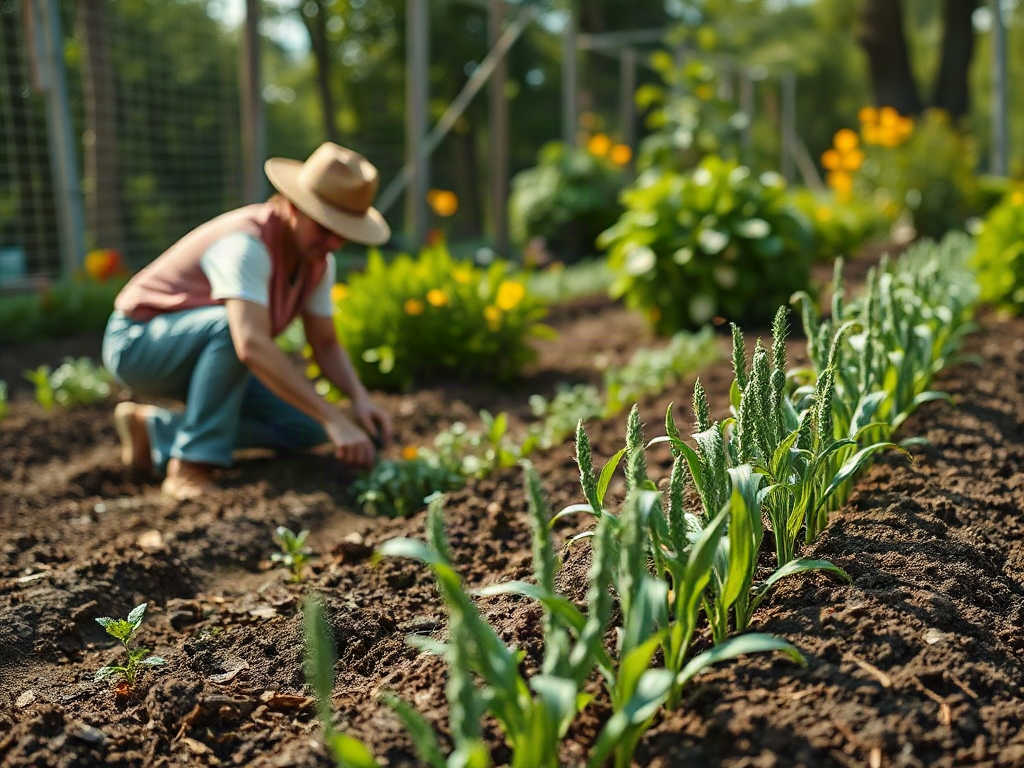
Permaculture farming principles beginners can apply include observing the site before changing it, slowing runoff, protecting soil, combining useful species, recycling organic material, and making small improvements based on feedback. Begin by mapping sunlight, drainage, wind, foot traffic, and existing plants through at least several weather events. Then test modest changes such as a mulched bed, a rain-fed tree basin, composting, or flowers near food plants rather than redesigning the entire property. Favor arrangements that reduce recurring labor, but watch for waterlogged roots, aggressive plants, pest habitat, and systems that require more maintenance than the household can sustain.
Observe the Property Before Making Permanent Changes
Site observation reveals where a low-effort design is possible and where an attractive idea will create recurring work. Sun exposure, frost pockets, seasonal drainage, wind, animal movement, utility lines, and convenient access all influence what can thrive. A sketch made after one sunny afternoon is not enough. Walk the property during rain, after rain, early in the morning, and late in the day. Repeat the exercise in more than one season whenever possible.
Record what actually happens rather than what a generalized property diagram says should happen. A south-facing area may receive little winter light because of evergreen trees. A seemingly dry corner may collect roof runoff during a storm. The spot closest to the kitchen may be ideal for frequently picked herbs, while a distant area may suit fruit or nut plants needing less frequent attention. Existing weeds can offer clues about disturbance, moisture, and compaction, although they should not be treated as a substitute for a soil test.
Beginners often rush to install permanent beds, ponds, fencing, or tree rows. Moving a container or annual bed is manageable; correcting a poorly placed tree, buried pipe, or large earthwork is expensive. Temporary markers, hoses, buckets, portable fencing, and one-season beds let a household test access and function first. For example, outline a proposed path with stakes and use it for several weeks. If everyone keeps cutting across a different route, the practical path is already visible.
A compact observation checklist keeps the process useful:
- Sun: Mark full-sun, partial-sun, and shaded areas at different times.
- Water: Note runoff direction, puddling, erosion, and fast-drying ground.
- Movement: Trace routes used for tools, livestock care, compost, and food collection.
- Exposure: Identify strong winds, reflected heat, frost pockets, and wildlife pressure.
- Existing assets: Locate established trees, usable biomass, sheds, gutters, and sheltered edges.
The aim is not to postpone every decision for a year. It is to distinguish reversible experiments from costly commitments. Readers comparing Permaculture farming principles beginners can apply should prioritize observation because every later method depends on local conditions rather than an idealized design.
Manage Water Where It Falls
Water should usually be slowed, spread, and directed into living soil before it leaves the property. Roof runoff, compacted paths, bare slopes, and overflowing troughs can become irrigation resources when their movement is understood. The appropriate method depends on rainfall intensity, slope, soil infiltration, building foundations, and what lies downhill. Water retention is not automatically beneficial in every location.
Start with low-risk measures. Mulch reduces surface evaporation and softens the impact of rain. Shallow basins around suitable trees can hold brief runoff long enough for infiltration. Rain barrels can capture roof water for nearby beds, provided they have secure covers, stable bases, and overflow directed away from structures. Paths can sometimes be shaped to shed water toward planted areas rather than concentrating it into an eroding channel.
Large swales, ponds, dams, and drainage alterations require more judgment. A contour ditch placed without accurate layout may send water toward a foundation, saturate a slope, or drown plants that need aerated root zones. Heavy clay accepts water more slowly than sandy ground, while already saturated land cannot absorb much additional runoff. Local rules may also govern water storage, excavation, wetlands, or changes to natural drainage. Beginners should use professional site-specific help before undertaking earthworks that could affect buildings, roads, neighbors, or unstable ground.
Consider a vegetable area below a shed roof. Sending the downspout straight into a bed may cause erosion during intense rain. A better trial could route the flow into a covered barrel with a controlled outlet, then discharge overflow through a level, mulched strip planted with moisture-tolerant species. After each storm, check whether water infiltrates within a reasonable period, mulch has moved, roots are exposed, or the area smells stagnant. Persistent standing water, collapsing bed edges, and runoff bypassing the intended route are failure signs.
Successful water management reduces emergency watering without creating chronic saturation. Compare soil moisture beneath mulch with uncovered ground, observe plant stress during dry weather, and inspect the system during the strongest safe-to-observe rain. The lesson is not to trap every drop; it is to give useful water a safe path through the property.
Keep Soil Covered and Organic Material Cycling
Living roots, mulch, and decomposing organic matter protect the soil surface while feeding biological processes below it. Bare ground loses moisture quickly, crusts under hard rain, and gives opportunistic weeds an open site. Repeated digging can also disrupt structure, especially when wet soil is worked. A beginner can improve conditions without trying to manufacture perfect soil immediately.
Use materials already available and safe for the intended area. Chopped leaves, clean straw, untreated wood chips, finished compost, and residue from healthy plants each serve different roles. Fine compost belongs close to the soil where roots and organisms can access it. Coarse wood chips work well on paths and around established perennial plants, but mixing large quantities into a vegetable bed can temporarily complicate nutrient availability. Keep mulch away from trunks and crowns because constant moisture against plant tissue can encourage decay and shelter rodents.
Composting closes a household nutrient loop, but it does not make every waste appropriate for every pile. Combine moist, nitrogen-rich material such as fresh plant trimmings with drier carbon-rich material such as leaves or shredded plain cardboard. A pile that smells sour or rotten is commonly too wet, compacted, or overloaded with rich material; add dry material and restore airflow. A pile that remains unchanged may be too dry, too small, or dominated by coarse carbon. Diseased plants, persistent weed seeds, pet waste, and treated materials require cautious handling because a casual home pile may not reach or maintain conditions needed to neutralize hazards.
For a new bed, compare two restrained approaches. Sheet mulching can suppress lawn and add organic material, but thick layers may remain wet, attract burrowing pests, or impede water movement in some settings. A shallow compost layer topped with organic mulch is easier to inspect and adjust. On compacted ground, a broadfork or garden fork can loosen the profile with less inversion than repeated tilling, but wet clay should be left alone until it crumbles rather than smears.
Signs of progress include easier infiltration, less surface crusting, moderated moisture, visible decomposition, and roots extending through rather than circling above a compacted layer. Laboratory soil testing is more reliable than guessing when nutrient imbalance, contamination, or persistent poor growth is suspected. The practical value of Permaculture farming principles beginners can apply lies in cycling suitable materials without assuming that more compost or deeper mulch is always better.
Build Diversity Through Useful Plant Relationships
Diversity makes a small farm less dependent on one species, one flowering period, or one harvest window. It can also provide habitat for pollinators and predatory insects, occupy several root depths, and produce food or biomass across the season. Diversity is most useful when every addition has a defined role and can coexist under the same light, moisture, and management conditions.
A simple mixed bed might contain tomatoes supported vertically, basil or parsley within reachable edges, and compact flowers such as sweet alyssum nearby. The arrangement offers multiple products and a longer sequence of blooms, but it still requires spacing that permits airflow and access. Packing plants together because a diagram labels them companions can increase humidity, hide pests, and intensify competition. Companion planting claims are often repeated more confidently than the evidence or local results justify, so evaluate combinations by observable functions rather than folklore.
Perennial systems require even more restraint. A young fruit tree could share space with spring bulbs, low-growing flowers, and a managed mulch zone. Avoid placing thirsty, aggressive, or climbing plants directly against the tree while it is establishing. Deep-rooted plants do not magically avoid all competition, and nitrogen-fixing plants do not necessarily release enough usable nitrogen to feed neighboring plants on demand. Prunings may become mulch, flowers may support insects, and ground covers may reduce exposed soil, but each benefit depends on active management.
Choose diversity in stages. Begin with a productive primary plant, add one insectary species suited to the location, then include a ground-covering or biomass plant only if space and water allow. Observe whether the added species shades seedlings, spreads beyond its boundary, hosts unwanted pests, or makes picking difficult. Native plants can be valuable around production areas because they are adapted to regional relationships, yet local suitability still matters; a native species may be too large, toxic to livestock, or poorly placed beside a path.
A diverse system is working when several species remain vigorous, blooms occur across useful periods, pest damage stays observable and manageable, and access remains easy. It is failing when one vigorous plant dominates, yields decline from crowding, or maintenance becomes confusing. Beginners should prefer a few legible relationships over a densely planted imitation of a mature food forest.
Apply Small Changes and Measure the Results
Small, reversible trials turn permaculture from a collection of appealing concepts into property-specific practice. A household can test one mulched bed, one compost method, one runoff basin, and one mixed planting before scaling any of them. This limits cost and makes causes easier to identify. Changing irrigation, varieties, spacing, fertilizer, and mulch simultaneously may improve a bed, but it will not reveal which change mattered.
Set a baseline before intervening. Photograph the area, record watering frequency, note how long puddles persist, measure the approximate depth of mulch, and list the labor required each week. The measures do not need to be sophisticated. Consistent notes about plant vigor, erosion, weed pressure, useful yields, and time spent are more informative than an elaborate record abandoned after two weeks.
Suppose a beginner wants to reduce summer watering. One bed receives a moderate layer of leaf mulch while a comparable bed remains under the usual management. Both are checked at the same soil depth before watering. If the mulched bed stays moist longer without slug damage, stem rot, or cool-season waterlogging, the practice may be worth expanding. If pests shelter beneath the material or the soil remains saturated, reduce the depth, change the material, or reserve that treatment for a drier location.
Use a short decision cycle:
- Name the constraint: excess runoff, exposed soil, high labor, low diversity, or wasted organic matter.
- Choose one modest intervention: keep it easy to remove, repair, or relocate.
- Define evidence: decide what improvement and failure would look like before beginning.
- Observe through relevant weather: a water feature needs rain testing; mulch needs both wet and dry checks.
- Retain, revise, or remove: scale only after the benefit exceeds the added maintenance.
Efficiency should be judged across the whole system. Chickens may turn scraps into manure and eggs, but they also need secure housing, feed, water, health care, and protection from weather and predators. A pond may increase habitat, yet introduce safety, mosquito, maintenance, and legal concerns. An element earns its place when its outputs are useful and its ongoing demands fit the household. That measured approach keeps Permaculture farming principles beginners can apply grounded in results rather than appearance.
Frequently Asked Questions
What is the easiest permaculture principle to begin with?
Begin with observation. Map sunlight, water movement, access, wind, and existing vegetation before buying plants or making permanent changes.
Do beginners need a large property for permaculture?
No. A patio, suburban yard, or small plot can use rain capture, composting, mixed plantings, mulch, and convenient placement of frequently used plants.
Does permaculture mean never tilling or pruning?
No. It favors minimizing unnecessary disturbance, but selective pruning, soil loosening, or bed preparation may be appropriate when tied to a clear purpose and local conditions.
How can a beginner tell whether a permaculture change is working?
Track specific outcomes such as watering frequency, infiltration, erosion, plant vigor, useful yield, pest damage, and weekly labor before and after the change.
What is a common beginner permaculture mistake?
Installing too much at once is a frequent mistake. Large earthworks, crowded plantings, and numerous new systems can hide causes of failure and create maintenance the household cannot sustain.
Conclusion
A workable permaculture property develops through careful placement, restrained trials, and honest evaluation. Map the forces already shaping the land, especially sun, drainage, wind, access, and seasonal change. Address exposed ground and wasted organic material with modest, inspectable methods before attempting major earthworks or densely layered plantings. Add species for defined functions, not because a planting diagram promises effortless cooperation.
Choose one current constraint and test one reversible response. Record the condition before the change, inspect it during relevant weather, and decide in advance which signs justify expansion or revision. A system that conserves water but creates root rot, or increases diversity while doubling maintenance, needs adjustment. The strongest next step is the one that produces a useful result without exceeding the property’s limits or the household’s capacity to care for it.