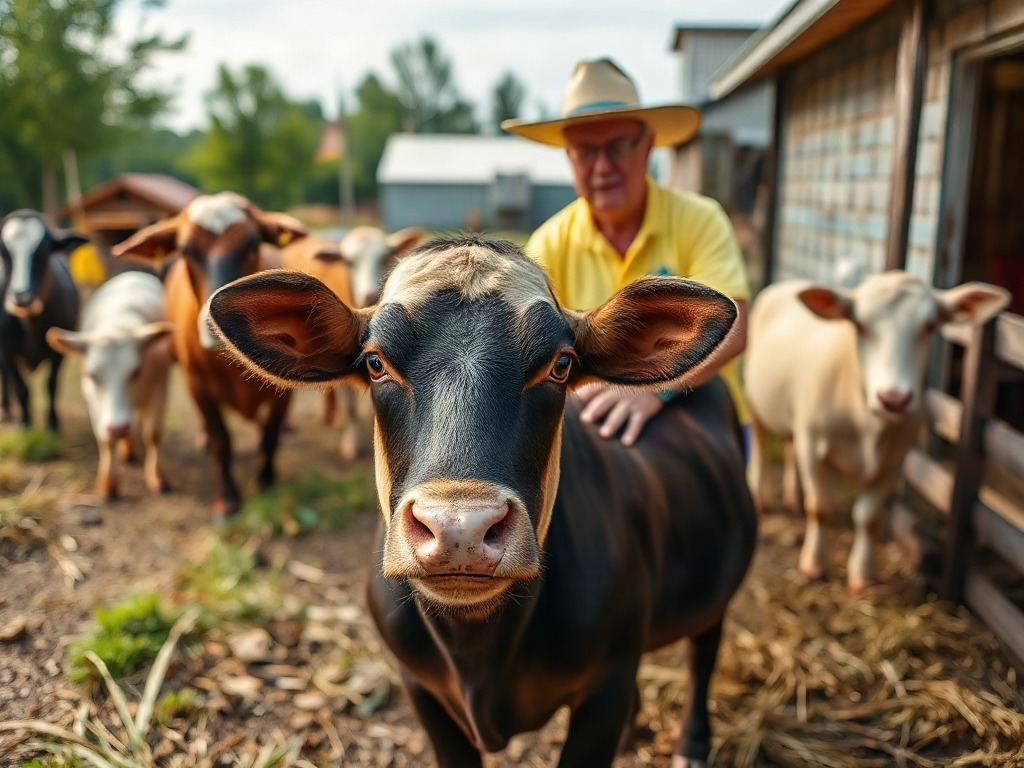
Starting a farm versus starting a homestead comes down to whether the land must operate as a commercial business or primarily support the household. A farm needs defined customers, saleable products, production records, dependable infrastructure, and enough margin to cover operating costs; a homestead can prioritize food security, self-reliance, and personal use without making every activity profitable. Zoning, water access, taxes, insurance, and animal rules can affect either choice regardless of acreage. Before buying equipment or livestock, decide what must generate income, estimate recurring labor and expenses, and confirm that the property legally supports the intended use.
The Operating Difference Between a Farm and a Homestead
A farm is organized around producing agricultural goods for sale, while a homestead is usually organized around meeting household needs. Both may have vegetables, poultry, orchards, workshops, or grazing animals, but the purpose behind those activities changes how they are managed. A homesteader can grow six tomato varieties because the family enjoys them. A market grower has to ask which varieties customers buy, how long they store, and whether their sales justify the bed space.
Commercial intent creates obligations that personal production does not. Once eggs, meat, produce, seedlings, dairy products, or preserved foods are sold, the operator may face business registration, tax reporting, product rules, labeling requirements, liability exposure, and customer expectations. The exact requirements vary by location and product. Calling a property a homestead does not exempt its owner from rules that apply to commercial sales, and calling it a farm does not automatically provide favorable tax treatment or permission to keep livestock.
Scale alone is a poor way to distinguish the two. A small urban flower plot can function as a farm if it consistently supplies paying customers. A large rural property with cattle, gardens, and hayfields may remain a lifestyle homestead if production is mainly for the household and no serious sales activity exists. Acreage affects capacity, but purpose, management, and market activity define the operation more accurately.
The distinction can also be blended. A family might maintain a home garden and laying hens for personal use while operating a small cut-flower enterprise on part of the property. In that case, the flower beds should be tracked as a business unit, with their own material costs, labor estimates, harvest records, and sales. Household projects can remain flexible, while the commercial portion must meet delivery dates and quality standards.
A common mistake is assuming that selling occasional surplus turns an enjoyable homestead into a financially sustainable farm. A few seasonal sales may offset feed or seed expenses without paying for labor, utilities, depreciation, or land costs. Readers weighing Starting a farm versus starting a homestead should first write a one-sentence operating purpose: either the property must earn income from defined products, or it will primarily supply the household with optional surplus sales. That sentence should control later spending decisions.
Income, Costs, and Recordkeeping
A farm needs an economic model before it needs an impressive collection of equipment. The operator must know what will be sold, who is likely to buy it, when revenue arrives, and which expenses continue between sales. Vegetable production may generate weekly summer revenue but require months of advance spending. Livestock may involve daily feed and care long before an animal or product is ready for market. Cash timing can strain an otherwise promising enterprise.
Start with a unit that can be measured. For eggs, estimate the realistic number of saleable dozens after household use, seasonal laying changes, breakage, and flock replacement. Compare expected revenue with chicks or pullets, feed, bedding, cartons, housing repairs, utilities, health needs, and losses. For a produce bed, account for seed, compost, irrigation, row cover, packaging, unsold harvest, and time spent washing and delivering. Gross sales are not the same as earnings.
A homestead budget answers a different question: is the household comfortable paying for the activity in exchange for food, skills, enjoyment, resilience, or preferred production methods? A home orchard can be worthwhile even if purchased fruit would cost less. That is a valid lifestyle choice, but the nonfinancial benefit should not be reported mentally as business profit. Separating household value from commercial performance prevents weak enterprises from being subsidized indefinitely without a conscious decision.
Recordkeeping should match the intended use. A household plot may only need a garden journal, harvest notes, and an annual expense total. A sales operation benefits from separate accounts, receipts, inventory records, mileage logs, customer orders, and labor tracking. These records reveal whether a popular product actually contributes enough after packaging and delivery. They also make conversations with tax, insurance, lending, or agricultural service professionals more productive.
Underpricing is a frequent failure mode. New producers often copy supermarket prices even though they buy supplies in smaller quantities and perform more labor per unit. Raising prices cannot repair every inefficient system, but ignoring labor and overhead produces an artificially cheap product. Before expanding, test a limited offering with real customers and record the full process from production through cleanup. Signs of a workable farm enterprise include repeat demand, consistent quality, manageable fulfillment, and revenue that exceeds direct costs by enough to address overhead. Persistent unsold inventory, emergency purchases, missed delivery commitments, or dependence on unpaid labor signal that the model needs revision.
Land, Infrastructure, and Legal Constraints
Property suitability is determined by usable resources and legal permissions, not by the listing description. “Farm,” “ranch,” or “homestead” in marketing language does not confirm that a buyer can operate a roadside stand, process poultry, house seasonal workers, drill a well, keep goats, or build multiple agricultural structures. County or municipal planning offices, health departments, water authorities, and state agriculture agencies may each govern a different part of the proposed operation.
Water deserves early scrutiny because production capacity means little without a reliable and lawful supply. A shallow well that serves a household may not support irrigated vegetables during dry weather. A pond may not be legally available for every use, and hauling water can quickly become expensive and labor-intensive. Check source capacity, water quality, distribution distance, storage, freeze protection, and pumping costs. For livestock, plan for peak consumption and interruptions rather than average daily use.
Infrastructure should follow the enterprise rather than precede it. A homestead family keeping a few hens may need a secure coop, weather protection, feed storage, and a practical cleaning routine. An egg business may also need efficient collection, grading or handling space where required, carton storage, refrigeration depending on applicable rules, and vehicle access for deliveries. The same flock size feels very different when customers expect a set quantity every week.
Soil, drainage, slope, road access, fencing, predators, prevailing wind, electricity, internet service, and distance to customers all shape what is feasible. Ten wooded acres are not equivalent to ten acres of level pasture. Cheap land far from a customer base can impose higher fuel costs and consume selling time. Conversely, smaller land near a strong market may support intensive vegetables, mushrooms, nursery plants, or flowers better than acreage-dependent grazing.
Insurance and neighbor impacts also deserve attention. A standard homeowner policy may not cover commercial visitors, product claims, paid workers, or farm activities. Noise, odors, delivery traffic, loose animals, and roadside parking can create conflict even where agricultural use is allowed. Confirm coverage with an insurance professional and obtain local requirements in writing when possible. The costly mistake is purchasing land first and investigating restrictions later. A sound review of Starting a farm versus starting a homestead treats due diligence as part of property selection, not as paperwork to complete after moving.
A Practical Decision Checklist Before You Commit
A staged decision protects cash, time, and household stability better than launching several enterprises at once. The first season should test assumptions on a scale small enough to correct. Someone interested in market vegetables might cultivate a modest area and serve a limited number of customers before buying a tractor or constructing a large wash station. A prospective goat dairy should investigate animal care, fencing, breeding cycles, milk handling, processing rules, and customer demand before acquiring a herd.
Use the following checklist to turn a broad ambition into an operating choice:
- State the primary purpose. Decide whether success means household provision, commercial profit, supplemental income, or a deliberate combination.
- Name the first output. Choose one main product or household goal rather than beginning with poultry, vegetables, fruit trees, bees, and dairy animals simultaneously.
- Verify property fit. Check water, usable ground, access, storage, fencing, utilities, and applicable land-use or sales rules.
- Estimate a full year of work and expense. Include off-season care, repairs, processing, marketing, delivery, and replacement costs.
- Test demand or household value. Speak with plausible buyers if income is required; for personal production, compare the workload with what the family will genuinely use.
- Define stop and expansion signals. Set measurable conditions for continuing, changing, or dropping the project.
The household must agree on labor expectations. Animals require coverage every day, while produce harvests can collide with outside jobs, school schedules, illness, or vacations. If only one person understands the watering system, customer list, or feeding routine, the operation has a fragile point of failure. Write basic routines down and identify backup care before adding responsibilities.
Expansion should solve a demonstrated bottleneck. Buy larger refrigeration because repeat orders exceed safe storage capacity, not because the building might someday be useful. Add growing space after existing beds sell reliably and production methods are stable. On a homestead, expansion can instead follow repeated household use: a larger pantry makes sense after several seasons show that preserved food is being eaten rather than discarded.
Progress looks different under each model. A farm should move toward reliable production, repeat customers, controlled costs, and less chaos per unit sold. A homestead should move toward dependable household outputs, manageable chores, useful skills, and systems that fit family life. If debt is growing, maintenance is routinely deferred, animals receive inconsistent care, or household members resent the workload, the plan is failing regardless of how productive the property appears. Revisit the purpose statement before adding another enterprise.
Frequently Asked Questions
Can a homestead legally sell products?
Often yes, but sales may trigger business, zoning, food-handling, labeling, tax, or insurance requirements. Verify the rules for the specific product and location before accepting orders.
How much land is needed to start a farm?
No single acreage applies. Intensive flowers or vegetables may use limited ground, while grazing livestock generally need more land. Water, soil, market access, and production method matter as much as total acreage.
Does farm status automatically provide tax benefits?
No. Eligibility and treatment depend on jurisdiction, land use, income, documentation, and other rules. Consult the relevant assessment office and a qualified tax professional rather than relying on a property label.
Should beginners start with crops or livestock?
Choose the option that fits available time, infrastructure, and goals. Annual crops are easier to pause or redesign; livestock impose continuous care, housing, feed, fencing, and backup responsibilities.
Can one property be both a farm and a homestead?
Yes. Household food production can coexist with a commercial enterprise. Track business income, costs, inventory, and facilities separately so personal value does not obscure commercial performance.
Conclusion
Choose the operating purpose before choosing acreage, machinery, or animals. If income is required, identify a customer, price one product with all direct costs and labor included, and test it on a limited scale. If household provision is the priority, design chores and infrastructure around what the family will consistently use and maintain. A mixed property can support both aims, but its commercial records and personal expenses should remain distinct.
The next step is a written property-and-enterprise review covering legal permissions, water, usable land, annual cash needs, labor coverage, insurance, and access to buyers. Confirm uncertain rules with the relevant local or state office before committing money. Expand only after actual records show dependable production, tolerable workload, and either repeat sales or meaningful household use.