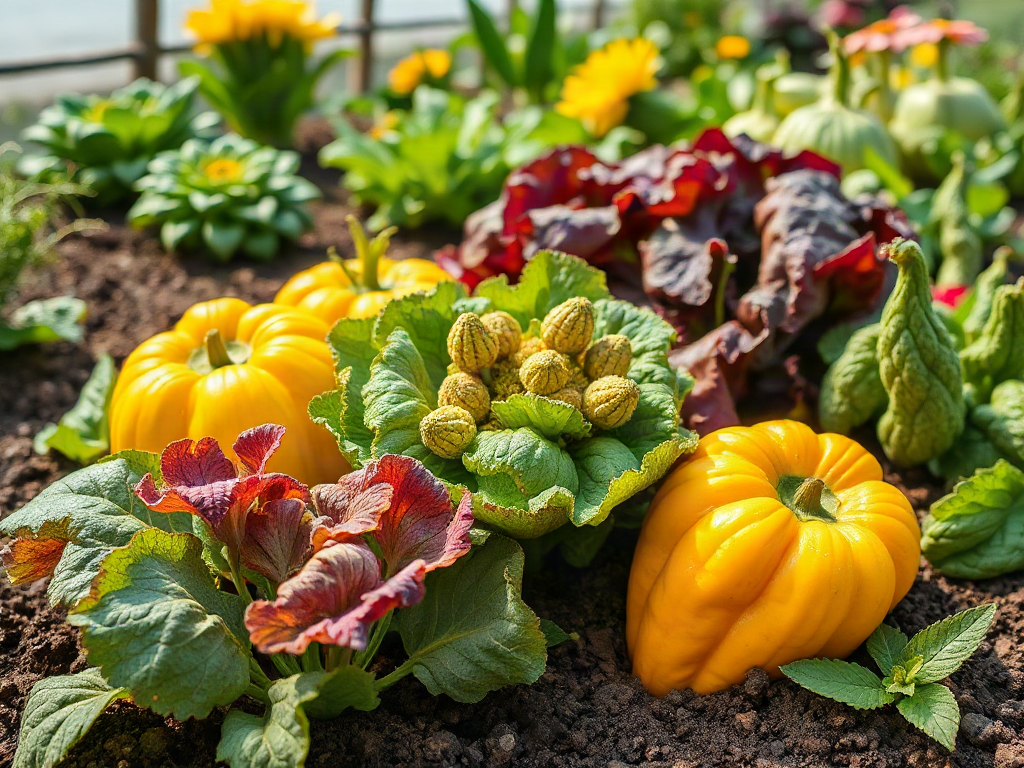
Healthier mixed beds come from companion planting that matches crops by light, root depth, water demand, growth rate, and pest pressure rather than relying on rigid pairing charts. Place tall crops where they will not smother sun-loving neighbors, keep aggressive spreaders contained, and leave enough airflow around plants vulnerable to fungal disease. Useful combinations include radishes between slow-growing carrots, lettuce beneath properly spaced tomatoes, and flowering herbs near vegetables that benefit from visiting pollinators and predatory insects. Pairings fail when gardeners crowd plants, combine incompatible irrigation needs, or expect a companion to replace crop rotation, fertile soil, and routine pest inspection.
What Makes a Companion Pairing Work
A useful companion pairing shares space without forcing either crop into chronic competition. Plant labels often describe mature height and spacing, but mixed beds also require attention to canopy width, root activity, watering frequency, and the number of weeks each crop occupies the ground. Two plants are not good neighbors merely because a chart places a check mark beside their names.
Physical compatibility provides the most dependable starting point. A quick radish crop can occupy open soil between young carrots because the radishes are usually harvested before carrot roots need that room. Lettuce can use partial shade near a properly supported tomato during warm weather, but only if the tomato canopy does not block nearly all light or trap damp air. These combinations work through differences in timing and growth habit, not through a mysterious effect one plant has on another.
Resource demand matters just as much. Rosemary prefers relatively lean soil and drier conditions once established, while cucumbers generally perform better with consistent moisture and richer ground. Putting them on the same irrigation line creates a compromise that may suit neither. Basil is easier to place near tomatoes because both can grow under similar summer watering, although each still needs its own root space. Matching care requirements is often more useful than following traditional lists of plants said to like or dislike each other.
Flowers and aromatic herbs add another layer. Dill, cilantro, sweet alyssum, calendula, and similar flowering plants may provide nectar or pollen for visiting insects when allowed to bloom. Their presence does not guarantee pest control, and aromatic foliage does not form an invisible barrier around vegetables. Treat insect-supporting plants as habitat rather than pesticide substitutes. Inspect leaf undersides, remove heavily infested material when appropriate, and identify the pest before acting.
The strongest companion planting guide for healthier mixed beds therefore begins with measurable compatibility: adequate sun, workable spacing, similar irrigation, and staggered harvest dates. Traditional associations can still be tested, but they should not override what the plants visibly require.
Reliable Pairings for Common Mixed Beds
Reliable mixed-bed combinations usually solve a specific space, timing, or habitat problem. Instead of asking whether two species are universally compatible, ask what each plant contributes and whether that contribution is useful in the bed you actually have.
Tomatoes, Leaf Lettuce, and Basil
Indeterminate tomatoes grown on a trellis create vertical structure, while leaf lettuce occupies the lower layer early in the season. Lettuce can be harvested before the tomato canopy becomes dense, or it can remain where afternoon shade delays heat stress. Basil fits the same warm-season watering pattern, but it should sit outside the tomato’s immediate root zone rather than being packed against the stem.
This arrangement fails when a gardener treats every open patch as usable space. Crowded tomato foliage dries slowly after rain or irrigation, and lettuce hidden beneath an oversized canopy becomes thin and pale. Prune or train tomatoes according to the variety and support system, water at soil level, and preserve a clear path for air and harvesting.
Carrots, Radishes, and Scallions
Carrots germinate and develop slowly, leaving bare-looking soil for several weeks. Radishes mature faster and can mark the row while producing an earlier harvest. Scallions have a narrow upright form that fits along an edge without creating heavy shade. The arrangement uses time and shape efficiently, but it does not mean the roots can be sown at full standalone density.
Thin carrots on schedule, remove radishes before they become oversized, and keep the surface evenly moist during germination. If all three crops remain crowded, roots become small or misshapen. Loose, stone-free soil has more influence on carrot shape than the identity of a neighboring crop.
Beans, Cucumbers, and Insectary Flowers
Beans and cucumbers can share a broad bed when each has separate vertical support and sufficient access to sunlight. Compact flowers such as sweet alyssum can occupy a sunny edge, where their blooms are accessible to visiting insects. Do not let vigorous cucumber vines climb across bean foliage or spread over the flowers. Separate trellises make inspection and harvest easier and reduce the tangled canopy that often develops when vigorous vines are mixed without boundaries.
Beans host nitrogen-fixing bacteria in root nodules, but gardeners should not assume that a neighboring cucumber receives an immediate supply of free nitrogen. Much of that nitrogen remains tied to the bean plant during active growth. Feed the bed according to crop needs and soil conditions rather than using beans as a substitute for fertility management.
How to Plan Spacing, Timing, and Bed Layout
A mixed bed should be designed at mature size even when transplants look small. Sketch the bed from north to south, mark permanent paths and trellises, and place the tallest crops where their shade will be useful or least disruptive. In the Northern Hemisphere, tall crops commonly cast less disruptive shade from the north side, although nearby buildings, slopes, and summer sun angles can change that rule.
Begin with the crop that has the longest season or largest canopy. A tomato, pole bean trellis, zucchini, or cucumber structure becomes the bed’s anchor. Add shorter crops only after reserving the anchor crop’s mature footprint. Fast vegetables can fill temporary gaps, but their harvest date must arrive before the primary crop needs the space. This approach differs from mixing equal numbers of every crop, which often creates attractive spring beds followed by midsummer congestion.
Use this compact planning sequence before sowing:
- Map sunlight: Note where structures and mature crops cast shade during the main growing season.
- Group water needs: Keep moisture-loving crops together and place drought-tolerant herbs in a separate zone or container.
- Reserve mature spacing: Use expected canopy width, not transplant size, to determine plant positions.
- Stagger harvests: Put radishes, baby greens, or scallions in spaces that will be needed later.
- Preserve access: Leave room to tie vines, inspect leaves, water the soil, and harvest without trampling roots.
Succession timing turns a crowded plan into a functional one. For example, spinach may finish before warm-season peppers spread, while bush beans sown after spring greens can use the same section later. Record sowing and expected harvest windows rather than relying on memory. Weather can shift those dates, so watch actual plant growth and remove a filler crop when it begins interfering with the anchor crop.
Containers can solve incompatibilities that a single bed cannot. Mint offers flowers and aromatic foliage, but its spreading rhizomes can overrun nearby crops; keeping it in a pot prevents a useful herb from becoming a long-term weed problem. Mediterranean herbs can occupy a drier container beside a frequently watered vegetable bed. The plants remain close enough to diversify the garden without forcing incompatible soil moisture.
A workable companion planting plan should also leave some unplanted surface. Mulch can protect that space, reduce soil splash, and conserve moisture without adding another root system. Empty-looking ground is sometimes the correct choice when airflow and access are already limited.
Pairing Mistakes and Signs a Bed Is Failing
Companion beds usually decline from excess density, mismatched care, or poor timing rather than from a forbidden plant combination. Pairing charts can distract from these visible causes. When growth falters, compare each crop’s light, moisture, fertility, temperature, and spacing requirements before blaming its neighbor.
Leggy stems, pale leaves beneath a canopy, and plants leaning toward the bed edge indicate inadequate light. Persistent moisture on crowded foliage, leaf spotting, and poor air movement point to a canopy that is too dense. Wilting beside wet-soil plants may reveal uneven root competition or incompatible watering needs. Small roots and delayed maturity often indicate that too many plants were left in place after the temporary intercrop should have been harvested.
Correct the limiting factor rather than adding another supposed companion. Thin excess seedlings, redirect vines onto supports, harvest fast crops early, or move potted herbs to a more suitable irrigation zone. If one plant repeatedly dominates, give it a dedicated bed next season. Zucchini, winter squash, mint, horseradish, and vigorous vining crops can be difficult mixed-bed partners in tight spaces because their physical spread overwhelms more restrained neighbors.
Pest expectations also need restraint. Marigolds are frequently treated as universal pest repellents, yet planting a few around a bed should not be expected to stop every insect or soil problem. Some companion effects are specific to particular plant species, pests, growing conditions, or management methods. A border flower may attract beneficial visitors while still doing little against an established infestation on crowded brassicas.
Evaluate results with simple records. Note planting dates, approximate spacing, irrigation zones, shade patterns, pest damage, disease symptoms, and harvest quality. A pairing is earning its place when both crops reach usable size, the canopy remains accessible, and harvesting one does not damage the other. It is failing when one crop repeatedly shades, tangles, dries out, or crowds its neighbor despite reasonable adjustments.
Change one variable at a time when possible. Expanding spacing while keeping the same crop combination reveals more than replacing every plant at once. The practical purpose of a mixed-bed planting reference is to support observation, not to impose permanent rules on different climates, soils, and bed dimensions.
Frequently Asked Questions
What vegetables should not be planted together?
Avoid combinations with sharply different water needs, severe shade conflicts, or aggressive growth. A sprawling squash beside small greens is often more troublesome than any traditionally forbidden pairing.
How close should companion plants be?
Start with the recommended mature spacing for the larger crop, then place short-lived or narrow plants only where they will not occupy its future canopy and root space.
Do herbs keep pests away from vegetables?
Some flowering herbs provide food or habitat for beneficial insects, but herbs do not reliably repel every pest. Use them alongside inspection, identification, sanitation, and appropriate crop protection.
Can tomatoes and peppers share a mixed bed?
Yes, if the bed provides full sun, adequate spacing, fertile soil, and consistent moisture. Because they share some pest and disease concerns, rotate the entire plant family in future seasons when space permits.
Does companion planting replace crop rotation?
No. Mixed planting may diversify a bed, but related crops can still share pests and diseases. Track plant families and rotate them when the garden layout allows.
Conclusion
Productive mixed beds are built around compatible growth habits, not folklore alone. Reserve space for mature canopies, separate crops with conflicting moisture needs, and use fast harvests to occupy temporary gaps rather than permanently increasing density. Flowers and herbs are valuable when they provide accessible blooms, culinary harvests, or useful ground coverage, but they should not be treated as guaranteed pest controls.
Map one bed before the next sowing, choose its longest-season crop as the anchor, and add only neighbors that fit its light, watering, and harvest schedule. During the season, watch for shade stress, tangled foliage, slow drying, and undersized harvests. Those observations provide better guidance than a universal pairing chart and make each year’s layout more reliable.