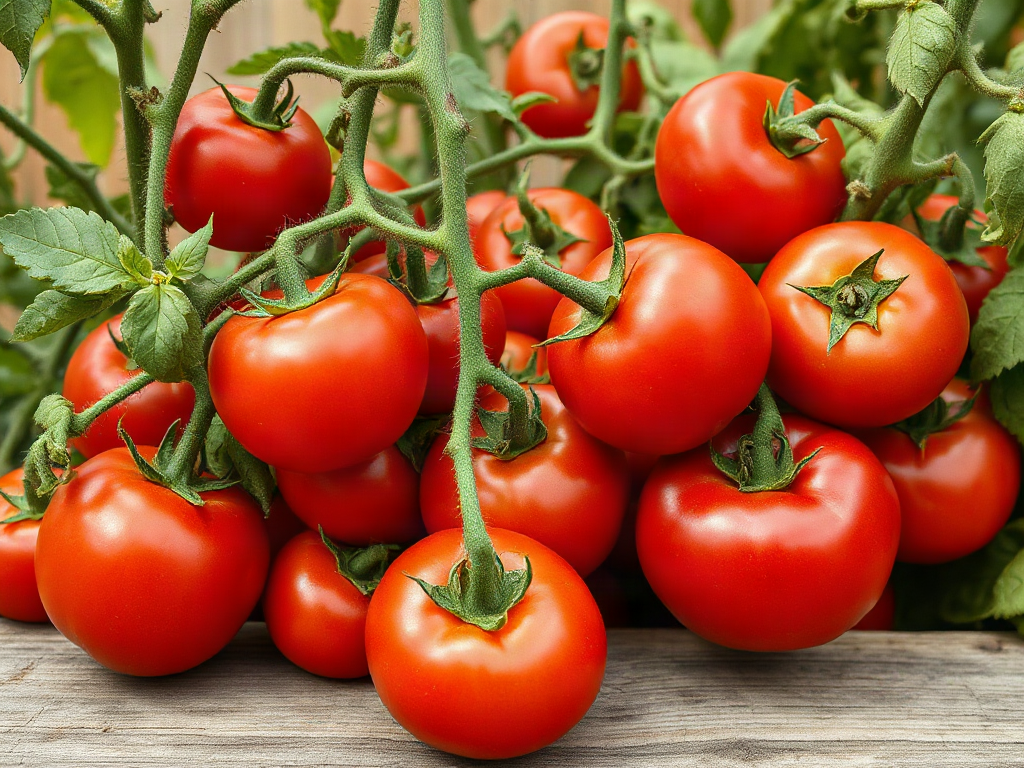
Garden tomatoes suited to small homestead harvests should combine dependable production, useful fruit size, disease resistance, and a growth habit that fits the available beds, containers, or trellises. Determinate paste tomatoes provide concentrated harvests for canning, while indeterminate slicers and cherry tomatoes spread fresh picking across the season. A balanced planting includes more than one fruit type and maturity window so weather or disease does not ruin the entire crop. Prioritize locally adapted cultivars, steady root-zone moisture, sturdy support, and realistic plant numbers based on how many tomatoes the household can eat or preserve.
Choose Tomato Types Around the Intended Harvest
The most useful tomato is one that matches what the household will do with the fruit. A productive variety can still be a poor homestead choice if it yields more delicate slicers than the family can eat, ripens too slowly for the local season, or produces watery fruit when the goal is thick sauce. Decide how much of the crop is meant for fresh meals, preserving, drying, or sharing before comparing cultivar names.
Paste tomatoes have dense flesh, relatively small seed cavities, and less juice than typical slicers. That structure reduces cooking time when making sauce, paste, or salsa. Roma-type fruit is convenient for processing because it is easy to core and often ripens in useful batches. A concentrated crop is an advantage on a scheduled canning day, but it becomes a liability when there is no time, equipment, or freezer space to handle several baskets at once.
Slicing tomatoes serve a different role. Medium-fruited cultivars are usually more practical than very large beefsteaks when dependable production matters. They tend to ripen sooner, fit sandwiches and meals without leaving much cut fruit, and place less weight on individual stems. Large heirloom slicers may offer distinctive flavor and color, but some mature late, crack readily after rain, or set fewer fruits during stressful weather. They can be worthwhile as a small part of the planting rather than its entire foundation.
Cherry and grape tomatoes provide an early, extended supply for salads, snacks, roasting, and drying. Their small fruit often resists minor cracking better than thin-skinned large tomatoes, although vigorous plants may overwhelm a short cage. Frequent picking is necessary because ripe fruit accumulates quickly. For a household wanting modest daily harvests, one healthy cherry plant may be more useful than several.
A practical allocation for a mixed kitchen garden is to give the largest share of space to the tomato type used most often, then reserve smaller shares for fresh eating and insurance. For example, a household that cans sauce might grow mostly paste plants, two reliable slicers, and one cherry tomato. A fresh-eating household should reverse that balance. The mistake is choosing every plant for novelty without assigning each one a kitchen purpose.
Seed catalogs provide maturity estimates, fruit descriptions, and growth habits, but local performance matters more than attractive photographs. Compare those descriptions with the experience of nearby growers or a regional extension office. The broader topic of Garden tomatoes suited to small homestead harvests begins with this connection between intended use, local conditions, and manageable harvest volume.
Match Growth Habit to Space and Labor
Determinate and indeterminate tomatoes distribute their growth and fruit differently, which directly affects trellising, picking, and preservation work. Determinate plants reach a genetically limited size and tend to ripen much of their fruit over a shorter period. Indeterminate plants continue producing new stems and flower clusters until frost, severe disease, or removal stops them.
Determinate tomatoes fit compact beds and processing plans particularly well. Many remain manageable in a strong cage, and their concentrated production makes it possible to collect enough fruit for a sauce batch without freezing tomatoes for weeks. Their limitation is that the main harvest may pass quickly. Once that flush ends, the plant usually will not supply the same steady late-season picking as a healthy indeterminate vine.
Indeterminate plants suit households that want tomatoes for meals over many weeks. A vertical trellis can keep their long vines off the soil, improve access for harvest, and use a narrow bed efficiently. That apparent space efficiency comes with recurring work: vines need tying or clipping, supports must withstand wind and fruit weight, and sprawling growth can shade neighboring crops. A flimsy cone cage is rarely adequate for a vigorous full-season cultivar.
Compact patios, dwarf tomatoes, and container-bred cultivars offer a third option. They are useful near the kitchen, in rental gardens, or where the best sunlight falls on a deck rather than an in-ground plot. Compact does not mean maintenance-free. A container has less soil to buffer heat and moisture swings, so it may require more frequent watering than a garden bed. Use a container large enough for the mature root system, include drainage holes, and support the plant before it becomes top-heavy.
Labor should influence the decision as strongly as square footage. A homesteader with limited time may get a more usable crop from caged determinate plants than from six indeterminate vines requiring weekly training. Someone able to inspect the garden regularly can manage vertical vines and pick cherry tomatoes before they split or fall. Count trellis length, cage availability, watering capacity, and preservation time before counting seedlings.
Watch the plants as the season develops. A suitable spacing and support system allows air movement, keeps fruit from resting on the ground, and leaves clusters reachable without breaking stems. Dense, tangled foliage; leaning cages; fruit hidden against wet soil; and vines growing into paths show that the chosen system is failing. Correct support early, because lifting a mature loaded vine often snaps branches. For additional planning context, keep Garden tomatoes suited to small homestead harvests tied to the labor the property can actually supply.
Build a Reliable Mix of Varieties
A resilient tomato patch relies on complementary varieties rather than one supposedly perfect cultivar. Weather, disease pressure, and season length affect cultivars differently. Planting two or three types with distinct maturity periods and fruit uses reduces the chance that a single weakness will determine the entire harvest.
Begin with days to maturity, treating the catalog number as an estimate rather than an appointment. The count commonly relates to transplanting, and cool soil, cloudy weather, transplant stress, or extreme heat may delay flowering and ripening. Short-season growers should anchor the planting with an early or midseason cultivar instead of relying entirely on a late, large-fruited tomato. Gardeners with a long warm autumn have more room to include slow-maturing types.
Disease-resistance codes can help narrow the choice when a known soilborne or foliar problem recurs. Resistance does not mean immunity, and codes address specific pathogens rather than every condition that causes yellow leaves or damaged fruit. Crop rotation, clean stakes, adequate spacing, mulching, and avoiding unnecessary leaf wetness remain useful. If the garden has no documented disease pattern, choosing solely by a long string of resistance letters may overlook flavor, maturity, and kitchen value.
Open-pollinated and hybrid tomatoes both belong in a small homestead garden. Open-pollinated varieties allow seed saving when plants are isolated enough to limit unwanted crossing, and a locally maintained line may perform well under regional conditions. Hybrids can offer a useful combination of uniformity, vigor, resistance, or crack tolerance. Saving seed from a hybrid will not reliably reproduce the same combination in the next generation, but that does not make its current crop unsuitable for eating or preserving.
A compact planting might use the following priority order:
- Foundation plant: Select a dependable medium slicer or paste tomato with an appropriate maturity range.
- Harvest extender: Add an indeterminate cherry or medium-fruited cultivar for continuing production.
- Special-purpose plant: Include one favorite heirloom, drying tomato, or colorful slicer after essential needs are covered.
- Backup: If space permits, plant a second cultivar for the household’s most important use.
For example, four plants might include two determinate paste tomatoes, one disease-resistant indeterminate slicer, and one cherry plant. That mix can provide processing volume, regular table fruit, and an early snack crop without creating four identical harvest peaks. In a cooler climate, all four should have realistic maturity dates; in a hot region, local reports about fruit set and cracking deserve more weight.
The common failure is buying several seedlings with missing or vague labels. Without the cultivar name and growth habit, planning support and harvest use becomes guesswork. Record each variety, planting location, first ripe fruit, disease behavior, flavor, and approximate yield usefulness. Even simple notes make next year’s selection more accurate than memory alone.
Manage Planting, Water, and Harvest Timing
Variety choice sets the potential harvest, but root establishment and moisture management determine how much of that potential reaches the kitchen. Tomatoes perform best when transplanted after frost danger has passed and the soil has warmed enough for active growth. Setting plants into cold, saturated ground can stall roots and expose them to stress without gaining meaningful earliness.
Harden indoor-grown seedlings gradually before transplanting. Sudden exposure to full sun and wind can scorch leaves and slow establishment. At planting time, remove only the lowest leaves needed to set a leggy transplant deeper; tomato stems can form roots along buried sections. Install cages, stakes, or trellis lines immediately so later work does not damage an expanded root system.
Consistent root-zone moisture matters more than a rigid watering calendar. Deep watering followed by reasonable drying encourages a broader root zone, while repeated shallow sprinkling keeps roots near the surface. Mulch moderates evaporation and reduces soil splash onto lower foliage, but it should not be piled tightly against the stem. Check moisture beneath the mulch rather than assuming the soil is wet because the surface looks dark.
Large swings from dry soil to heavy watering can contribute to fruit cracking and make blossom-end rot more likely, especially while roots are young or restricted. Blossom-end rot involves inadequate calcium reaching developing fruit, but adding calcium indiscriminately is not always the answer; uneven moisture or injured roots may interfere with uptake even when soil calcium is present. A soil test is more informative than applying amendments by guesswork. Overfeeding with nitrogen can also produce lush foliage at the expense of timely fruiting.
Inspect plants while tying vines or harvesting. Remove fruit that is badly damaged or decaying, look beneath leaves for pests, and notice whether discoloration begins on old lower foliage or appears suddenly across the plant. Avoid diagnosing every brown spot from appearance alone. Weather injury, nutrient problems, herbicide drift, insects, and several diseases can resemble one another, so a regional extension diagnostic resource may prevent ineffective treatment.
Harvest planning should begin before the first fruit colors. Gather clean baskets, confirm freezer or canning capacity, and decide where surplus will go. Pick tomatoes at the stage suited to their use: fully colored fruit for immediate meals, firm ripe fruit for transport, and sound fruit beginning to color when cracking weather or frost threatens. Tomatoes showing decay, mold, or serious insect damage should not be treated as equivalent to sound preserving fruit.
Signs the plan is working include sturdy supported growth, fruit ripening at a rate the household can use, minimal loss on the ground, and enough healthy foliage to sustain later clusters. Chronic splitting, overloaded counters, neglected vines, and repeated support failures indicate too many plants or the wrong growth habit. Reduce plant numbers next season before expanding infrastructure. A smaller planting harvested promptly often supplies more usable food than a larger patch that outruns the homestead’s time.
Frequently Asked Questions
How many tomato plants does a small homestead need?
The number depends on appetite, preservation goals, cultivar yield, and season length. Start with a modest mix, record how much fruit is actually used, and adjust next year rather than relying on a universal plants-per-person estimate.
Are determinate tomatoes better for canning?
Determinate paste tomatoes are often convenient because much of the crop ripens within a shorter window. Indeterminate paste tomatoes can still work when fruit will be frozen and accumulated for later processing.
Which tomatoes are easiest to grow in limited space?
Compact determinate, dwarf, and container-bred cultivars are easier to contain. Vigorous indeterminate tomatoes can also use space efficiently on a tall trellis, but they require regular training and stronger support.
Should a homestead grow heirloom or hybrid tomatoes?
Both can be useful. Grow open-pollinated varieties for repeatable seed saving and distinctive traits, and choose hybrids when their maturity, uniformity, or specific disease resistance addresses a practical garden need.
Can paste and slicing tomatoes be planted together?
Yes. They require similar general care and can share a bed when spacing and supports are adequate. Gardeners saving seed should consider isolation needs because nearby tomato varieties may cross through insect activity.
Conclusion
A useful homestead tomato planting is measured by food that reaches the table, pantry, or freezer—not by the largest possible number of plants. Assign each cultivar a purpose, favor maturity dates that fit the local season, and combine concentrated paste production with a smaller supply of extended-harvest fruit when both preserving and fresh eating matter. Match determinate, indeterminate, dwarf, or container types to the support and attention available.
Before ordering seed or buying transplants, review last year’s kitchen use, available bed length, sound cages or trellises, and realistic processing capacity. Plant a dependable foundation variety first, then add one or two specialty choices. During the season, track ripening, cracking, disease symptoms, and unused surplus. Those records reveal which tomatoes truly suit the homestead and which merely occupied valuable ground.