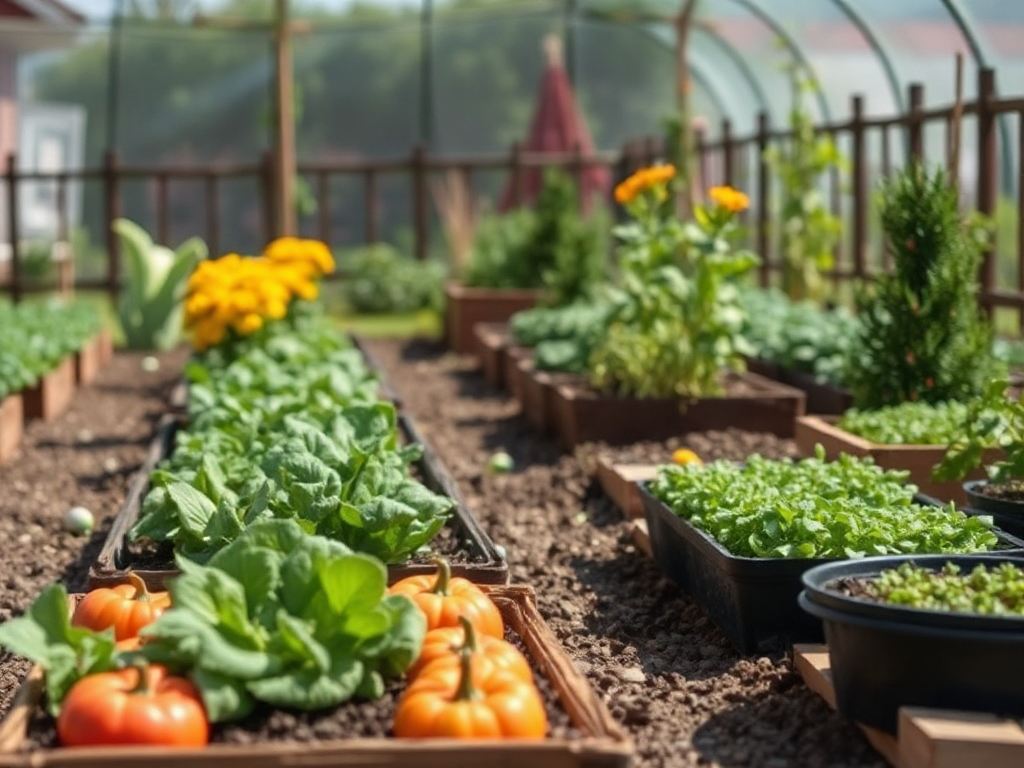
Creating a productive garden layout involves strategically planning your garden's design to optimize space, sunlight, and plant compatibility. Start by assessing your available area, considering factors like sunlight exposure and soil quality. Incorporate companion planting to enhance growth and deter pests, and utilize vertical gardening techniques to maximize space efficiency. Additionally, consider crop rotation to maintain soil health and prevent diseases. By combining these methods, you can significantly increase your garden's productivity and sustainability.
Assessing Your Space and Conditions
Before you can create a productive garden layout, you need to thoroughly assess your available space and the specific conditions of your environment. Start by measuring your garden area and noting any existing structures, trees, or other elements that may impact sunlight exposure and airflow. Understanding soil quality is also crucial; consider conducting a soil test to determine pH levels and nutrient content. This information will guide your plant selection and layout decisions.

For instance, if your soil is heavy clay, you may need to amend it with organic matter to improve drainage and nutrient availability. Alternatively, sandy soils may require more frequent watering and fertilization. By knowing your soil type and condition, you can choose plants that thrive in those specific environments, ultimately leading to a more productive garden.
Understanding Plant Compatibility
Plant compatibility is a key factor in creating an effective garden layout. Companion planting—growing different plants together for mutual benefit—can enhance growth, deter pests, and improve yields. For example, planting tomatoes alongside basil can boost tomato flavor while repelling harmful insects.
Moreover, certain plants can provide shade or support for others; for instance, taller plants can shield shorter ones from harsh sun or wind. Be cautious of plants that may compete for nutrients or harbor pests that could harm their neighbors. Conduct research on compatible and incompatible plants to ensure a harmonious garden ecosystem.
Designing for Sunlight and Water Access
Sunlight and water are critical components of a productive garden layout. When planning your garden, observe how sunlight moves across your space throughout the day. Ideally, your sun-loving plants should be placed in areas that receive full sun, while shade-tolerant plants can be positioned in areas that receive partial shade.
Water access is equally important; consider incorporating a drip irrigation system or rainwater collection to ensure efficient watering. Creating raised beds can also improve drainage and make watering easier. By designing your garden with these factors in mind, you can create an environment where plants thrive and produce abundantly.
Implementing Space-Saving Techniques
Maximizing space is essential for a productive garden layout, especially in smaller areas. Vertical gardening techniques, such as using trellises or wall planters, allow you to grow climbing plants like peas or cucumbers upward, freeing up ground space for other crops. Container gardening is another effective method, enabling you to grow herbs or small vegetables in limited areas.
Additionally, consider intercropping, which involves planting different crops together in the same space to maximize yield. This can prevent overcrowding and promote healthier plants by ensuring they have access to the necessary resources. By utilizing these space-saving techniques, you can significantly enhance your garden’s productivity.
Frequently Asked Questions
What is the best layout for a vegetable garden?
The best layout often includes raised beds or rows that allow for easy access while maximizing sunlight exposure and water drainage.
How can I improve soil quality for my garden?
Improving soil quality can be achieved through composting, adding organic matter, and testing for nutrient levels to amend as necessary.
What plants grow well together in a garden?
Plants like tomatoes and basil, or carrots and onions, are known to thrive when grown together due to their complementary growth habits.
How often should I water my garden?
Watering frequency depends on the climate and soil type, but generally, gardens should receive about an inch of water per week, either through rainfall or irrigation.
What are some common mistakes in garden layout?
Common mistakes include overcrowding plants, neglecting sunlight needs, and failing to consider plant compatibility, which can hinder growth and yields.
Conclusion
Creating a productive garden layout requires careful planning and consideration of various factors, including space, plant compatibility, sunlight, and water access. By assessing your garden’s unique conditions, implementing companion planting strategies, and utilizing space-saving techniques, you can maximize your garden’s yield and sustainability. Focus on continuous learning and adapting your methods to ensure a thriving garden that meets your needs.
Further Reading
Authoritative Sources
- USDA National Institute of Food and Agriculture
nifa.usda.govResearch and extension resources related to agriculture, plants, soil, and food systems.
- Extension Foundation Gardening Resources
extension.orgUniversity extension education resources for practical gardening and home agriculture topics.
- USDA Natural Resources Conservation Service
nrcs.usda.govSoil, water, conservation, and land management resources for practical growing decisions.