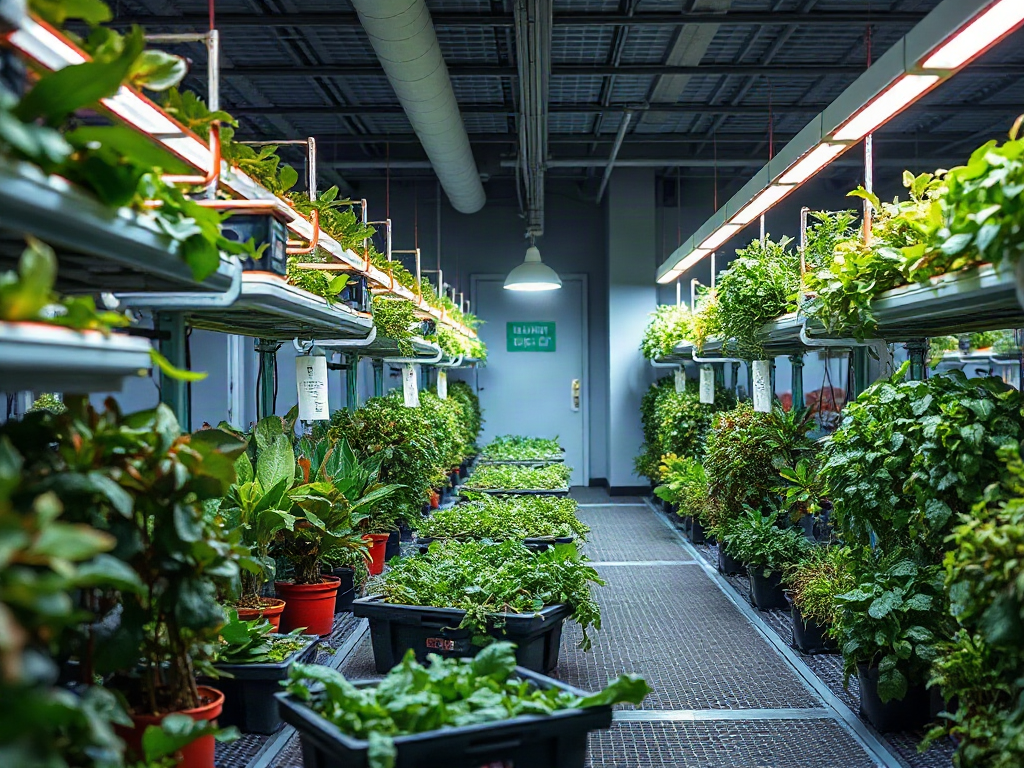
Vertical farming offers controlled indoor growing the advantages of stacked production, precise lighting, recirculated water, year-round scheduling, and protection from outdoor weather. Growers can adjust temperature, humidity, airflow, nutrients, and light for a specific crop rather than accepting seasonal conditions. The strongest results usually come from fast-growing leafy greens, herbs, seedlings, and microgreens that use limited vertical space efficiently. Those benefits carry real costs: electric lighting, cooling, pumps, monitoring, sanitation, and backup systems must remain reliable, so crop value and operating efficiency matter as much as potential yield.
How Does Controlled Indoor Growing Change Production?
Indoor control shifts crop production from reacting to weather toward managing a designed environment. Plants are arranged on shelves, towers, or other vertical structures, while artificial lighting and mechanical systems supply the conditions normally provided by sunlight, soil, rainfall, and seasonal air movement. The practical advantage is not simply growing indoors; it is being able to keep important variables within a useful range for the chosen crop.
Lighting can be scheduled for predictable growth, irrigation can deliver water and nutrients directly to roots, and ventilation can remove heat and moisture from dense plant canopies. A grower raising basil, for example, can maintain a repeatable daily cycle rather than slowing production during short winter days. Stable scheduling also makes harvest planning easier. A household system can stagger trays for weekly use, while a market grower can coordinate planting dates with standing orders.
Control does not mean every plant receives perfect conditions automatically. Temperature at the top of a rack may differ from temperature near the floor. Shelves can cast shadows, fans can dry one edge of a tray faster than another, and dense foliage can trap moisture even when the room feels comfortable. Sensors placed only in the open aisle may therefore describe the room without describing the plant canopy. Checking several rack positions is more useful than relying on a single display.
The indoor environment also changes pest and disease pressure rather than removing it. Physical separation from outdoor beds may reduce exposure to windblown weed seeds, heavy rain, and some pests. Once aphids, fungus gnats, algae, or a root pathogen enter a warm, densely planted room, however, they may spread rapidly through shared water, tools, trays, or plant material. Clean seedlings, washable surfaces, prompt removal of unhealthy plants, and routine inspection remain essential.
Compared with a greenhouse, a fully enclosed vertical room provides greater independence from daylight and outside temperatures but usually requires more electricity. A greenhouse captures sunlight yet experiences stronger seasonal swings and may need supplemental lighting or heating. The better option depends on climate, crop schedule, available space, and energy cost. For a homestead, a small rack used to start seedlings may deliver more practical value than attempting to replace the outdoor garden.
Space, Water, and Crop-Quality Advantages
Vertical arrangement increases the productive growing area within a limited floor footprint. Several shallow shelves can hold lettuce, herbs, or propagation trays where one ground-level bench would otherwise fit. This makes the approach relevant to basements, insulated outbuildings, urban utility rooms, and other places where horizontal land is scarce. Usable capacity is still limited by ceiling height, safe access, light clearance, and the space required for reservoirs and ventilation equipment.
Many indoor vertical systems use recirculating hydroponics, which captures nutrient solution after it passes the roots and sends it through the system again. Water is delivered where plants need it rather than being lost to runoff across a field. The grower can observe reservoir level, nutrient concentration, and acidity, then make measured corrections. That control may be particularly useful where water availability is constrained or where hauling soil into an indoor space is impractical.
Recirculation creates a shared dependency. A leaking fitting, blocked line, failed pump, or contaminated reservoir can affect an entire rack rather than one plant. Small channels and low-volume root zones may dry quickly when flow stops. Before expanding a system, test how long each crop can tolerate a power or pump interruption, keep replacement fittings on hand, and make the reservoir easy to inspect and clean. Water efficiency should never be mistaken for immunity to water-system failure.
Consistent environmental settings can also produce uniform leaf size, harvest timing, and appearance. Greens are less likely to be splashed with soil, while protection from hail, hard rain, and sudden frost reduces weather-related damage. Uniformity is valuable when packing equal portions or planning repeated household harvests. It does not guarantee flavor or nutritional quality, which still respond to variety, plant maturity, light, temperature, mineral balance, and harvest handling.
A compact operating checklist keeps these advantages measurable rather than assumed:
- Map the rack: Check light, temperature, and airflow at upper, middle, lower, center, and edge positions.
- Track inputs: Record water additions, nutrient adjustments, electricity use, and crop losses by batch.
- Inspect roots and leaves: Healthy foliage can briefly hide low oxygen, root browning, or irrigation trouble.
- Compare usable harvests: Judge the system by edible output and quality, not total plant count alone.
A common mistake is maximizing shelf density before proving that air and light reach every plant. Crowding may increase the number of seedlings initially, yet reduce marketable or edible output through stretched growth, uneven moisture, and damaged lower leaves. Leave enough working room to examine plants, clean spills, remove trays, and repair irrigation without dismantling the rack.
Which Crops Fit Vertical Systems Best?
Compact, quick-turning crops generally make the best use of stacked indoor space. Leaf lettuce, arugula, baby greens, basil, cilantro, mint, microgreens, and young transplants have relatively shallow canopies and can be harvested before becoming structurally large. Their shorter crop cycles also allow a grower to detect mistakes, adjust the next planting, and reuse the shelf sooner.
Crop form matters as much as whether a plant can technically grow hydroponically. A vining tomato may thrive indoors, but its height, trellis, fruit load, pollination needs, and long production cycle can occupy the space of several layers of greens. Cucumbers and peppers present similar challenges. Root crops need enough depth and support for the harvested portion to develop. A crop that grows successfully may still be a poor vertical choice if it blocks lights, limits access, or consumes a large conditioned volume.
| Crop Type | Vertical-System Fit | Main Constraint to Check |
|---|---|---|
| Microgreens | Strong fit for shallow trays and rapid turnover | Sanitation, seeding uniformity, and mold control |
| Leaf lettuce | Strong fit for repeated, compact batches | Heat, airflow, spacing, and root-zone oxygen |
| Culinary herbs | Good fit when demand justifies regular harvests | Different growth rates and pruning requirements |
| Tomatoes and cucumbers | Possible, but usually better in tall single-level zones | Trellising, lighting intensity, pollination, and energy |
| Potatoes and large roots | Usually a weak fit for closely stacked racks | Root volume, crop weight, and long occupancy |
Crop selection should begin with the intended use. A homesteader seeking winter salad greens has a different target from someone starting hundreds of spring transplants. For household production, choose foods already eaten regularly and schedule modest batches so harvests do not arrive all at once. For seedling production, adjustable shelf height and removable lights may matter more than maximizing the number of permanent layers.
Trialing one crop and one cultivar simplifies diagnosis. If several varieties, nutrient recipes, and light schedules change simultaneously, weak growth has no obvious cause. Begin with a small batch, record germination and harvest dates, weigh or count usable output, and note discarded plants. Signs of a good fit include even canopies, manageable roots, repeatable harvest timing, and easy access. Persistent stretching, tip damage, uneven color, excessive pruning, or blocked walkways indicate that spacing, conditions, or the crop itself should change.
What Costs and Risks Must Growers Manage?
Energy and equipment reliability determine whether indoor control remains an advantage. Lights add both illumination and heat; fans, pumps, dehumidification, cooling, and heating may then be needed to maintain the environment. The same enclosure that protects crops from a cold night can overheat when lights, plant transpiration, and warm outdoor weather combine. Estimating only lamp wattage understates the operating burden.
Capital costs can include shelving, fixtures, timers or controllers, reservoirs, pumps, plumbing, sensors, waterproof surfaces, and electrical work suited to a damp growing area. Reused shelves and simple timers may lower the entry cost, but improvised electrical connections near water create unacceptable risk. Circuits, connectors, hanging hardware, and load limits should match the equipment and environment; qualified electrical help may be warranted for permanent installations.
System complexity should match the operator’s ability to monitor and repair it. A passive or simple hand-watered shelf may require more labor but fail gradually. A highly automated rack can produce consistent crops with less daily intervention, yet a single sensor, dosing, software, or pump fault may alter many plants at once. Automation is most valuable after the crop and basic process work reliably, not as a substitute for understanding plant responses.
Prioritize system decisions in this order:
- Protect people and the building. Address electrical safety, water containment, drainage, rack stability, and safe lifting access.
- Protect the crop during failure. Plan for pump outages, blocked irrigation, excessive heat, and missed inspections.
- Stabilize the root zone and canopy. Confirm water flow, oxygenation, temperature, light coverage, and air movement.
- Measure operating value. Compare edible harvests with seed, nutrient, water, electricity, replacement-part, and labor inputs.
- Expand only after repeatable batches. Replicate a proven shelf rather than scaling an unresolved problem.
Warning signs include condensation on walls, algae in exposed water, hot spots on upper shelves, brittle or curled leaf edges, persistent root discoloration, strong reservoir odors, and widening differences between trays. Treat those as system information rather than isolated plant defects. For example, repeated damage on one rack edge points toward airflow or light distribution, while symptoms appearing across every channel may implicate the shared reservoir or room environment.
A weak assumption is that greater yield per floor area automatically means lower cost or lower environmental impact. Vertical stacking may use space and water efficiently while drawing substantial electricity. The result depends on local energy sources, climate-control demand, crop losses, equipment life, and how much usable food is harvested. Keep batch records and calculate performance from actual operation before committing an entire room or a large budget.
Frequently Asked Questions
Is vertical farming practical for a small homestead?
Yes, when it serves a focused purpose such as winter greens, herbs, microgreens, or seedling propagation. A single monitored rack is usually a more manageable starting point than converting a whole room.
Does every vertical farm use hydroponics?
No. Vertical layouts can use hydroponic channels, containers with growing media, aeroponic equipment, or other root-zone systems. Hydroponics is common because reservoirs and shallow channels integrate well with stacked racks.
Can vertical farming replace an outdoor vegetable garden?
It can replace selected crops, but it is rarely the most practical substitute for sprawling, tall, or storage crops. Indoor racks often complement gardens by producing greens and transplants while outdoor beds handle larger plants.
What is the most common beginner mistake?
Expanding before one shelf produces repeatable harvests is a frequent mistake. Uneven light, weak airflow, irrigation faults, and sanitation problems become harder and more expensive to correct at larger scale.
How can a grower tell whether the system is worthwhile?
Track usable harvest weight or portions alongside electricity, water, nutrients, seed, labor, crop losses, and repairs. Compare those records with the cost and reliability of buying or growing the same crop another way.
Conclusion
Controlled vertical production is most convincing when limited space, dependable scheduling, or year-round access to compact crops has clear value. Its strengths come from coordinating light, water, nutrients, airflow, and temperature—not merely adding more shelves. Begin with a small rack, a crop suited to shallow layers, and records that distinguish edible output from planted capacity.
Safety, water containment, sanitation, and failure planning should be settled before automation or expansion. Check conditions within the canopy, inspect roots, and look for location-based patterns across the rack. If repeated batches are uniform, accessible, and economical enough for their intended use, duplicate the proven setup. If energy demand, losses, or maintenance outweigh the harvest, use the indoor system for seedlings or seasonal greens and leave larger crops to a greenhouse or outdoor beds.