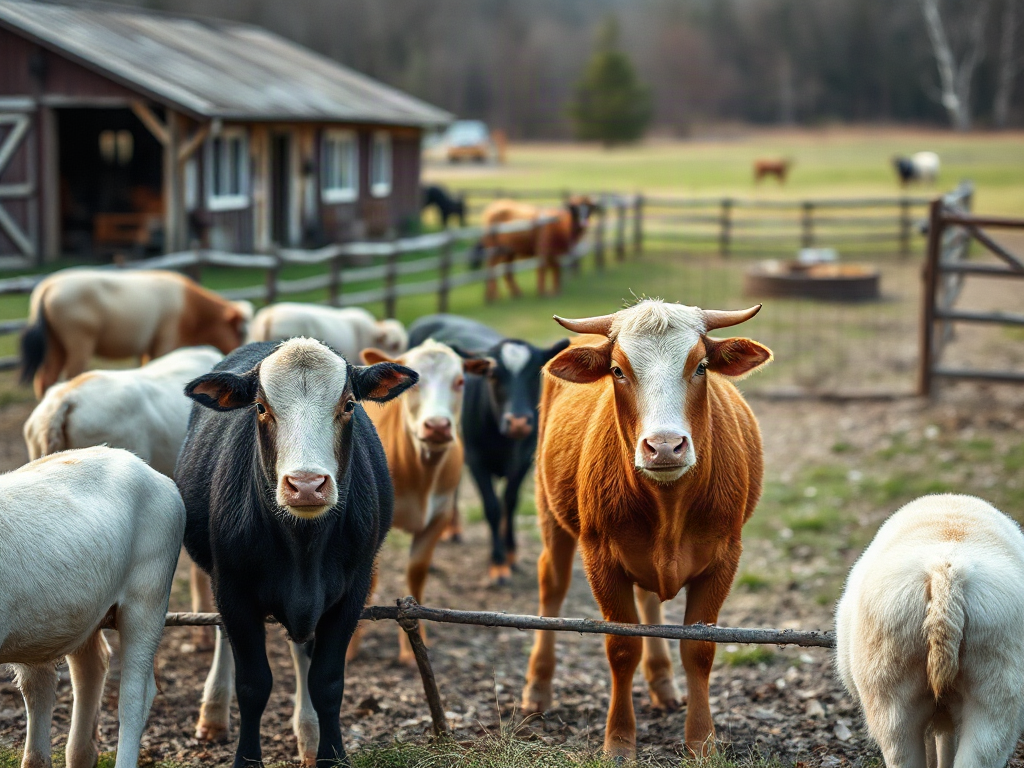
Choosing between subsistence and commercial homesteading comes down to whether the property should mainly supply household needs or produce dependable income through sales. Subsistence homesteading prioritizes food security, preservation, flexible production, and lower exposure to market prices, while commercial homesteading adds customer demand, business records, regulations, marketing, and consistent output. A practical decision starts with measuring household consumption, available land, labor, water, startup funds, and realistic local buyers. Many new operators underestimate the time required for packaging and sales, while others grow too little variety to cover household needs. A hybrid model often works well: reserve core crops, livestock, or preservation capacity for the household, then sell a limited number of products that match local demand and available labor.
What Each Homesteading Model Is Designed to Do
Subsistence homesteading is organized around household use. The operator grows, raises, gathers, preserves, or makes enough to replace part of the food and household supply that would otherwise be purchased. Commercial homesteading uses the same kinds of activities, but production is planned around paying customers, repeatable quality, sales channels, and a margin after expenses.

The distinction is not simply “small” versus “large.” A family with a large garden may still operate on a subsistence basis if nearly everything is eaten at home. A smaller property can be commercial if it produces a focused item such as culinary herbs, seedlings, eggs where permitted, cut flowers, or shelf-stable goods for sale. The purpose of the output matters more than acreage.
Subsistence production usually values variety and resilience. A garden might include potatoes, beans, tomatoes, greens, onions, herbs, and a few preservation crops because the household benefits from spreading harvests across seasons. Commercial production often narrows the range to products that can be grown efficiently, priced clearly, and sold without excessive waste. That focus can improve organization, but it also makes the operation more vulnerable to a crop failure, a lost market, or a sudden change in demand.
A common mistake is assuming that commercial sales naturally follow from producing extra food. Surplus is not the same as inventory. Customers may want uniform sizes, reliable pickup times, clean packaging, specific labeling, or a product that is available repeatedly. Before choosing a model, decide whether the primary goal is reducing grocery dependence, creating cash flow, developing a farm business, or combining those aims. The decision becomes clearer when the homestead has one stated priority for the next growing season.
Comparing Land, Labor, Cash, and Risk
The strongest comparison uses four practical limits: land, labor, cash, and risk tolerance. Subsistence systems can function with modest infrastructure when the household accepts seasonal variety and does much of the work directly. Commercial systems may need irrigation, storage, fencing, washing areas, refrigeration, transport, packaging, records, and dependable production schedules. Those additions create capacity, but they also tie money up before sales occur.
Labor is often the deciding constraint. Household food production includes planting, watering, weeding, harvesting, cooking, preserving, feeding animals, and maintaining equipment. Commercial production adds customer communication, order management, market travel, bookkeeping, cleaning, packaging, and handling unsold goods. A person who has time for a garden on weekends may not have time to harvest and deliver several orders during a weekday morning.
Cash flow also behaves differently. In a subsistence model, a failed planting may mean buying more vegetables or losing a preservation opportunity. In a commercial model, the same failure can affect deposits, customer trust, market fees, and planned income. Commercial operators should calculate direct costs such as seed, feed, containers, fuel, stall fees, repairs, and payment processing. They should also account for unpaid labor. A product that sells well but consumes excessive time may not be profitable.
Use a simple comparison before committing:
- Household demand: Estimate what the family actually eats or uses rather than what sounds appealing to grow.
- Available work hours: Separate reliable weekly time from occasional bursts of enthusiasm.
- Infrastructure: Check water, storage, fencing, tools, processing space, and transport.
- Market evidence: Identify actual buyers and prices before expanding production.
- Downside tolerance: Decide how much money and unsold product the household can absorb.
The weak assumption to avoid is that more acreage solves every problem. Extra land without water, labor, fertility management, or a sales outlet can increase weeds and wasted harvest rather than income. A focused, manageable plot is often more useful than a large underdeveloped operation.
When a Subsistence Model Makes More Sense
Subsistence homesteading is usually the better starting point when household food savings, self-reliance, and flexible scheduling matter more than revenue. It suits people who want to learn production skills without promising customers a specific quantity or delivery date. It can also fit households with limited capital, uncertain work schedules, or little access to nearby markets.
The model allows production to follow household needs. If lettuce bolts, it can be replaced with another crop; if a preserving batch is smaller than expected, the family can adjust meals. A mixed garden may include fresh vegetables, dry beans, culinary herbs, berries, and crops suited to freezing or canning. Small livestock can add eggs or manure, but only when feed, shelter, daily care, and local rules make the arrangement practical.
For example, a household with two adults working irregular shifts may gain more from growing storage onions, potatoes, winter squash, and greens than from attempting a weekly produce stand. These crops can support meals across different periods and may require less precise harvest coordination than delicate greens. The choice is not about producing every calorie; it is about selecting outputs that replace meaningful purchases without creating an exhausting workload.
Subsistence does not mean ignoring costs. Seeds, fencing, irrigation parts, feed, jars, freezer space, and replacement tools still have financial value. Track purchases and harvests for one season. The record can show whether a crop is genuinely useful, whether preservation is worth the energy, and which tasks consume more time than expected. A frequent failure mode is growing according to available seed packets rather than household consumption. Planting a large quantity of an unpopular crop creates waste, while neglecting staple or frequently used foods limits the model’s practical value.
Readers comparing approaches can also review Choosing between subsistence and commercial homesteading alongside a household crop plan. The goal is not total isolation from the market; it is intentional replacement of selected purchases.
When Commercial Production Is Worth the Added Work
Commercial homesteading becomes more plausible when a specific product has identifiable buyers, a repeatable production method, and enough margin to justify the labor. Starting with demand is safer than starting with a large harvest. Talk with potential customers, local market organizers, restaurants, community groups, or retailers about product type, quantities, timing, packaging, and purchasing habits.
A focused example might be a grower who discovers steady local demand for vegetable seedlings in spring. Seedlings can use limited space more intensively than a broad field crop, but the business still requires reliable germination, labeling, watering, scheduling, and customer communication. Another operator might sell dried culinary herbs, but must confirm suitable processing, packaging, labeling, and sales requirements in the relevant jurisdiction. Rules vary by product and location, so local agricultural, health, and business authorities should be consulted before selling.

Commercial work is successful only when production and sales are treated as one system. A crop can perform well biologically and still lose money if harvest takes too long, cooling is inadequate, or the market is too far away. Keep records for each product: inputs, usable yield, labor hours, selling price, delivery costs, and waste. If the figures are uncertain, run a small trial rather than purchasing major infrastructure.
Commercial operators also need a contingency for weather and inconsistent demand. Planting all available space with one crop may make harvest efficient, but it concentrates risk. A smaller product range with staggered planting, preorders, or multiple sales outlets may provide better control. The common misconception is that sales automatically make homesteading more sustainable. Revenue can support land and equipment, but customer obligations may reduce household flexibility and increase dependence on purchased inputs.
Review Choosing between subsistence and commercial homesteading after one sales cycle, not after one enthusiastic market day. Look for repeat orders, manageable labor, low waste, and a margin that remains reasonable after all expenses.
Building a Practical Hybrid Homestead Plan
A hybrid model combines household production with carefully limited sales. It is often useful for people who want food resilience but also need cash to pay for feed, repairs, taxes, tools, or property improvements. The key is to protect the household’s essential supply before assigning land and labor to revenue crops.
Divide the plan into three layers. First, identify household staples and high-use items that are worth producing. Second, reserve capacity for preservation, seed saving where appropriate, replacement plantings, and ordinary losses. Third, choose one or two commercial products that use remaining capacity and have a clear buyer. This order prevents a promising sales opportunity from consuming all the potatoes, eggs, seedlings, or storage space the household intended to use.
A practical first-year plan might include a modest kitchen garden, a preservation target based on actual meals, and a small trial of one saleable product. Measure the time required from preparation through cleanup. Signs the plan is working include consistent household use, controlled inputs, repeatable harvest quality, and sales that do not displace sleep, paid employment, or necessary maintenance. Signs it is failing include chronic unfinished chores, frequent emergency purchases, unsold perishables, and revenue that disappears into untracked expenses.
Review the plan at the end of each season. Expand only the activity that has both practical demand and manageable labor. Reduce products that generate waste or require infrastructure the household cannot maintain. The mistake to avoid is trying to run a full farm business while still learning basic production. A phased approach gives the household evidence before it takes on debt, regulatory obligations, or customer commitments.
For another planning perspective, use Choosing between subsistence and commercial homesteading with a written budget and weekly task schedule. A clear boundary between household output and commercial inventory makes results easier to evaluate.
Useful next steps include publications from a state university extension, the United States Department of Agriculture, and local agricultural or health departments. These sources can clarify enterprise budgeting, food handling, farm business planning, zoning, permits, and product-specific sales requirements without assuming that rules are identical everywhere.
Frequently Asked Questions
Can a homestead be both subsistence and commercial?
Yes. Many households produce staples for themselves while selling a limited product range. Separate household reserves from sale inventory so customer demand does not consume essential supplies.
Which model costs less to start?
Subsistence production often requires less specialized infrastructure, but costs depend on crops, livestock, water, fencing, storage, and tools. Commercial production adds selling and compliance expenses that should be budgeted early.
How do I know whether a product is commercially viable?
Confirm real buyer interest, calculate all direct costs and labor, test a small quantity, and track waste and repeat purchases. A high selling price alone does not demonstrate profitability.
Should beginners start with livestock for income?
Not necessarily. Livestock creates daily obligations and recurring feed, housing, health, and handling costs. A small crop or seedling trial may be easier to evaluate before adding animals.
What is the biggest planning mistake?
Expanding output before measuring household demand, labor hours, infrastructure limits, and buyer commitments can create waste and fatigue. A seasonal trial provides better evidence than a large initial investment.
Conclusion
The best model matches the purpose of the homestead, not an idealized picture of rural life. Choose subsistence production when replacing selected household purchases and building food skills are the main priorities. Choose commercial production only when buyers, labor, infrastructure, records, and product requirements can support dependable sales. A hybrid plan is often the most practical route: protect household staples, reserve capacity for losses and preservation, then test one focused product with measurable costs and demand. Track time as carefully as money, review results after a full season, and expand only what remains manageable. That process turns a broad lifestyle decision into a sequence of practical choices that can change as land, income, skills, and family needs develop.