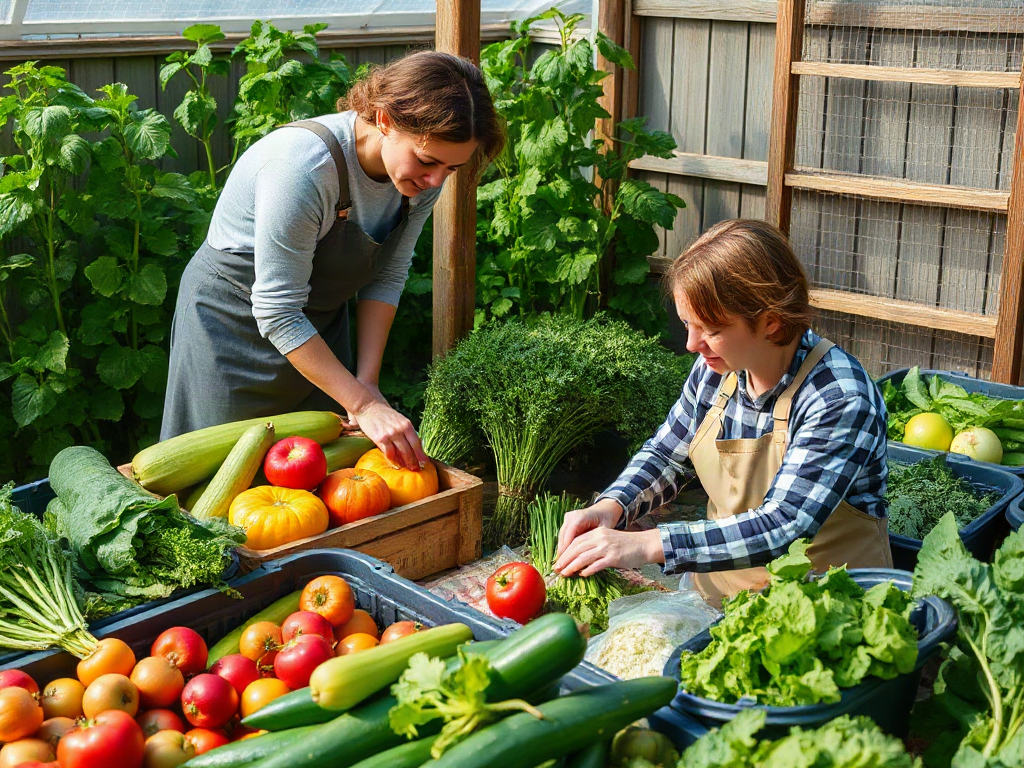
Start a farm-to-table business from your homestead by selecting a small group of legally sellable foods, confirming local requirements, testing demand, and building a harvest-to-customer system before expanding production. Choose crops or products that match your climate, labor, storage capacity, and nearby buyers rather than planting everything you can grow. Price each item after counting seeds, feed, packaging, utilities, delivery time, market fees, and your labor. Written harvest records, batch labels, dependable cold storage, and a simple preorder system reduce waste and make customer commitments manageable. Begin with one sales channel and a limited weekly offering, then use repeat orders and actual margins—not enthusiasm alone—to decide what deserves more acreage.
Choose a Viable Homestead Product and Customer
A profitable farm-to-table business begins with a specific customer and a manageable product, not with a large planting plan. A homestead may produce eggs, vegetables, herbs, flowers, fruit, baked goods, preserves, meat, or prepared meals, but each category brings different equipment, shelf-life, labor, and selling requirements. The best first offering usually uses resources already available on the property while solving a clear buying problem nearby.

Study the local market before committing acreage or livestock. Visit farmers markets, review restaurant menus, ask small grocers what they struggle to source, and talk with households about preferred quantities and pickup times. A chef may value consistent bunches of herbs every week, while families may prefer a mixed vegetable box. Those are different businesses: the chef needs uniformity and reliable delivery; the household customer may accept unusual produce but require convenient communication.
Match the offer to production reality. Salad greens can provide frequent harvests but need careful washing, cooling, and fast turnover. Tomatoes may attract strong demand but have a narrow harvest window and substantial staking, picking, and sorting labor. Eggs create a recurring product but require daily care, packaging, flock management, and appropriate labeling. A shelf-stable item may reduce spoilage pressure, yet processing can add equipment costs and regulatory complexity.
A useful starting point is a deliberately narrow menu, such as two salad mixes, three seasonal vegetables, and one herb bundle. Avoid promising a weekly box before knowing whether weather, pests, and labor can support it. The internal resource how to start a farm-to-table business from your homestead should be treated as an operating question: what can be grown, handled, and delivered consistently enough that customers will order again?
The common mistake is confusing personal abundance with marketable supply. A surplus of zucchini does not prove that customers will buy it at a price covering harvest and delivery. Record likely yield, usable yield after damage, harvest time, and expected selling price. If those figures do not support the product, test a smaller quantity or choose a different crop before expanding.
Check Rules, Food Handling, and Farm Capacity
Legal requirements should be investigated before advertising products or accepting payment. Rules vary by location and may differ according to whether you sell raw produce, eggs, meat, dairy, canned goods, baked items, beverages, or prepared meals. Contact the appropriate county, state, or provincial agencies about business registration, zoning, sales tax, labeling, kitchen use, permits, inspections, and market requirements. Do not assume that a home kitchen or a farm setting automatically qualifies for every product.
Food handling also determines what a homestead can sell responsibly. Fresh produce needs clean harvest containers, potable water where required, protection from animals and chemicals, and a shaded or refrigerated holding area. Products that require temperature control need a documented method for keeping them cold from harvest through handoff. Meat, dairy, and prepared foods generally demand more specialized facilities and oversight than uncut vegetables, so they are often poor first products for a new operator without existing infrastructure.
Map the physical flow before purchasing equipment. A practical route might run from field to sorting table, wash area, drying rack, cooler, packing shelf, and pickup station. Each step should prevent cross-contamination and unnecessary handling. A crowded refrigerator, an uncleanable packing surface, or muddy harvest bins can create quality problems even when the crops were grown well. Separate personal household storage from business inventory when possible, especially when orders must be held overnight.
Keep records that identify what was harvested, when it was packed, which customer received it, and what happened to unsold inventory. Batch or lot records are particularly useful for processed foods and can help trace a problem if a customer raises a concern. Use plain, accurate labels and avoid claims such as organic unless the applicable certification or labeling rules allow them. Guidance from a university extension service or official agriculture department can clarify local practices without replacing required permits.
A weak assumption is that liability insurance, a permit, or a food-safety course makes the whole operation safe. Those tools support risk management, but they do not correct poor sanitation, unreliable refrigeration, or misleading labels. Start with products whose handling requirements you can meet every week. If the business later adds farm-to-table products such as preserves or prepared meals, review the rules again rather than extending the original assumptions.
Build Pricing, Production, and Sales Systems
Pricing must cover the full cost of producing and moving food, not merely the seed packet or animal feed. Calculate direct inputs, packaging, washing supplies, utilities, market fees, payment processing, delivery mileage, equipment wear, spoilage, and labor. Labor includes planning, sowing, weeding, harvesting, cleaning, answering messages, packing, and bookkeeping. A price that looks competitive may still lose money if the owner is quietly donating several hours to each order.
Use a simple product worksheet. For a box of vegetables, estimate the usable weight or count, the time required to harvest and pack it, the packaging cost, and the proportion likely to be unsold. Then compare the proposed price with local alternatives. A direct-to-consumer box may justify a higher price than wholesale restaurant sales because it includes communication and flexible assortment, but it may also require more individual packing and customer service. Wholesale orders reduce transaction time per unit while demanding stricter consistency and delivery punctuality.
Production planning should begin with committed capacity rather than optimistic yield. Plant succession crops only after estimating available labor during peak harvest. Reserve some output for weather loss, pests, damaged produce, and household use. A preorder model can reduce waste because demand is known before harvest, while an open market stall may create visibility and attract impulse buyers. The tradeoff is that preorders require accurate inventory information; selling more than the farm can supply damages trust quickly.
Choose one primary sales channel for the first season. Options include on-farm pickup, a weekly preorder list, a community-supported agriculture share, a farmers market, restaurant accounts, or a small retail partnership. Each channel changes the work pattern. Restaurant delivery may require early harvesting and exact pack sizes. A pickup window may lower transportation costs but requires clear directions, payment procedures, and a plan for late collections.

Use an ordering calendar with cutoff times, harvest days, packing times, and customer notifications. A compact operating checklist can include:
- Confirm available inventory before accepting orders.
- Record harvest quantities and rejected items.
- Cool, clean, sort, and label products according to their handling needs.
- Reconcile payments, mileage, packaging, and waste each week.
- Review gross margin and customer complaints before adding another product.
The usual failure is underpricing to compete with a supermarket without comparing what is actually being sold. A homestead product may offer freshness, variety, or direct communication, but customers still expect accurate weights, clean packaging, and dependable fulfillment. The separate resource how to start a farm-to-table business from your homestead becomes practical only when the farm records show which items pay for their space and labor.
Launch Small and Improve the Weekly Operation
A pilot season gives better information than a large launch. Invite a limited group of nearby customers to place orders for a defined period, such as several weeks, and state exactly what will be available, where pickup occurs, how substitutions work, and when payment is due. The objective is not to create a polished brand immediately; it is to test whether production, fulfillment, communication, and pricing work together under ordinary homestead conditions.
Measure more than sales. Track how many units were harvested, sold, donated, composted, or left in the field. Note the time spent on each order and the reasons for substitutions or refunds. If a product sells out quickly but takes too long to wash and pack, increasing acreage may worsen the bottleneck. If customers like a crop but repeatedly decline it because the package is too large, change the unit size before abandoning the crop.
Customer feedback is most useful when it reveals a decision. Ask whether the pickup window was workable, which products were used, whether package sizes fit household needs, and which items customers would reorder. Do not treat every request as a new product opportunity. A request for fresh pasta, cheese, or prepared meals may sound attractive but could require facilities and compliance steps far beyond those for raw produce. Protect the central operation from attractive distractions.
Reliability matters more than variety during the early stage. Tell buyers promptly when weather changes availability, provide a fair substitution policy, and never disguise a lower-grade item as a premium one. Set a minimum order or delivery boundary if travel consumes too much time. For restaurants, agree on order cutoffs, pack sizes, invoicing, and what happens when a crop fails. For households, a short weekly availability message may be enough; an elaborate ordering platform is rarely the first investment that solves an operational problem.
Scale only after the pilot shows repeat demand and a workable margin. Expansion might mean adding a second pickup day, increasing a proven crop, improving cooling, or hiring seasonal help—not automatically adding every product customers mention. Signs of a sound system include predictable packing time, low avoidable waste, accurate inventory, and customers who return without heavy discounting. Signs of failure include overdue bookkeeping, missed delivery promises, unsafe storage, and revenue that depends on unpaid family labor. Fix those weaknesses before growth turns them into permanent costs.
For location-specific requirements, consult your state or provincial agriculture department, county extension office, local health department, and market organizer. Those sources can explain current rules for direct sales, food processing, labeling, inspections, and approved facilities; requirements should be verified locally before a product is offered.
Frequently Asked Questions
What should a homestead sell first?
Begin with a product you can grow or make consistently, handle safely, and sell close to home. Uncut seasonal produce is often simpler to test than meat, dairy, or prepared foods, but local demand and regulations should decide the final choice.
How do I find customers before planting?
Speak with nearby households, chefs, markets, and small retailers about quantities, timing, packaging, and price expectations. Collect expressions of interest or preorders without promising more than your projected harvest can support.
How should farm-to-table products be priced?
Include inputs, packaging, equipment use, market or payment fees, delivery, spoilage, and all labor. Compare the resulting price with local alternatives, then adjust the product size or sales channel if the margin is too thin.
Do I need permits to sell food from a homestead?
Possibly. Requirements depend on the product and jurisdiction, with processed, refrigerated, animal, and prepared foods often subject to different rules than raw produce. Ask the relevant local and state agencies before selling.
What is the safest way to expand?
Expand a proven product or improve a bottleneck first. Use sales, margin, waste, labor, and repeat-order records to decide whether to add acreage, equipment, a sales channel, or another product.
Conclusion
A workable homestead farm-to-table business is built around dependable fulfillment, not simply abundant production. Select one customer group and a narrow offering, verify the rules for every product, and design the harvest, cooling, packing, payment, and pickup sequence before accepting regular orders. Price each item with labor and waste included, then run a limited pilot that reveals whether customers reorder and whether the margin justifies the workload. Keep records detailed enough to show which crops or products earn their space. The next practical move is to interview local buyers, choose a small test menu, calculate its costs, and schedule a short trial. Growth should follow evidence from the operation rather than pressure to offer more variety.