Why Homestead Policies Often Fall Short
Insurance gaps usually appear when a property has changed faster than its policy. A home may begin with a residence, detached garage, and ordinary household contents, then gradually acquire a barn, greenhouse, poultry flock, solar equipment, workshop tools, farm stand inventory, and occasional visitors. The insurer may still be rating the property as a conventional home even though its structures, activities, and liability exposures have become more complex.

Policy language matters more than the label attached to the property. A homeowners policy may cover the main dwelling and personal belongings while applying separate limits to other structures. It may also restrict property used for a business, exclude certain motorized equipment, or provide little protection for animals. A farm or farmette policy may fit better, but it is not automatically broader in every category. Coverage depends on definitions, endorsements, deductibles, valuation terms, and exclusions.
Consider a small operation with a $12,000 greenhouse, a $9,000 compact tractor, and several thousand dollars of fencing and irrigation equipment. A homeowner might assume these items fall under the same protection as the house. In practice, the greenhouse could be subject to an other-structures limit, the tractor could require separate scheduling, and buried irrigation lines might have limited or no coverage. The gap is not discovered until an adjuster applies the policy wording after a storm.
Review the declarations page alongside the full contract. The declarations page shows limits and deductibles, but exclusions and conditions often determine whether a claim is payable. Homestead Insurance Coverage Gaps to Review should therefore be treated as a property inventory exercise, not merely a premium comparison.
Buildings, Equipment, and Stored Property
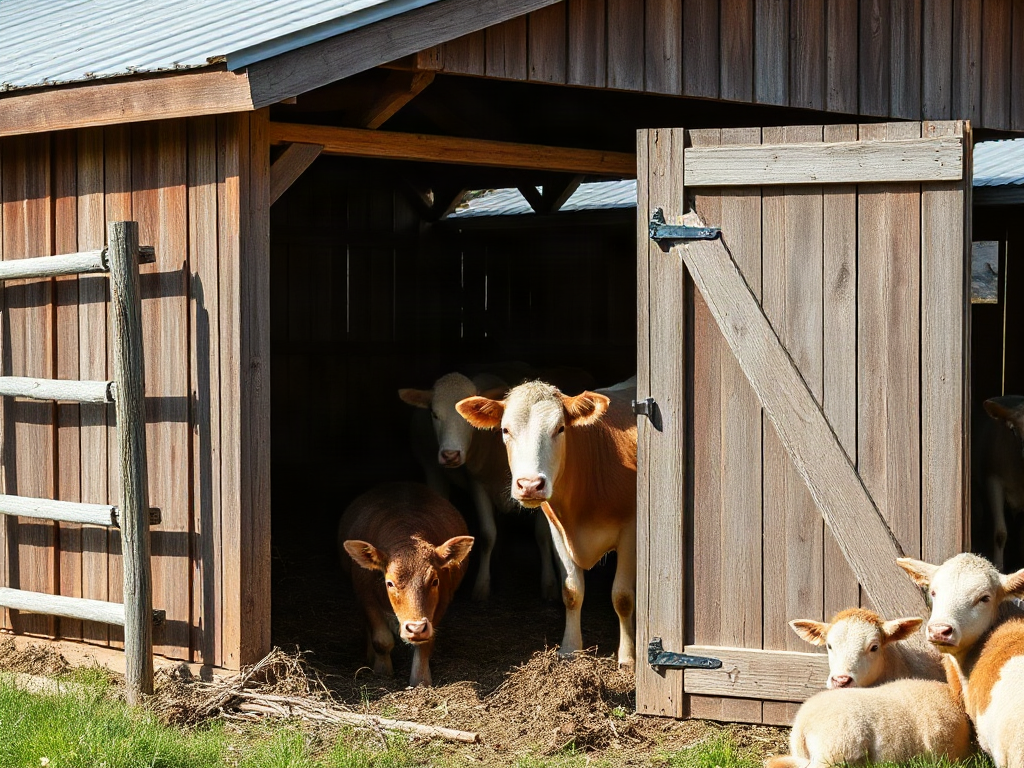
Detached structures deserve a separate valuation because their replacement cost can be very different from their market value. Barns, workshops, sheds, chicken coops, root cellars, hoop houses, and greenhouses may use specialized materials or labor that are not reflected in a general percentage of the dwelling limit. A modest-looking barn can also contain wiring, concrete, stalls, plumbing, and custom doors that raise rebuilding costs.
Ask whether each structure is covered as an other structure, scheduled separately, or excluded because of its construction or use. Greenhouses are a useful example: glass panels, polycarbonate sheets, shade systems, benches, heaters, and growing equipment may not share one coverage treatment. A policy that covers the frame may not replace plants, harvested goods, or internal mechanical components after the same event.
Equipment creates a second layer of uncertainty. Tractors, tillers, log splitters, trailers, generators, welders, chainsaws, freezers, pressure canners, and solar batteries may fall under different sections—or outside the policy entirely. A tractor stored on the property is not necessarily covered like household personal property, and damage while it is being used away from the premises may involve another limitation. Ask about theft, collision, overturn, off-premises use, and whether replacement cost or actual cash value applies.
Build a property schedule with photographs, serial numbers, receipts, purchase dates, and realistic replacement estimates. Separate the list into the house, each detached structure, mobile equipment, tools, stored supplies, and seasonal inventory. Common mistakes include using an old purchase price for a current replacement estimate and assuming labor performed by the owner will be reimbursed at the same rate as contracted work. A lower premium may be sensible for low-value tools, but high-value equipment often warrants scheduled coverage or a specialized policy.
Livestock, Produce, and Home-Based Income
Animals and agricultural goods do not fit neatly into ordinary personal-property assumptions. Chickens, goats, sheep, cattle, bees, rabbits, and horses may have limited coverage, no coverage, or narrowly defined protection. Even when livestock is insured, the policy may distinguish between death from a covered peril, illness, neglect, theft, and liability arising from escape or injury. Ask the insurer to describe the treatment of each species rather than accepting a general statement that “farm animals” are included.
Liability deserves attention whenever visitors enter a pasture, buy eggs, collect honey, use a farm stand, or help with chores. A visitor injured by a loose gate, uneven path, aggressive animal, or tool may create a liability claim even if the property damage itself is minor. Commercial activity can also change the policy analysis. Selling vegetables occasionally from a roadside table is not necessarily treated the same way as operating a regular farm store, hosting workshops, boarding animals, or accepting paid volunteers.
Produce and supplies require a timing-based inventory. Seed, feed, hay, firewood, canned goods, honey, eggs, meat, and harvested vegetables may be stored in several locations and may deteriorate after a covered event without being directly destroyed by it. Coverage may depend on whether items are personal, farm, or business property, and whether spoilage, utility interruption, contamination, or refrigeration failure is covered.
A practical scenario shows why accurate disclosure matters. Suppose a homeowner begins selling maple syrup and stores finished bottles in a detached freezer. A power outage damages the product, while a customer later alleges an allergic reaction. Property spoilage, business inventory, product liability, and utility-service interruption are separate questions. The least expensive policy is not necessarily the best fit if the activity creates exposures that the policy was never designed to address. Record sales activity honestly and request written guidance on farm, home-business, and product-liability options.
Liability, Water, Fire, and Disaster Exclusions
Liability gaps can be more financially severe than gaps involving tools or fencing. A standard personal-liability limit may not address every exposure created by a private road, pond, hunting access, farm machinery, paid work, guest lodging, or animal ownership. An umbrella policy can add another layer, but it generally does not repair an underlying exclusion. The underlying policy and umbrella must be reviewed together.
Water coverage requires precise questions. Sudden pipe damage may be treated differently from flood, groundwater seepage, sewer backup, surface runoff, or gradual leakage. A spring-fed basement, low-lying barn, irrigation failure, or failed sump pump can produce damage that sounds similar in ordinary conversation but is separated sharply in policy language. Flood insurance, water-backup coverage, equipment-breakdown coverage, or a service-line endorsement may be relevant alternatives, depending on the property and insurer.

Fire protection can also be affected by rural conditions. Distance from a fire station, private roads, seasonal access, wood stoves, propane tanks, open burning, welding, and outbuilding wiring may influence underwriting or claim conditions. Do not assume that a fire policy covers every ignition source or that a detached structure has the same protection as the residence. Keep maintenance records for chimneys, electrical systems, generators, and heating equipment, but recognize that maintenance documentation does not override an exclusion.
Storm, wildfire, wind, hail, and earthquake terms may include separate deductibles or restricted causes of loss. A policy with a low general deductible can still impose a percentage deductible for a named catastrophe. Ask which structures and property categories share that deductible. The common failure is reviewing the premium without modeling a plausible loss: roof damage to the house, a destroyed shed, spoiled freezer contents, and temporary relocation may all be handled differently.
A Practical Policy Review Process
A useful review begins with changes made since the policy was last issued or renewed. Note new buildings, renovations, purchases, animals, sales, employees, guests, renewable-energy systems, water sources, and changes in occupancy. Then compare those facts with the policy’s definitions of residence premises, business, farm, other structures, personal property, and covered causes of loss.
Use a short priority sequence rather than trying to solve every issue at once:
- Confirm rebuilding limits: Compare the dwelling and detached-structure limits with current local labor and material costs.
- Classify property: Mark each major item as household, farm, business, scheduled, mobile, or stored property.
- Test exclusions: Ask specifically about flood, backup, gradual damage, pests, power interruption, animal loss, and off-premises equipment.
- Check liability: Describe visitors, sales, animal ownership, rentals, ponds, events, and machinery use.
- Document decisions: Keep the agent’s written responses with the declarations page and inventory.
Compare at least two workable approaches: expanding a homeowners policy with endorsements or moving to a farm-oriented policy. Endorsements may preserve familiar coverage and cost less, while a farm policy may handle agricultural buildings, equipment, and liability more coherently. Neither choice should be made from the name alone. Request sample limits, valuation treatment, exclusions, deductibles, and claim scenarios in writing.
Recheck the policy after a major purchase, construction project, new enterprise, severe regional weather event, or change in animal ownership. Signs that a review is overdue include an inventory that has not been updated, equipment with no serial-number record, a new structure absent from the declarations, or an agent who has never been told about sales or visitors. Reviewing homestead coverage annually is useful, but reviewing it immediately after a material change is more protective.
For reliable guidance, consult your state insurance department, the National Association of Insurance Commissioners, and the full policy forms supplied by your insurer. These sources can clarify policy terminology, complaint procedures, endorsements, and questions to raise with a licensed insurance professional.
Frequently Asked Questions
Does homeowners insurance automatically cover a barn?
It may provide limited other-structures coverage, but the limit, construction requirements, use, and cause of loss determine whether the barn is adequately protected. Ask whether separate scheduling is available.
Are tractors and farm tools covered as personal property?
Not necessarily. Mobile equipment, trailers, and business-use tools may have exclusions or special limits. Provide an inventory and ask about theft, collision, off-premises use, and valuation.
Can a home policy cover produce sold from the property?
Occasional sales may be treated differently from an ongoing business. Inventory, spoilage, customer injuries, and product claims should be discussed separately with the insurer.
Why is flood coverage separate from ordinary water damage?
Policies commonly distinguish flood or surface water from sudden internal plumbing failures and sewer backup. The source and path of the water determine which coverage, if any, may apply.
When should a homestead policy be reviewed?
Review it at renewal and after adding buildings, equipment, animals, sales, rentals, visitors, or major renovations. Written answers are preferable to relying on assumptions about standard coverage.
Conclusion
A homestead policy should reflect the property that exists now, not the simpler residence originally insured. Prioritize the dwelling and detached-structure limits, then classify equipment, livestock, stored goods, and income-producing activities. Water sources, rural fire conditions, animal liability, business exclusions, and catastrophe deductibles deserve direct questions because they often determine whether a plausible loss is covered at all. Create a current inventory, photograph major assets, disclose changes, and ask for written responses about uncertain items. Compare endorsements with a farm-oriented policy only after examining exclusions and valuation terms. A careful review cannot remove every risk, but it can expose costly assumptions while there is still time to correct them.