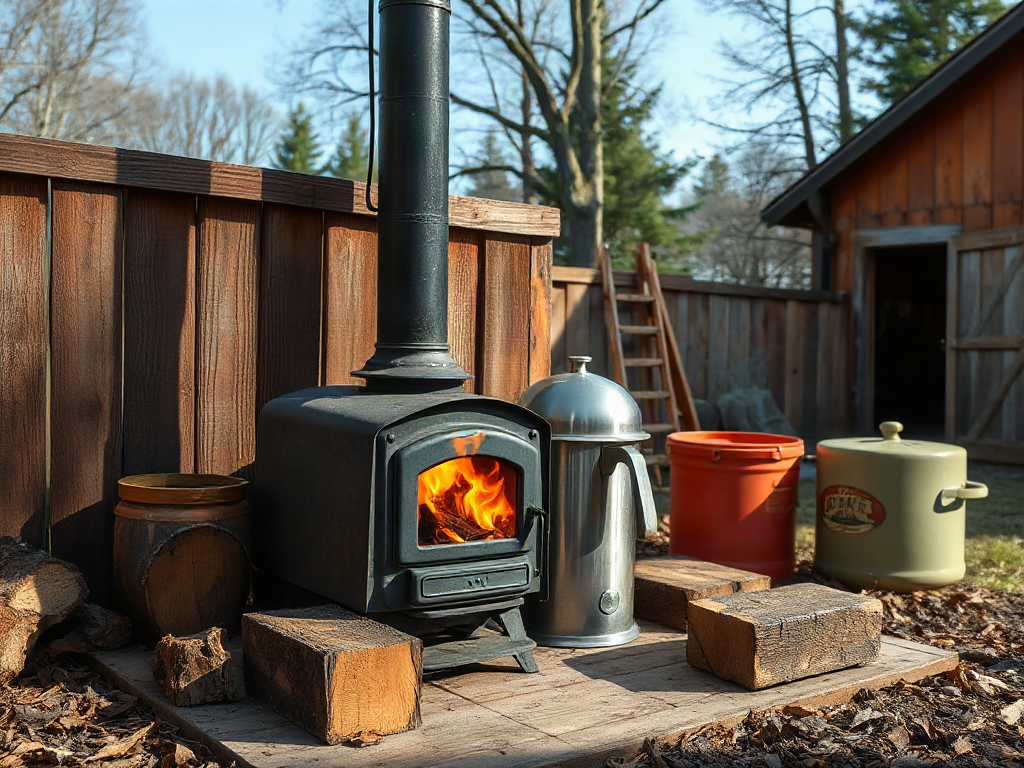
Fire Safety Around Wood Stoves and Outbuildings depends on controlling heat transfer, keeping combustible materials separated, and inspecting both the stove system and nearby structures before each heating season. Use the stove manufacturer’s required clearances, install listed floor and wall protection, maintain the chimney, and store firewood well away from the building. In outbuildings, dust, dry bedding, fuel containers, wiring faults, and clutter can turn a small ignition into a fast-moving fire. Keep suitable extinguishers accessible, test smoke and carbon monoxide alarms where applicable, and never rely on a metal heat shield or closed stove door to correct an installation that does not meet local code.
Control Heat Around the Wood Stove
Wood-stove fires often begin before flames ever touch a wall. Repeated radiant heat can dry and gradually damage combustible materials, while sparks, embers, and overheated connectors create more immediate ignition hazards. A safe installation therefore depends on the complete system: stove placement, floor protection, wall clearances, stovepipe routing, chimney construction, and the condition of nearby furnishings.

Use the stove’s listed installation instructions as the primary reference rather than copying a distance from another model. Clearances vary by appliance, connector, shielding arrangement, and whether the chimney passes through a wall or roof. A heat shield may reduce an approved clearance when installed exactly as specified, but a sheet of metal fastened directly to a wall is not automatically equivalent. Air space, noncombustible supports, and open circulation behind a shield can be part of its safety function.
Floor protection should extend beyond the stove and account for the direction in which logs may roll or embers may fall. A small hearth pad that fits neatly beneath the legs may leave the loading area exposed. Noncombustible protection also needs to remain intact; cracked masonry, loose tile, or a warped pad should not be treated as cosmetic defects when sparks can reach the subfloor.
Furniture, curtains, baskets, kindling, clothing, and stacked firewood should not occupy the clearance zone. The risk increases in a small cabin or workshop because items are frequently moved closer to the stove during cold weather. Marking the safe boundary on the floor or arranging a fixed storage location makes the correct distance easier to maintain than relying on memory.
A common mistake is treating a cool-looking wall as proof that the installation is safe. Heat may travel through wall coverings, framing, and insulation even when the surface feels comfortable during a brief fire. If the stove has been relocated, the room remodeled, or the appliance replaced, have the installation reviewed against current local requirements and the manufacturer’s instructions before using it routinely.
Keep Chimneys, Flues, and Fuel Storage in Safe Condition
Chimney and flue maintenance controls two separate hazards: ignition inside the venting system and leakage of smoke or carbon monoxide into occupied areas. Burning damp wood, restricting air too aggressively, or operating a stove with poor draft can promote creosote formation. That sticky or hardened deposit can ignite when flue temperatures rise, especially after a long period of low-temperature operation.
Have the chimney inspected and cleaned when its condition and use warrant it, following local requirements and guidance from recognized fire-safety organizations or a qualified chimney professional. An inspection should look beyond visible soot at the stove collar. Check the connector joints, supports, cleanouts, chimney cap, flashing, liner, and the point where the vent passes through combustible construction. Rust, gaps, loose sections, water damage, or staining around joints deserve attention before the next fire.
Do not burn painted or treated lumber, plastic, cardboard with unknown coatings, or household trash. Those materials can create toxic smoke, excessive ash, or deposits that behave differently from seasoned firewood. Dry, properly sized wood generally gives more predictable combustion, but even good fuel does not compensate for a damaged chimney or an installation with inadequate clearance.
Store firewood so that it does not become an extension of the stove’s heat zone. A small working supply may be kept indoors only where the appliance instructions and local rules allow it, away from the loading door and other hot surfaces. The main stack should be outside the dwelling or outbuilding, stable, protected from precipitation, and separated from walls, doors, electrical equipment, and other ignition sources. Avoid placing a woodpile beneath stairs, against a shed, or beside a fuel tank simply because those areas are convenient.
Signs that the venting system needs prompt evaluation include smoke entering the room, a sharp change in draft, unusual odors after the stove cools, visible creosote flakes, or dark staining around pipe connections. A chimney fire may be loud or may go unnoticed; never assume the absence of dramatic symptoms means the system is sound. If a chimney fire is suspected, leave the building, call emergency services, and do not reopen the stove to inspect it.
Reduce Fire Hazards in Outbuildings
Outbuildings combine ignition sources with materials that burn quickly: dry lumber, sawdust, hay, straw, bedding, fabric, dust, solvents, and fuel containers. A wood stove in a workshop, barn, cabin, or detached shed must be evaluated differently from one in a tidy living room because the surrounding contents change with the season and the task being performed.
Keep combustible dust and loose debris from collecting around the stove, stovepipe, electrical outlets, and motors. Fine sawdust can settle on hot surfaces and in hidden corners, while a spark from a grinder or damaged extension cord may ignite a pile that appears harmless. Sweep or vacuum with equipment appropriate for the material, and remove oily rags in a suitable covered container rather than leaving them beside a workbench or stove.
Do not use a wood stove as a convenient heater in a structure that stores gasoline, propane cylinders, paint thinner, pesticides, oxygen equipment, or other flammable or reactive products. Storage rules differ by product, but the practical principle is consistent: keep hazardous substances in approved containers and designated locations away from heat, sparks, exits, and direct sunlight. Never dry gloves, coats, hay, or lumber against the stove or stovepipe.
Animal buildings require additional judgment. Bedding and feed may be moved by animals, drafts, or routine cleaning, gradually entering a clearance area that was empty when the stove was installed. A stove room separated from stalls or pens is generally easier to control than an appliance in a shared animal space. If livestock are present, plan for evacuation without opening a hot stove or navigating a blocked doorway.
Electrical equipment deserves a separate inspection. Space heaters, chargers, lights, extension cords, and automatic feeders may operate near the stove or in dusty conditions. Replace damaged cords, avoid daisy-chaining extension cords, and keep wiring protected from rodents and abrasion. A breaker that trips repeatedly signals a problem to investigate, not a nuisance to bypass.
Weak assumptions cause many outbuilding failures. A detached structure is not automatically safer because it is separate from the house, and a concrete floor does not make stored combustibles safe. A metal shed can also trap heat and may contain combustible wall or roof components. Walk through the building at the beginning of the heating season and after every major change in storage, wiring, tools, animals, or stove equipment.
Build a Routine That Works Under Pressure
A useful fire-safety routine separates daily checks from seasonal inspections. Daily habits should take seconds: confirm that the stove door closes properly, the ash area is not overflowing, combustibles remain outside the marked clearance zone, and no smoke is entering the room. Ashes can retain heat for a long time, so place them in a lidded metal container set on a noncombustible surface away from buildings, decks, porches, and woodpiles. Do not assume cold-looking ash is safe to mix into compost or spread on soil.

Before the heating season, inspect the entire route from the stove to the chimney termination. Confirm that pipe sections remain secure, protective components are undamaged, the chimney cap is clear, and roof or wall penetrations show no signs of overheating or water intrusion. Test smoke alarms and carbon monoxide alarms according to their instructions, replace batteries or units as indicated, and make sure occupants can hear them from sleeping areas. In an outbuilding, locate extinguishers where they can be reached without passing the stove or crossing the most likely fire path.
Choose an extinguisher appropriate for ordinary combustibles and electrical equipment, and follow its labeling and local fire-service advice. An extinguisher is a first-response tool for a small, contained fire with a clear escape route; it is not a reason to remain in a smoke-filled building. If flames involve the chimney, ceiling, wall, fuel, or a growing pile of bedding or dust, evacuate and call emergency services instead of attempting a prolonged attack.
A compact inspection sequence can prevent overlooked details:
- Compare stove and chimney clearances with the appliance manual and local requirements.
- Remove combustible clutter, dust, oily rags, and loose bedding from the heat zone.
- Check pipe joints, supports, penetrations, chimney condition, and visible deposits.
- Move firewood, fuel, chemicals, and stored materials to suitable separate locations.
- Test alarms, verify exit paths, and tell everyone what to do if smoke appears.
Practice matters more than a written plan that nobody remembers. Identify two exits where possible, keep doors and paths unobstructed, and agree that no one reenters for tools, animals, documents, or firewood. If animals are housed nearby, rehearse who opens gates and who calls for help; do not create a rescue plan that requires someone to work beside a burning stove or enter a smoke-filled structure.
The most reliable sign that the approach is working is not simply a clean stove. It is a controlled environment in which clearances remain clear, the chimney receives appropriate maintenance, hazardous storage stays separated, alarms function, and every occupant can leave quickly. When those conditions cannot be achieved—particularly in a crowded shed or improvised installation—the safer decision may be removing the stove or using a professionally reviewed heating alternative.
Frequently Asked Questions
How far should a wood stove be from a wall?
The required distance depends on the stove listing, stovepipe, wall protection, and local requirements. Use the manufacturer’s manual rather than a generic measurement.
Can firewood be stored beside a wood stove?
Keep only a limited working supply where the installation instructions permit it, and place the main woodpile well away from hot surfaces, the stove door, and the building.
Is a metal heat shield enough to make a stove safe?
Not by itself. An effective shield may require specified materials, an air gap, open circulation, and correct mounting. It cannot correct every clearance or chimney problem.
Where should ashes from a wood stove go?
Put ashes in a covered metal container on a noncombustible surface away from buildings and combustibles. Treat them as hot until fully cooled over time.
What should happen if a chimney fire is suspected?
Leave the structure, call emergency services, and keep others out. Do not reopen the stove or attempt to inspect the chimney while it may still be hot.
Conclusion
Fire protection around a wood stove depends on the whole setting, not just the appliance. Verify listed clearances and floor protection, keep the connector and chimney in sound condition, and store wood, fuel, chemicals, dust-producing materials, and bedding outside the heat zone. Outbuildings need especially frequent review because tools, animals, seasonal storage, and electrical equipment can change the hazard without changing the stove.
Before the next fire, inspect the installation against its manual and local requirements, arrange an appropriate chimney inspection, test alarms, clear exit routes, and place extinguishers where they remain reachable. If the structure cannot maintain separation or safe escape access, changing the heating arrangement is more sensible than trying to compensate with improvised shielding or extra caution.