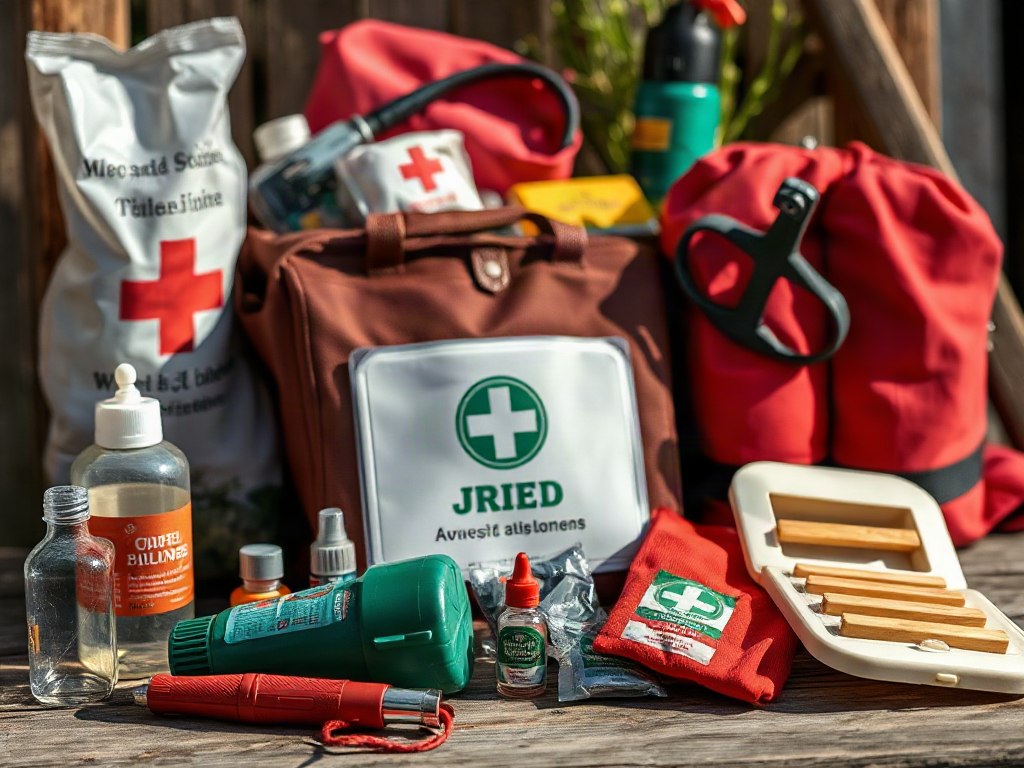
Outdoor Work Injury Supplies for Homesteads should cover bleeding, eye injuries, burns, punctures, sprains, chemical exposure, and communication needs during work away from the house. A practical kit combines gloves, sterile dressings, pressure bandages, irrigation fluid, eyewash, burn dressings, tweezers, a cold pack, splinting material, hand sanitizer, and a charged phone or radio. Supplies should be divided between a main home kit and compact grab-and-go kits for the barn, workshop, tractor, and garden. Check expiration dates, replace used items immediately, and seek urgent medical care for uncontrolled bleeding, deep wounds, impaired breathing, serious eye injuries, or suspected fractures.
Build a Kit Around Homestead Injury Risks
Outdoor work creates a different injury profile from routine household activity. Fencing wire can puncture skin, chainsaws and axes can cause severe bleeding, sawdust can enter an eye, and wet ground can turn a simple walk into a sprain. Livestock add another layer of risk through kicks, bites, crushed fingers, and falls near gates or feeders. A useful first-aid setup reflects those conditions rather than relying on a small household box filled mainly with adhesive bandages.

Begin by listing the work done on the property and the distance from each work area to the main supplies. A person repairing a fence at the far boundary needs a compact kit that can be carried on foot. Someone using a workshop, greenhouse, or barn needs supplies mounted or stored where they can be reached without crossing a cluttered floor. The goal is not to stock every medical product; it is to provide immediate protection, bleeding control, rinsing, covering, and communication until the injury can be assessed properly.
A sensible arrangement usually includes one fully stocked kit inside the home and smaller kits in vehicles or high-risk work zones. A tractor kit might emphasize gloves, gauze, a pressure dressing, eye protection, and a flashlight. A garden pouch might need irrigation fluid, tweezers, wound coverings, and a cold pack. A workshop kit should add burn dressings and a clean eyewash bottle. A single large box in the kitchen is cheaper initially, but it often fails when an injury occurs far from the house.
Do not confuse protective equipment with first-aid equipment. Safety glasses, hearing protection, gloves, boots, and chaps may reduce exposure to hazards, but they do not replace wound-care supplies. Likewise, a first-aid kit cannot make unsafe equipment acceptable. Before expanding the kit, correct the hazard that caused repeated minor injuries, such as a dull blade, poor lighting, loose fencing, or a missing tool guard.
Use the related planning notes in Outdoor Work Injury Supplies for Homesteads as a property-specific inventory reference. The most valuable kit is the one that matches actual tasks, can be found quickly, and is replenished after use.
Essential Supplies for Cuts, Punctures, and Bleeding
Bleeding-control supplies deserve the highest priority because a deep cut can become urgent before someone reaches the house or road. Stock several pairs of nitrile gloves, sterile gauze pads, rolled gauze, adhesive tape, pressure dressings, and absorbent trauma pads. Include a clean barrier such as a CPR face shield if the situation requires assisting another person. A permanent marker can help record the time a dressing was applied for responders, while a headlamp keeps both hands available after dark.
Minor scrapes and shallow cuts can generally be rinsed with clean running water, gently covered, and monitored. A puncture from a nail, staple, thorn, or rusty wire needs more caution because the visible opening may be smaller than the underlying tissue damage. Do not assume that a tiny puncture is harmless. Dirt, plant material, or animal contamination may remain below the surface, and the person may need professional evaluation based on the wound and immunization history.
For heavy bleeding, gloves protect both the helper and the injured person. Apply firm, direct pressure with gauze or a clean dressing and maintain it rather than repeatedly lifting the pad to inspect the wound. If blood soaks through, add material on top instead of removing the first layer. Uncontrolled bleeding, spurting blood, a deep or gaping wound, numbness, loss of movement, or an injury involving the neck, chest, abdomen, or groin requires emergency help. A tourniquet is a specialized tool for life-threatening limb bleeding when direct pressure is not enough, but it should be used according to recognized emergency training and its instructions.
Antiseptic wipes can be useful for cleaning intact skin around a wound, but harsh chemicals poured into tissue may cause irritation and do not substitute for thorough irrigation. Hydrogen peroxide and alcohol are often kept because they are familiar, yet they can damage healthy tissue when repeatedly applied inside an open wound. Clean water, sterile saline, appropriate dressings, and timely medical advice are usually more practical choices.
Consider two common scenarios. A loose fence staple creates a small puncture in a boot-covered foot; the response is not simply to apply an adhesive strip and return to work. The person should remove contaminated footwear, inspect the wound, rinse it, and consider medical assessment. A hatchet slips and causes brisk bleeding on the forearm; the priority is gloves, direct pressure, a pressure dressing, and emergency communication, not searching for ointment. Supplies support the first response, not a substitute for treatment.
Handling Eye Injuries, Burns, Sprains, and Exposure
Eye and exposure supplies are easy to omit because they do not resemble traditional first-aid items. Keep sterile eyewash or clean potable water available in the workshop, barn, and vehicle used for fieldwork. Fine dust, chaff, soil, and small particles should be flushed rather than rubbed. Chemical splashes require immediate, prolonged rinsing while following the product label and seeking urgent medical guidance. A small bottle carried in a pocket may help with dust, but it is not an adequate substitute for a larger accessible rinse source in a chemical-use area.
Protective eyewear remains the better solution when grinding, mowing, trimming, splitting wood, or handling dusty bedding. First aid begins after exposure has occurred; glasses reduce the chance of an injury and may preserve useful time when the work area is remote. Persistent pain, light sensitivity, blurred vision, a penetrating object, or a metal fragment should be treated as an urgent medical concern. Never try to remove an embedded object from the eye.
Burn care calls for clean water, sterile nonstick dressings, gauze, and a clean covering. Cool running water may be appropriate for a minor thermal burn, but ice, grease, flour, and thick household substances can worsen tissue damage or complicate evaluation. Homesteads using woodstoves, canning equipment, welding tools, hot oil, or open-flame burners should place burn supplies near those hazards, not in a distant bathroom cabinet. Electrical, chemical, extensive, deep, facial, hand, foot, genital, or circumferential burns warrant prompt professional evaluation.
For sprains and suspected fractures, a cold pack, elastic wrap, triangular bandage, and padded splint material can help stabilize the situation. A wrap that is too tight can reduce circulation, so fingers and toes should be checked for color, warmth, sensation, and increasing pain. A makeshift splint may be reasonable while waiting for help, but forcing a visibly deformed limb straight is not. Severe pain, inability to bear weight, unusual movement, numbness, or swelling after a high-force incident calls for medical assessment.
Include tweezers for superficial splinters and plant spines, but avoid digging into tissue to remove a deeply embedded object. Packets of oral rehydration solution may be useful during prolonged hot work, although they do not treat heat illness. Confusion, fainting, inability to drink, unusual behavior, or worsening weakness requires emergency action and cooling, not a return to labor. A kit should support sensible first steps while leaving diagnosis and definitive care to clinicians.
Place, Inspect, and Use Supplies Under Pressure
Accessibility determines whether a supply is useful. Mark kits with a clear first-aid label, store them above damp floors, and avoid locked containers unless everyone who works nearby can access the key. A barn kit should not be hidden behind feed bags, and a vehicle kit should remain usable across seasonal temperature changes. Heat, freezing conditions, moisture, dust, and sunlight can degrade dressings, adhesive products, medications, and plastic packaging.

Use a short inspection routine at the beginning of each active season and after any significant injury. Check that sterile packages are sealed, gloves are intact, scissors and tweezers are clean, eyewash has not expired, flashlights work, and the phone or radio can reach someone outside the work area. Replace missing items immediately rather than waiting for a scheduled shopping trip. Recording the inspection date on the lid makes responsibility visible when several people share the property.
A compact field kit should be light enough to carry but substantial enough to control the first urgent problem. A practical checklist includes:
- Nitrile gloves, hand sanitizer, and barrier protection.
- Sterile gauze, rolled gauze, pressure dressings, tape, and absorbent pads.
- Clean water or saline for rinsing, plus eyewash where eye hazards exist.
- Nonstick burn dressings, a cold pack, elastic wrap, triangular bandage, and splint material.
- Tweezers, blunt-tip scissors, a headlamp, marker, emergency contacts, and a charged communication device.
Medication deserves separate judgment. Some households include ordinary pain relievers or allergy medicine, but allergies, pregnancy, age, chronic conditions, and drug interactions make shared medication a poor one-size-fits-all solution. Keep medicines in original labeled packaging and follow the label. Do not give someone else a prescription medication, and do not let pain relief conceal a serious injury that needs evaluation.
Practice matters more than buying an elaborate bag. Everyone who works outdoors should know the kit locations, how to call for help, and which hazards require stopping work immediately. A brief drill can reveal that a gate blocks the route, a phone has no signal, or gloves are buried beneath unrelated tools. Keep the field kit inventory paired with a property map, access instructions, and emergency contact information. If a response depends on finding supplies, identifying the injury, and contacting help, those steps should be rehearsed before an accident.
The common failure is overconfidence after a minor incident. A cut that appears closed may reopen during lifting; a dusty eye may continue to hurt after rinsing; a twisted ankle may be unstable despite reduced swelling. Stop the task, reassess after initial care, and escalate when symptoms persist or worsen. The cheapest kit is not the smallest one—it is the one that prevents delays without encouraging unsafe self-treatment.
Frequently Asked Questions
What should every outdoor homestead kit contain?
Carry gloves, gauze, a pressure dressing, tape, wound-rinsing fluid, scissors, tweezers, a cold pack, an elastic wrap, a flashlight, and emergency contact information.
Should a homestead have more than one first-aid kit?
Yes. A home kit plus smaller kits in vehicles, workshops, barns, and remote work areas reduces delays when an injury occurs away from the house.
When does a cut require urgent medical attention?
Seek urgent help for uncontrolled bleeding, a deep or gaping wound, loss of sensation or movement, severe contamination, or injuries to the face, chest, abdomen, neck, or groin.
Is hydrogen peroxide suitable for cleaning every wound?
No. Repeated use inside an open wound may irritate healthy tissue. Clean water or saline and an appropriate dressing are generally more practical for initial care.
How often should outdoor injury supplies be checked?
Inspect them at least at the start of each active season and after every use, with extra checks after exposure to heat, freezing temperatures, moisture, or dust.
Conclusion
A dependable homestead injury setup is built around the work that actually happens outdoors. Prioritize bleeding control, gloves, wound irrigation, eyewash, burn coverings, sprain supplies, lighting, and communication before adding less essential items. Divide those supplies among the home, vehicle, barn, workshop, and field so distance does not become the first obstacle after an accident.
Inspect packaging and expiration dates, replace used materials immediately, and teach every regular worker where the kits are kept. Treat persistent pain, impaired movement, serious eye symptoms, deep wounds, burns, and uncontrolled bleeding as reasons to seek professional care rather than problems to conceal with a bandage. A short seasonal drill and a written emergency contact plan can make the equipment far more effective when work does not go as planned.