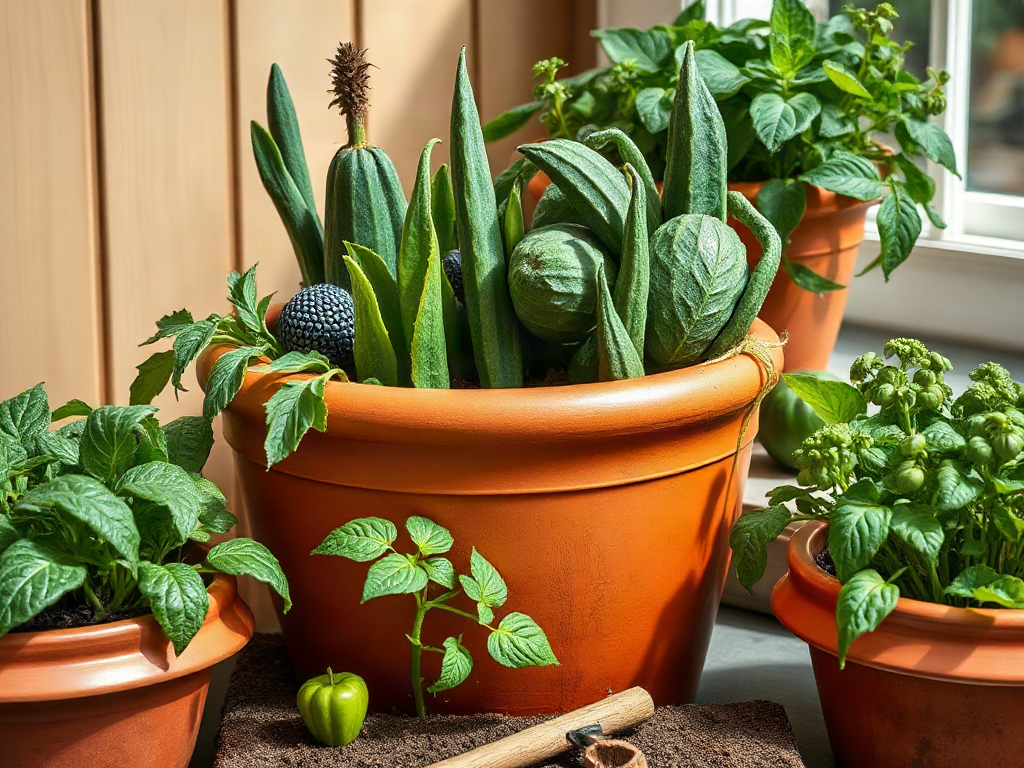
Assess Light, Space, and Container Weight
Successful container gardening begins with measuring the growing site, not buying pots. Track direct sunlight over a clear day and note whether nearby walls, railings, or buildings block light at midday. Fruiting plants such as tomatoes, peppers, and beans usually need the brightest position available, while lettuce, spinach, parsley, and some other leafy crops can tolerate less intense light. A balcony that receives morning sun may suit greens and herbs better than a patio tomato, even if both locations feel bright.
Limited space also includes the surface beneath the container. A large planter filled with wet mix becomes difficult to move and may be unsuitable for a balcony or narrow shelf. Choose a final position before filling heavy pots, and use a wheeled caddy only when the surface is stable and the container can be secured. Rail planters and hanging baskets save floor area, but they dry quickly and may be exposed to wind. A deep pot on the ground is less space-efficient but generally more forgiving.
Sketch the area with three practical zones: the brightest location, a partly shaded location, and a convenient watering point. Reserve the brightest zone for crops that must flower or fruit. Put salad greens and herbs where they can be harvested frequently. Leave enough room between containers to inspect leaves, remove damaged growth, and water the soil rather than spraying the foliage.

- Bright sun: patio tomatoes, peppers, bush beans, cucumbers, and strawberries.
- Partial sun: lettuce, chard, parsley, cilantro, and green onions.
- Vertical space: compact peas or cucumbers with a secure trellis, provided the support will not catch damaging wind.
A common mistake is treating every unused corner as equally productive. Light determines whether a plant can make enough energy for a harvest, while access determines whether it receives dependable care. Begin with fewer containers placed where they are easy to reach; an organized cluster usually outperforms a crowded collection scattered across difficult locations.
Choose Crops That Fit Small Pots
Crop selection should follow the available container volume and harvest goal. Shallow-rooted greens can grow in a broad box, whereas tomatoes, peppers, carrots, and larger eggplants need deeper or more substantial containers. A compact variety may take less vertical room, but it still needs enough root space and sunlight. “Dwarf” describes plant size, not a permission to use a tiny pot.
For a first planting, combine quick crops with longer-season plants. Radishes and baby lettuce provide an early harvest while a pepper or tomato develops. Basil, chives, thyme, and parsley are useful in small pots because repeated harvesting keeps them productive, although mint should usually have its own container because it spreads aggressively. Bush beans can produce well in a moderate planter, while vining beans require support and can shade neighboring plants.
Read the seed packet or plant label for mature height, spread, and spacing rather than relying only on the container’s diameter. A patio tomato may still become top-heavy when loaded with fruit. A trellis can make a cucumber possible in a small footprint, but the support must be installed before the vine becomes tangled. Root vegetables require a soil depth that accommodates the mature root; growing short carrot types is more realistic than forcing standard carrots into a shallow box.
Plant combinations also need compatible water and light preferences. Rosemary prefers a drier interval than lettuce, so placing them together creates a compromise that may suit neither. Tomatoes and basil can share a large container only when the pot is large enough for both root systems and the basil does not crowd the tomato’s base. Separate pots make it easier to adjust watering and replace a declining plant.
Prioritize crops that are expensive, perishable, or frequently used in your kitchen. A small pot of cut-and-come-again lettuce may offer more practical value than a space-consuming pumpkin vine. The weak assumption to avoid is that the most ambitious crop is the best choice; in a confined garden, reliable harvests from compact plants are a stronger measure of success than variety count.
Build Containers for Healthy Roots
Every container needs drainage, a stable base, and a growing medium that holds moisture while allowing air around the roots. Drainage holes should release excess water freely; adding a layer of gravel at the bottom does not improve drainage and reduces the volume available for roots. Use a commercial potting mix or a container-specific blend rather than dense garden soil, which can compact and remain waterlogged in a pot.
Container shape influences both plant stability and watering. A wide, heavy pot is useful for a tomato or pepper because it resists tipping, while a long window box suits shallow-rooted greens. Dark containers may heat more quickly in strong sun, and porous terracotta loses moisture through its sides. Neither material is automatically better: terracotta can benefit plants that dislike persistently wet conditions, while plastic may reduce watering frequency in a hot, exposed position.
Fill the pot nearly to the top, leaving a small gap so water does not wash soil over the edge. Set a saucer underneath only where runoff will not damage the surface, and empty standing water when it collects for extended periods. Containers placed on a balcony should have a runoff plan because repeated leakage can stain flooring or affect the space below.
Match pot size to the plant
Use a modest container for a single herb or a shallow crop, but give fruiting plants enough volume to support both roots and top growth. A pot that is too small dries rapidly, warms unevenly, and leaves little nutritional reserve. An oversized container is not harmful by itself, but a small seedling in a very large volume can sit in wet mix after watering, particularly in cool weather. Increase size thoughtfully as roots fill the available mix.
Start seeds in trays or small cells when appropriate, then transplant sturdy seedlings into their intended pots. Handle root balls gently and water the mix after planting so it settles around the roots. The common failure is filling an attractive container with poor soil and treating later fertilizer as a cure. Feed cannot correct persistent drainage problems, compacted mix, or a pot that is fundamentally too small.
Water, Feed, and Maintain a Compact Display
Container plants need more frequent moisture checks than plants in the ground because their limited soil volume is exposed on several sides. Check the mix with a finger near the surface and lift smaller pots to judge their weight. A dry surface alone does not prove the root zone is dry, while a wilted plant may be suffering from overheated roots or damaged roots rather than simple thirst.
Water slowly until some moisture exits the drainage holes, then allow excess to drain. Light sprinkling wets only the top layer and encourages roots to remain shallow. On hot, windy days, a small container may need attention more than once, while a shaded plastic pot may stay damp much longer. Grouping plants with similar moisture needs makes the routine easier, but do not crowd them so closely that leaves remain wet and airflow disappears.
Potting mixes contain limited nutrients, and repeated watering can carry soluble nutrients away. Use a fertilizer labeled for vegetables or herbs and follow its directions rather than assuming more will produce faster growth. Slow-release products reduce the need for frequent feeding, while a diluted liquid fertilizer can be useful when plants are actively growing. Pale leaves, weak growth, or poor flowering can signal several problems, including insufficient light, root restriction, cold conditions, or nutrient imbalance; fertilizer is not the first answer to every symptom.
Harvesting is part of maintenance. Pick lettuce leaves from the outside, remove basil tips above a pair of leaves, and harvest beans while pods are young and firm. Regular picking can keep some crops producing, but it cannot overcome insufficient light or a plant’s natural short season. Inspect undersides of leaves weekly for aphids, mites, whiteflies, and chewing damage. Remove isolated pests by hand or with a gentle water spray before considering a treatment, and follow the product label if one is used.
A practical routine is to check moisture and leaf condition during watering, rotate containers when growth leans toward the light, and record which pots dry fastest. Overwatering is the most common mistaken response to wilting. If the mix stays wet for days, the solution may be better drainage, a smaller watering volume, more light, or removal of a saucer—not another drink.
Fix Common Problems and Plan the Next Planting
Small-space gardens reveal problems quickly because each container has little margin for error. Yellow lower leaves can follow aging, excess water, or depleted nutrition. Brown leaf edges may reflect dry mix, salty fertilizer buildup, heat, or wind. Stretched seedlings usually indicate inadequate light rather than a need for more fertilizer. Diagnose the growing conditions before changing several variables at once.
When growth fails, inspect the pot’s drainage holes, the root zone, and the plant’s daily light. Roots that smell sour or appear dark and mushy suggest prolonged saturation. A plant with a tightly circling root ball may need a larger container, but transplanting a stressed plant into a much larger wet pot can prolong the problem. If a tomato produces leaves but few flowers, check sunlight, temperature swings, and excess nitrogen before blaming the variety.
Space limitations make succession planting especially valuable. After radishes or an early lettuce crop finishes, remove spent roots, refresh the mix with new container medium or suitable amendments, and plant another short-season crop if weather permits. Do not automatically reuse mix from a diseased plant for another susceptible crop. Cleaning pots and removing dead plant material reduces the chance of carrying problems into the next planting, although it does not replace sound watering and spacing.
Use this compact priority order when a container garden feels difficult:
- Confirm drainage and choose a pot large enough for the mature plant.
- Place the crop according to its actual light requirement.
- Match watering frequency to weather, pot material, and plant size.
- Feed modestly only after light, roots, and moisture are functioning.
- Replace poor performers with a crop better suited to the site.
Compare a struggling container with a successful one nearby. If both receive the same light but one dries faster, pot material, wind exposure, root volume, or plant density may explain the difference. The useful lesson is not to copy a fixed schedule but to observe the container’s response. Add the container gardening for beginners with limited space plan to your seasonal notes, and use those observations to select better crops next time.
For readers building a broader edible setup, container gardening for beginners with limited space can complement a small in-ground bed, while container gardening for beginners with limited space remains useful for testing varieties before committing scarce ground space.
University extension publications on vegetable container gardening, seed packets, and local horticultural guidance can help you verify mature plant size, seasonal timing, and crop-specific spacing for your climate. Those sources are more useful than a universal watering calendar because containers respond to local heat, wind, light, and pot materials.
Frequently Asked Questions
What vegetables are easiest in containers for beginners?
Lettuce, radishes, green onions, basil, chives, bush beans, and compact peppers are approachable choices. Patio tomatoes can work well when given strong light, a sturdy pot, and support.
How much sunlight do container vegetables need?
Fruiting crops generally need the brightest location available, while leafy greens and several herbs can manage with less direct light. Watch the site through the day rather than judging brightness from one moment.
Can I use soil from my yard in a container?
Garden soil may compact and drain poorly in pots. A quality potting mix is usually a better choice because it is formulated to balance moisture retention and air space around roots.
How often should container plants be watered?
Check the root-zone moisture frequently and water when the mix is beginning to dry, then soak thoroughly until some water drains. Frequency changes with heat, wind, pot material, plant size, and container volume.
Why are my container plants wilting even after watering?
Wilting can result from saturated roots, excessive heat, root restriction, or damaged roots as well as drought. Check drainage, soil moisture below the surface, recent weather, and whether the pot is large enough.
Conclusion
A productive container garden in a small area depends on matching the plant to the site rather than squeezing every possible crop into available pots. Measure sunlight, protect access for watering, and reserve larger, heavier containers for fruiting plants that need root volume and support. Begin with a few reliable crops, use a draining potting mix, and observe moisture at the root level instead of following a rigid calendar. When a plant struggles, inspect light, drainage, root space, and crowding before adding fertilizer or water. Record which combinations perform well, then replace finished salad crops with another short-season planting. Careful selection and repeatable routines will produce more useful harvests than a crowded arrangement of unsuitable varieties.