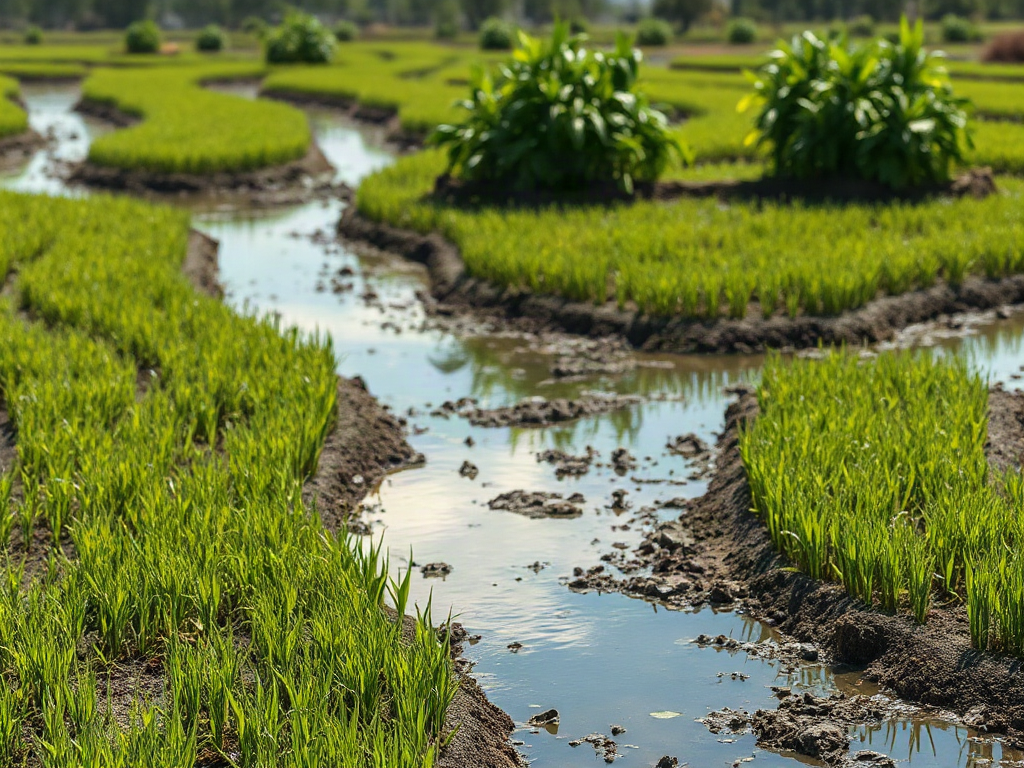
Aztec farming methods made productive raised fields possible by building chinampas from lake sediment, vegetation, and soil within shallow wetlands, then managing canals around the plots. The surrounding water supplied irrigation, moderated temperature, provided nutrient-rich mud, and allowed crops and materials to move by canoe. Farmers maintained fertility through repeated additions of organic matter rather than relying on permanently fertile construction fill. Chinampas supported intensive harvests near major settlements, but their success depended on controlled water levels, regular canal clearing, secure field edges, and coordinated labor—not simply on making elevated garden beds.
How Chinampas Were Built in Shallow Wetlands
Chinampas were long, narrow cultivation plots formed in shallow lake margins and wetlands, especially in the southern Basin of Mexico. They are often called “floating gardens,” but mature fields did not normally float. Farmers created stable planting surfaces by marking plot boundaries, enclosing them with posts or woven vegetation, and filling the enclosed area with layers of aquatic plants, mud, and mineral soil until the surface stood above the surrounding water.
The narrow shape was functional rather than decorative. A farmer working from the plot or a canoe could reach much of the cultivated surface without moving soil over a long distance. Canals between fields provided access and supplied material for maintenance. Mud dredged from a canal could be spread over a field, while cut vegetation could be incorporated as organic matter. That linked field improvement with waterway upkeep: clearing a canal restored passage and drainage while producing useful material for the beds.
Trees, particularly willows suited to wet ground, could be planted along field margins. Their roots helped reinforce vulnerable edges, and their trunks marked boundaries. Trees were not a substitute for structural maintenance, however. Unsupported banks could slump into canals, while excessive woody growth could shade crops or consume working space. Successful construction balanced reinforcement with sunlight, access, and continued dredging.
Water level was the decisive constraint. A plot built too low faced saturated roots or inundation; one raised too high lost the convenient connection between moist subsoil and the canal. Salinity also mattered in parts of the lake system. Freshwater cultivation was more dependable where water movement and hydraulic works limited intrusion from saltier lake areas. Dikes, causeways, sluices, and canals therefore belonged to the larger agricultural system even though an individual chinampa was managed as a field.
The most misleading comparison is a conventional framed garden bed. A timber-sided bed on dry ground holds imported soil and depends on external watering. A chinampa was integrated with a wetland: its dimensions, fertility inputs, transport routes, and drainage all depended on adjacent canals. Readers examining Aztec farming methods and productive raised fields should treat the field and water network as one piece of infrastructure. Copying the raised surface without the managed hydrology misses the mechanism that made it productive.
Why Raised Fields Could Produce Repeated Harvests
High productivity came from continuous management of moisture, nutrients, planting space, and growing time. Raising the root zone above open water reduced prolonged saturation while leaving water close enough for irrigation. Canal water could be lifted onto crops during dry periods, and the surrounding water moderated rapid temperature changes near the field surface. These advantages reduced certain stresses, but they did not remove the need for attentive crop care.
Fertility was renewed rather than assumed. Farmers could return canal sediment, decomposed aquatic vegetation, household organic residues, and other locally available materials to the plots. Fine sediment recovered nutrients that had moved from land into waterways. Organic additions improved the cultivated layer and replaced some of what harvests removed. Repeated applications mattered because intensive cropping steadily exported nutrients in edible plants and crop residues.
Seedling production made the system more efficient. Seeds could be started in carefully prepared nursery areas and transplanted after germination, allowing the main plot to remain occupied by a maturing crop for longer. Transplanting also let farmers select vigorous seedlings and establish regular spacing. A nursery did not guarantee success: seedlings moved too late could suffer root disturbance, and tender plants still faced weather, pests, and transplant shock. Its value was tighter control over timing and scarce field area.
Several interacting features explain the harvest intensity:
- Reliable moisture: canals kept water close, although it still had to be directed onto the root zone appropriately.
- Recycled fertility: sediment and organic material returned nutrients and rebuilt the surface layer.
- Nursery scheduling: replacement seedlings could be ready as soon as space opened.
- Long cultivation periods: local conditions and moisture access allowed land to remain in use for much of the year.
A common mistake is to credit productivity entirely to nutrient-rich lake mud. Sediment could be valuable, but a field receiving repeated harvest pressure still needed replenishment, weed control, pest observation, edge repair, and water management. Too much wet sediment applied at once could bury small plants or create a poorly aerated surface. Material also had to come from water known to be suitable for food production; that limitation is especially important for any modern adaptation near contaminated runoff.
Compared with rain-fed upland plots, chinampas demanded more infrastructure and routine labor but offered more control over moisture and planting schedules. Their strength was not effortless abundance. It was the concentration of water, fertile material, transport, and skilled labor in a compact landscape close to consumers.
Crops, Nurseries, and the Working Farm System
Chinampa cultivation supported diverse food production rather than a single-crop formula. Maize, beans, squash, chiles, tomatoes, amaranth, herbs, and flowers are associated with agriculture in the Basin of Mexico, although crop combinations varied by place, period, market, and field conditions. Maize supplied a staple grain, beans contributed protein-rich food, squash provided edible fruit and seeds, and chiles and tomatoes added culinary and trade value.
Crop diversity should not be reduced to the familiar idea that maize, beans, and squash were always planted together in every bed. Intercropping can use vertical space and provide complementary growth habits, but dense mixtures complicate transplanting, harvesting, and repeated soil additions. A market-oriented grower might devote different plots or rows to crops with distinct harvest schedules. Flowers and specialty produce could be valuable near a large urban population even when they were not dietary staples.
The working calendar required matching crop needs to field position. Moisture-sensitive plants belonged on well-drained surfaces, while the lowest or most flood-prone edges demanded caution. Taller crops could shade nearby seedlings if rows were poorly oriented or crowded. Succession planting worked only when nursery plants were ready, fertility had been restored, and the previous crop was removed promptly. A vacant plot represented lost production, but planting immediately into compacted or depleted soil could produce a weak stand.
A practical field sequence would involve preparing nursery soil, sowing a replacement crop, tending the occupied field, harvesting at maturity, adding suitable sediment or decomposed organic material, leveling the surface, and transplanting the next seedlings. Signs that management was working included even emergence, stable banks, navigable canals, soil that remained moist without staying waterlogged, and new growth after transplanting. Warning signs included yellowing across an entire plot, stagnant or foul water, collapsing margins, salt deposits, persistent root disease, or a canal gradually filling until it no longer buffered or drained the field.
Transport added another layer of productivity. Canals allowed bulky composting material, harvested produce, tools, and workers to move by canoe through the agricultural district. That reduced the difficulty of carrying loads over saturated land. Proximity to Tenochtitlan and other settlements connected intensive production with concentrated demand, although chinampa districts were only part of the wider food system. Tribute, trade, and cultivation outside the wetland zones also supplied urban populations.
For a useful interpretation of Aztec farming methods and productive raised fields, separate biological output from the social organization supporting it. Canals, water-control structures, boundary maintenance, and transport routes required cooperation beyond a single planting decision. A productive field could decline if the shared canal serving it became obstructed or if broader water control failed.
What Modern Homesteaders Can Adapt—and What They Should Not Copy
Modern growers can adapt the principles of chinampa agriculture more safely than they can reproduce the historic system literally. Useful principles include placing water close to crops, recycling clean pond sediment and aquatic biomass, raising roots above saturated ground, producing transplants in advance, and arranging beds for short travel distances. A small homestead does not need to excavate a canal network to apply those lessons.
On a seasonally wet property, broad raised rows separated by shallow drainage channels may protect roots while capturing runoff. Near a clean irrigation pond, a grower might use settled sediment after confirming that the water receives no sewage, road runoff, livestock waste, or chemical contamination. In a dry climate, sunken paths or water-storage basins may conserve moisture more effectively than exposed raised beds. The correct adaptation follows local hydrology; copying the visible shape while ignoring rainfall, evaporation, soil texture, and water quality can make conditions worse.
A compact planning checklist keeps the adaptation grounded:
- Map water movement. Observe the site during wet and dry periods before changing grades.
- Test the soil and water. Check basic fertility and investigate plausible contamination risks before applying sediment to food beds.
- Start with one trial plot. Compare its drainage, irrigation demand, labor, and yield with a conventional bed.
- Provide an overflow route. Water must leave safely during heavy rain rather than cutting through the bed.
- Track maintenance. Record sediment buildup, bank erosion, crop response, and time spent clearing channels.
The main tradeoff is labor versus control. Water-adjacent beds may reduce irrigation hauling and make biomass recycling convenient, yet channels accumulate weeds and sediment, banks erode, and standing water may create mosquito habitat if circulation and local ecology are ignored. Deep, steep-sided water also creates a hazard for children, livestock, and wildlife. Simple drainage swales or ordinary raised rows are often more sensible where land is limited, winters freeze water structures, or maintenance time is scarce.
Water quality creates the firmest boundary. Historic nutrient cycling occurred in a different waste and pollution context from modern peri-urban waterways. Sediment from a roadside ditch, industrial area, treated lawn, mine-affected watershed, or water body receiving wastewater should not be assumed safe because it looks rich and dark. Composting does not reliably remove metals or every persistent contaminant. Food growers should use known inputs and seek appropriate testing when a credible risk exists.
The best sign of a successful adaptation is not visual resemblance to a chinampa. It is a stable root zone, predictable moisture, safe inputs, manageable upkeep, and harvest gains that justify the construction. The broader account of Aztec farming methods and productive raised fields offers design logic, but local evidence should decide whether a water-linked bed, a drained mound, or a conventional garden is the better choice.
Frequently Asked Questions
Were Aztec chinampas actually floating gardens?
No. Mature chinampas were constructed fields anchored in shallow wetlands. Their association with water and vegetation led to the “floating gardens” label, but the cultivated surface was built up and stabilized.
Why were chinampas so productive?
Nearby water, recycled canal sediment, organic inputs, nursery transplants, long growing periods, and intensive labor allowed fields to be planted repeatedly. Productivity depended on maintenance rather than the raised shape alone.
What crops were grown on Aztec raised fields?
Growers cultivated crops including maize, beans, squash, chiles, tomatoes, amaranth, herbs, and flowers. Planting choices varied with field conditions, household needs, and urban market demand.
Did chinampas need irrigation?
Yes. Canal water was close at hand, but moisture still had to reach the crop root zone. Farmers also had to manage drainage and water levels so roots did not remain saturated.
Can a homesteader build a modern chinampa?
A homesteader can adapt its water-management and nutrient-recycling principles, but should first assess flooding, water quality, drainage, safety, and maintenance. A simple raised row may be safer and more efficient than a literal canal field.
Conclusion
Chinampa agriculture worked because cultivation, waterways, fertility renewal, seedling production, and transport operated as a connected system. The raised plots protected crop roots only when canals remained functional and water levels stayed suitable. Repeated additions of clean sediment and organic material replaced nutrients, while nurseries shortened the interval between harvests.
For a modern homestead, the sound next step is to study site hydrology before moving soil. Mark seasonal wet areas, identify the source and quality of incoming water, and compare one modest trial bed with an ordinary garden plot. Keep any channel shallow and safely drained, use only verified clean inputs, and record whether reduced irrigation or stronger harvests compensate for added maintenance. The enduring lesson is disciplined integration—not a promise that every wet property should become a canal garden.