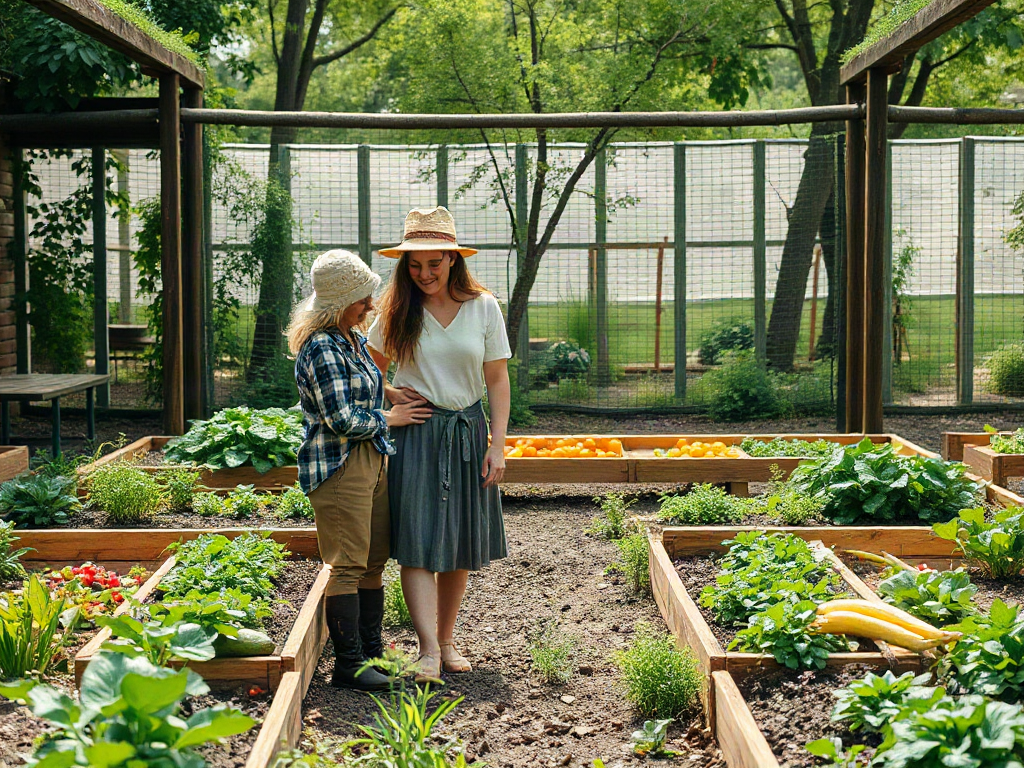
Three sisters farming can extend beyond a single garden layout by arranging corn, climbing beans, and squash in mounds, staggered blocks, strips, or rotating plots according to available space and labor. Corn must become sturdy before beans begin climbing, while squash needs enough light and room to cover exposed soil without smothering young crops. Variety choice, planting sequence, water access, and harvest routes matter more than copying one traditional diagram. The system works best when treated as adaptable intercropping rather than a promise that every corn, bean, and squash combination will thrive together.
Why Is the Three Sisters System More Than One Layout?
The familiar picture of corn, beans, and squash sharing one circular mound is only one expression of a much broader intercropping practice. Indigenous agricultural traditions developed in distinct climates, soils, and communities, so the crops and their arrangement were not uniform. A humid region with deep soil presents different choices from a dry site where water must be concentrated. Treating one diagram as the definitive design strips away that local adaptation and can produce a poorly functioning garden.
Each crop occupies a different physical layer. Corn provides vertical structure, climbing beans use that structure, and sprawling squash shades part of the soil surface. Their growth habits can reduce bare ground and make productive use of horizontal and vertical space. Those relationships are conditional, however. A weak sweet-corn stalk may lodge under vigorous pole beans, while an aggressive winter squash can overrun slow-growing corn. Dense foliage may suppress some weeds but can also conceal pests and make harvesting difficult.
The nitrogen relationship is frequently overstated. Legumes host nitrogen-fixing bacteria in root nodules when compatible bacteria and suitable soil conditions are present. Much of that nitrogen remains in the bean plant during active growth; neighboring corn should not be expected to receive an immediate, complete supply. Nitrogen may become more available to later crops as roots and residues decompose. A field with low fertility therefore still needs soil testing, compost, an appropriate rotation, or another locally suitable fertility plan.
A practical interpretation begins with functions rather than a fixed shape. The corn needs adequate sunlight and enough neighboring corn plants for wind pollination. The beans need supports that will remain upright. Squash needs room to run without blocking access or burying seedlings. A gardener can preserve those relationships in clusters, offset rows, broad beds, or adjacent strips.
For example, a small homestead might plant several short corn blocks, place pole beans along selected inner rows, and direct squash vines toward the block edges. This differs from an isolated mound, yet it retains complementary growth layers and improves picking access. The common mistake is maximizing plant density before considering mature size. Begin with fewer vines and beans than the space appears able to hold; additional exposed soil can be mulched, but an impenetrable planting is difficult to correct.
How Should You Choose a Field Pattern?
The best pattern fits the field dimensions, sunlight, water delivery, equipment, and expected harvest routine. A design that performs well in a hand-tended bed may interfere with a wheel hoe, irrigation line, or harvest cart. Before planting, mark where people will walk and where squash vines can spread without crossing every route.
| Pattern | Useful Situation | Main Tradeoff |
|---|---|---|
| Clustered mounds | Hand cultivation and compact sites | Clusters can become crowded and dry quickly |
| Staggered blocks | Better corn pollination with controlled access lanes | Requires deliberate spacing between blocks |
| Parallel or offset rows | Drip irrigation and straightforward harvesting | Beans may shade nearby squash unevenly |
| Adjacent strips | Larger plots, crop rotation, or light equipment | Plants interact less closely than in mixed clusters |
Clustered mounds concentrate the crops and are convenient for hand work, but a mound is not automatically the right response to wet or dry soil. Raised soil can drain and warm sooner, yet it may lose moisture faster. On a dry, sandy site, level basins or modest planting stations may conserve water better than high hills. On poorly drained ground, raised planting areas may protect roots from prolonged saturation. The soil and rainfall pattern should determine the contour.
Blocks offer a strong compromise for many homesteads. Corn is wind-pollinated, so several short rows grouped together generally provide more opportunities for pollen to reach silks than one long, narrow row. Beans can be limited to selected stalks instead of every plant, and squash can be placed around the perimeter. Leave deliberate openings into the block; otherwise, checking ears or picking beans requires stepping over vines.
Strip arrangements separate the sisters without completely isolating them. A corn-and-bean strip can alternate with a squash strip, followed by a service lane. This approach is useful when the grower wants clearer crop rotation, simpler drip-line placement, or access for a cart. Its weakness is reduced living ground cover beneath the corn, which may require mulch or shallow early cultivation.
Draw the mature footprint rather than the seedling footprint. Mark north and south, likely shade, water lines, paths, and the direction vines should travel. If access or irrigation looks awkward on paper, greater density will make it worse in midsummer. Choose the least complicated pattern that meets the farm’s actual goals instead of forcing every possible plant interaction into one bed.
How Do You Match Crops and Planting Times?
Compatible growth rates matter more than simply choosing one crop from each category. The corn must be tall and firmly rooted before climbing beans exert weight on it. The squash should establish soon enough to cover soil but not so quickly that its leaves shade newly emerged corn. Local frost dates, soil temperature, and the days to maturity printed on seed packets shape the sequence.
Sturdy, tall corn is usually a better living support than compact sweet corn, although mature size alone does not guarantee resistance to wind. Pole beans should climb rather than remain bushy, but extremely vigorous varieties can overwhelm the stalks. Squash selection changes the entire footprint: a compact summer squash occupies a defined space, while a long-vined winter squash may travel across paths and neighboring beds. Selecting all three crops independently and combining them afterward is a common cause of failure.
Plant corn first and wait until it is established before sowing pole beans nearby. The correct interval varies with temperature and growth rate, so plant development is a better signal than a rigid calendar date. Corn should have enough height and root anchorage that emerging bean vines cannot pull it sideways. Squash may be sown with the corn or shortly afterward where the season permits, but its first true leaves should not close over the corn stations.
A cool-spring scenario shows why fixed schedules are unreliable. Corn planted into marginally cold soil may emerge slowly, while beans planted by a preset date can catch up and begin twining around weak seedlings. In that case, delaying the beans is safer than preserving the original interval. In a warm climate, rapid corn growth may shorten the wait. Check crop development every few days rather than treating all plantings identically.
Use a small first-year trial to test the combination. Record the varieties, sowing dates, spacing, irrigation, wind exposure, and whether the corn remained upright. Signs of a workable match include corn rising above bean foliage, squash covering gaps without swallowing planting stations, and paths remaining usable. Leaning stalks, tangled bean growth near the ground, pale corn, or squash advancing over young plants signal a need to reduce density, redirect vines, or change varieties next season.
Seed saving adds another constraint. Multiple corn varieties flowering at the same time can cross-pollinate, while some squash varieties cross within compatible botanical groups. Growers seeking true-to-type seed need appropriate isolation or controlled pollination. Food production and seed purity are separate design goals, and a compact polyculture does not automatically satisfy both.
Managing Soil, Water, Weeds, and Harvest Access
Management determines whether the planting remains cooperative after the canopy closes. Test the soil when possible and correct major deficiencies before sowing. Corn is a demanding feeder, and relying solely on the presence of beans can leave it stunted and pale. Finished compost can contribute organic matter and nutrients, but the amount and any additional amendments should reflect soil conditions rather than a universal recipe.
Water should reach root zones without repeatedly soaking foliage. Drip lines or carefully placed soaker hoses are easier to inspect before vines cover the ground. If watering by hand, retain several access points and use a wand that reaches beneath leaves. Dense foliage can make the surface look moist while raised stations or the soil underneath remain dry. Check moisture with a finger or trowel at root depth instead of judging by leaf cover alone.
Early weed control has the greatest payoff. Squash eventually shades open ground, but seedlings do not suppress established weeds. Hoe shallowly or hand-weed while the crops are small, taking care around developing roots. Once vines spread, pulling large weeds can disturb squash runners and bean roots. Organic mulch may protect remaining bare soil, provided it is kept away from seedling stems and does not form a cold, wet mat.
A compact field check keeps the system manageable:
- Before sowing: map sun, water, paths, mature vine spread, and the planned rotation.
- During establishment: confirm corn emergence and anchorage before allowing beans to climb.
- Before canopy closure: remove weeds, position irrigation, and redirect young squash vines.
- During production: inspect stalk lean, leaf color, soil moisture, pest damage, and harvest access.
- After harvest: record yields and failures, return healthy residues appropriately, and rotate crop families where space permits.
Rotation is easier with blocks or strips than with one permanent mixed mound. Moving corn and beans while shifting squash to another section can interrupt repeated pressure from crop-specific diseases and pests, although rotation distances and intervals depend on the particular problem. Remove diseased material rather than assuming every residue belongs in place. Healthy residues can contribute organic matter, but woody corn stalks decompose slowly and may need chopping or separate composting.
Harvest labor deserves equal weight with biological interaction. Fresh beans may require frequent picking, summer squash can become oversized quickly, and corn maturity creates a short period of concentrated work. If vines hide every path, produce will be missed or damaged underfoot. A slightly lower planting density with visible picking lanes often gives a more usable harvest than a densely planted demonstration bed.
Frequently Asked Questions
Do the three sisters have to be planted in one mound?
No. Clusters, blocks, offset rows, and adjacent strips can preserve complementary crop functions while improving irrigation, rotation, or harvest access.
Should corn, beans, and squash be planted on the same day?
Not necessarily. Corn should establish enough height and root strength before pole beans climb it. Squash timing should prevent its foliage from covering young corn.
Will beans provide all the nitrogen corn needs?
No. Much of the fixed nitrogen remains in living bean tissue during the season. Use soil conditions, testing, compost, and crop rotation to make fertility decisions.
Can sweet corn support pole beans?
Some sturdy sweet-corn varieties may support restrained bean growth, but short or weak stalks can lodge. Trial the pairing on a small scale before expanding it.
What is the easiest pattern for a larger homestead plot?
Blocks or strips are often easier to irrigate, weed, rotate, and harvest than tightly mixed mounds. The best choice depends on equipment width and available paths.
Conclusion
A useful three sisters planting starts with the land and the grower’s working routine, not a copied diagram. Select a pattern that gives corn a pollination-friendly grouping, keeps climbing beans on sound supports, and directs squash away from essential access routes. Match varieties by mature size and growth speed, then delay beans until the corn is securely established.
Before expanding, test one block or strip and document what happens through harvest. Watch stalk stability, crop color, weed pressure, soil moisture, vine direction, and the time required to pick produce. Adjust spacing and crop choices from those observations. The strongest design may be less densely mixed than the familiar mound, but it will be easier to water, rotate, inspect, and harvest under the conditions of the homestead.