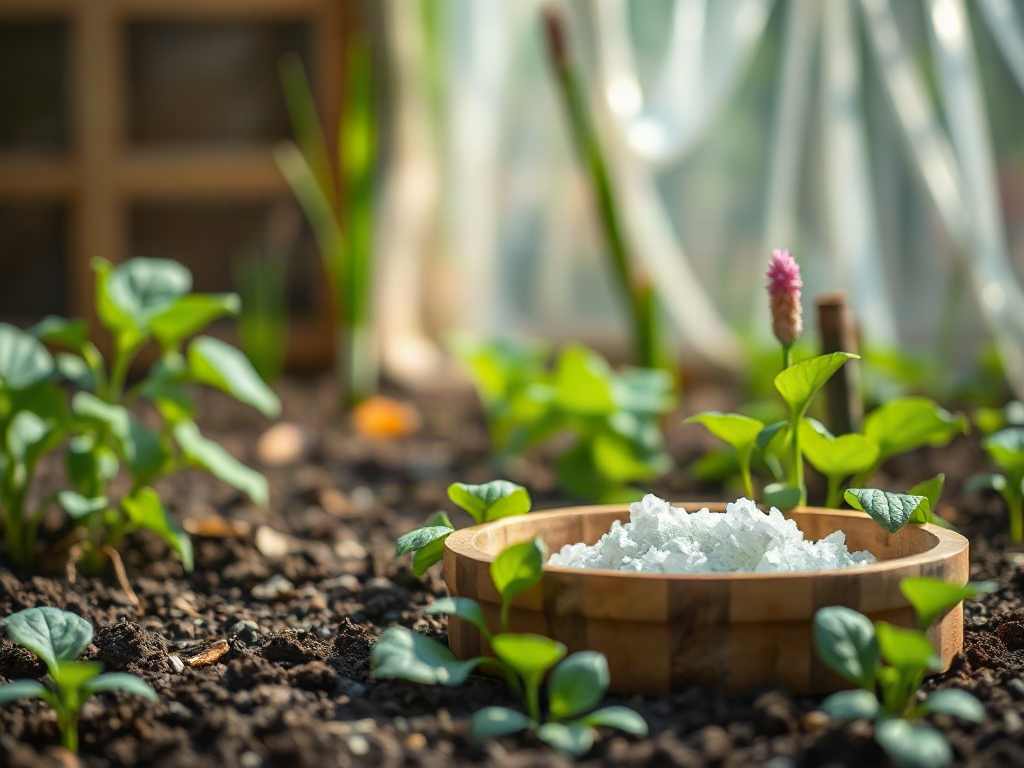
Korean natural farming inputs for a small homestead should begin with indigenous microorganisms, fermented plant juice, and a simple water-soluble calcium preparation rather than the entire KNF catalog. These inputs address different needs: microorganisms inoculate organic matter, plant juice supplies compounds extracted from actively growing plants, and calcium is commonly used around flowering and fruit development. Prepare tiny batches, label every container, dilute conservatively, and test each input on a few plants before treating a whole bed. Poor ingredient quality, uncontrolled fermentation, chlorinated mixing water, and overly concentrated applications can produce odors, leaf damage, or inconsistent results.
Choose Inputs by Function, Not by Recipe Count
Korean natural farming, commonly shortened to KNF, is a system of managing biological activity with locally collected or fermented materials. Its named preparations are not interchangeable fertilizers. Each has a particular role, and a small property rarely needs all of them at once. The sound starting point is to identify a specific limitation—slow residue breakdown, weak vegetative growth, or a crop entering reproduction—and then select one preparation that fits it.
Indigenous microorganisms, or IMO, are collected from a healthy local environment and multiplied on carbohydrate-rich materials. They are generally used to inoculate compost, animal bedding, or biologically quiet ground rather than to supply a measurable dose of nitrogen, phosphorus, or potassium. Fermented plant juice, or FPJ, extracts soluble material from vigorous plant growth with sugar. Water-soluble calcium, often abbreviated WCA, is made by reacting clean eggshell material with vinegar and is commonly applied at very dilute rates during reproductive growth.
That functional distinction prevents a frequent error: treating every KNF liquid as a complete plant food. A tomato bed with pale leaves may have insufficient nitrogen, cold roots, damaged roots, unsuitable pH, or waterlogged ground. Spraying multiple ferments without checking those conditions hides the diagnosis and may delay a straightforward correction. KNF inputs may complement sound fertility management, but they do not replace a soil test, enough organic matter, appropriate irrigation, crop rotation, or correction of a known mineral deficiency.
For a first season, rank possible preparations by whether their ingredients, storage requirements, and intended use fit the property. A gardener with leaf mold, a shaded woodland edge, and several compost piles has a practical setting for exploring IMO. Someone managing only containers may gain more from a small FPJ trial and ordinary finished compost. Eggshell calcium is easy to make, but it should not be assumed to correct blossom-end rot by itself; irregular watering can prevent calcium movement into fruit even when calcium exists in the root zone.
The narrower approach also makes observation possible. If five homemade inputs are applied together, improved growth or damaged foliage cannot be traced to one material. Readers comparing Korean natural farming inputs for a small homestead should therefore prioritize a short trial record over an elaborate collection of bottles. Record the crop, growth stage, dilution, application method, weather, and untreated comparison. That evidence is more useful than assuming a bubbling jar is automatically effective.
Start With Three Manageable Preparations
A practical starter set consists of FPJ, WCA, and an introductory IMO collection. Together they expose the homesteader to plant fermentation, mineral extraction, and microbial collection without requiring every advanced KNF preparation. Each process still demands clean materials and careful observation; “natural” does not mean contamination-proof or harmless at any concentration.
Fermented Plant Juice
FPJ is made from tender, actively growing plant tips harvested while they are fresh, combined with roughly an equal weight of brown sugar according to common KNF practice. Mugwort and dropwort appear in traditional instructions, but local vigorous plants are often chosen where identification and safe handling are certain. Avoid sprayed vegetation, diseased tissue, roadside plants exposed to pollutants, and poisonous species. Do not substitute an unknown weed simply because it grows quickly.
Use a clean container with headspace, mix without crushing the material into paste, and cover it in a way that excludes insects while allowing fermentation gases to escape. The finished liquid should have a fermented, sweet-sour character rather than a putrid odor. Exact fermentation speed changes with temperature, moisture, and plant material, so a calendar date alone is an unreliable endpoint. Strain the liquid, label it, and keep it out of heat and direct sun.
Water-Soluble Calcium
WCA uses eggshells cleaned of residue, dried, and lightly roasted until tan rather than burned black. The shells are added gradually to vinegar in a nonreactive vessel. Bubbling shows the acid reacting with the shell’s calcium carbonate. Leave ample headspace, do not seal an actively bubbling mixture tightly, and wait until the reaction settles before filtering and storing it.
This preparation is economical where eggs are already used, but it is not a substitute for diagnosing field conditions. A soil test may show that no calcium amendment is needed. Fruit disorders associated with calcium transport often become worse when moisture fluctuates or roots are injured. Address irrigation consistency before expecting a foliar or soil-applied preparation to solve the symptom.
Indigenous Microorganisms
Introductory IMO collection commonly begins with lightly cooked rice placed in a breathable collection box and set near undisturbed leaf litter or another biologically active site protected from rain and animals. Successful growth is typically dominated by pale, fuzzy colonization and a pleasant earthy or fermented smell. Strong black, green, or vividly colored growth, insect infestation, or a rotten odor warrants discarding the collection away from crop beds.
IMO work has more environmental variability than the two liquids. Humidity, temperature, collection location, and rice moisture affect what colonizes the bait. Beginners should make one small collection, photograph it, and compare its appearance over time rather than scaling immediately. Where local collection is impractical, mature compost and leaf mold offer a simpler way to add diverse decomposer habitat without attempting a full IMO sequence.
Build a Clean, Repeatable Preparation Routine
Consistent handling matters more than producing large volumes. Small homesteads often have limited storage, fluctuating temperatures, and containers borrowed from food preservation. A dedicated shelf, a scale, clean utensils, and weather-resistant labels reduce uncertainty while keeping concentrated inputs away from children, livestock, and household foods.
Begin by separating preparation tools from feeding equipment and kitchen fermentation vessels. Use food-safe glass, ceramic, or suitable plastic where the recipe permits, and avoid reactive metal during acidic extractions. Containers should be clean and free of detergent residue. Covers must match the process: a ferment may need gas exchange, while a finished and stable extract needs protection from insects, evaporation, and contamination.
A compact production routine can follow five checks:
- Confirm the material. Identify plants positively, reject moldy ingredients, and use clean eggshells or fresh sugar.
- Measure the batch. Weigh ingredients rather than estimating a large jar by eye.
- Control the environment. Keep preparations shaded and away from temperature extremes, rain, rodents, and poultry.
- Label immediately. Write the input name, ingredients, preparation date, and any later dilution notes.
- Inspect before use. Check odor, surface growth, insects, leaking lids, and pressure before opening or applying anything.
Water quality deserves attention at the mixing stage. Municipal water containing disinfectants may be less suitable for living microbial preparations than rainwater or tested well water. If tap water is the only practical source, consult the local utility to determine whether it uses chlorine or chloramine; simply leaving water uncovered may reduce chlorine but does not reliably remove chloramine. For plant extracts or calcium solutions, water quality still influences pH and concentration even when living organisms are not the principal target.
Odor is a useful warning but not a laboratory test. A clean ferment can smell strong, and an acceptable aroma cannot prove that a culture is free of undesirable organisms. Slimy decay, putrid smells, unexpected colored mold, or pressurized containers indicate that the batch should not be rescued by adding sugar or increasing dilution. Compost questionable plant material only if doing so is safe for the compost system; otherwise dispose of it where animals cannot reach it.
Cost control comes from making less, not from keeping doubtful batches. A quart-sized experiment is easier to monitor and use during its suitable storage period than a bucket made for a garden with four beds. A preparation log linked to Korean natural farming inputs for a small homestead can track ingredient sources and failures, making the next batch more repeatable instead of turning every season into a new guess.
Dilute, Test, and Read the Garden’s Response
Concentrated KNF preparations should not be poured directly around roots or sprayed undiluted on leaves. Published KNF recipes commonly call for substantial dilution, but the appropriate rate depends on the preparation, crop, growth stage, application route, and specific method being followed. Use the dilution given by a reliable recipe for that exact input, then begin at its conservative end rather than combining several concentrates at maximum strength.
A jar test and a small crop trial are useful before broad application. Mix only the amount needed, inspect for sediment or unexpected reactions, and treat a few representative plants while leaving similar plants untreated. Apply in mild conditions, not to drought-stressed foliage in intense midday sun or immediately before heavy rain. Mark the treated plants so that later impressions do not replace an actual comparison.
For example, a homesteader might test diluted FPJ on one short row of established leafy greens while leaving the neighboring row under the same watering and compost program. Over the following week, useful observations include leaf color, new growth, turgor, insect activity, spotting, curled margins, and surface residue. Faster growth is not the only favorable result, and dark leaves are not proof of balanced nutrition. Uniform, sturdy growth without scorch is more meaningful than a dramatic short-lived flush.
Warning signs include browned leaf edges, spotting after a foliar spray, sour odors persisting on the bed, surface slime, increased fungus-gnat activity, or plants wilting despite adequate moisture. Stop applications rather than adding a second input to counteract the first. Rinse foliage with clean water when a recent spray appears to be causing damage, provided weather and crop conditions make rinsing sensible. Recheck the dilution math, measuring tool, water volume, and whether multiple products were mixed.
Microbial inputs require a different measure of success. IMO added to a compost system may be assessed through odor, moisture balance, decomposition, and the physical character of the finished material, but temperature and carbon-to-nitrogen balance remain major drivers. If a pile smells anaerobic, adding inoculant without restoring air space and correcting excess moisture will not fix the underlying condition. Structure and oxygen come before another microbial dose.
Compare KNF with simpler alternatives before committing labor. Finished compost, mulch, cover crops, and a soil-test-based amendment plan have clearer roles and may be enough for a productive garden. KNF becomes a reasonable experiment when those fundamentals are functioning and the homesteader can maintain records. Expand an input only after repeated small trials show a useful response without injury, objectionable odor, wasted ingredients, or excessive labor. That standard keeps Korean natural farming inputs for a small homestead tied to observable management rather than recipe collecting.
Frequently Asked Questions
Which KNF input should a beginner make first?
FPJ or water-soluble calcium is easier to observe and prepare in a small batch than a complete IMO program. Choose FPJ for a cautious vegetative-growth trial or WCA for a growth-stage-specific calcium experiment, while maintaining ordinary soil and watering practices.
Can KNF inputs replace compost and soil testing?
No. Homemade ferments do not reveal pH, nutrient levels, salinity, or organic-matter status. Use compost, mulch, crop rotation, irrigation management, and soil-test recommendations as the foundation; treat KNF preparations as targeted additions.
How can I tell whether a KNF ferment has failed?
Putrid decay, insect infestation, unexpected strongly colored mold, slime, or dangerous pressure are reasons to reject a batch. A sweet-sour or fermented odor may be normal, but smell alone cannot verify safety or quality.
Can several KNF inputs be mixed in one sprayer?
Only combine inputs when a trusted method provides compatible proportions and timing. Beginners obtain clearer results by testing one diluted preparation at a time because mixtures make plant injury and beneficial responses difficult to trace.
Is rainwater required for making KNF inputs?
Clean rainwater is useful but not mandatory. Tested well water may work, while municipal water should be checked for chlorine or chloramine when living microbial preparations are involved. Keep collection surfaces and storage vessels clean.
Conclusion
A modest KNF program is easier to evaluate than a shelf crowded with overlapping ferments. Select one input for a defined purpose, prepare only enough for a controlled trial, and preserve the conditions that matter most: reliable irrigation, healthy roots, organic matter, drainage, and balanced fertility. FPJ, WCA, and a carefully monitored IMO collection provide three distinct entry points, but none should be treated as a universal fertilizer or a rescue for poorly diagnosed crop stress.
Start by checking available ingredients, storage space, water quality, and the time required for observation. Label each preparation, follow an input-specific dilution, retain an untreated comparison, and stop when plants or batches show warning signs. Expand only the process that produces repeatable value on the crops and soils actually present on the property.