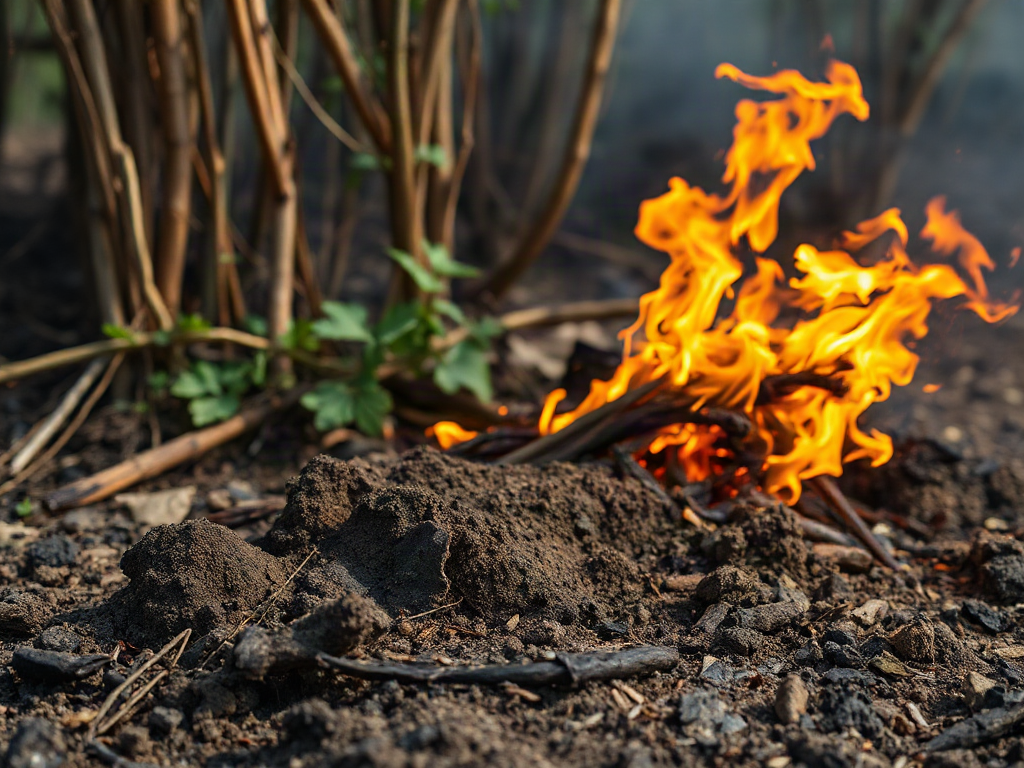
Slash-and-burn farming puts household land at risk by exposing bare ground, releasing stored nutrients too quickly, and creating a fire that may escape into fences, buildings, trees, or neighboring property. The ash can briefly raise fertility, but rain and wind may remove it before crops use those nutrients. Repeated burning can reduce organic matter, weaken soil structure, accelerate erosion, and encourage persistent weeds. Household landowners should favor cutting, chipping, mulching, composting, grazing, or carefully managed debris removal, with local fire rules and site conditions checked before any burn is considered.
Why a Small Burn Can Create Large Property Risks
A household plot concentrates people, structures, animals, stored fuel, utility lines, and property boundaries within a relatively small area. That makes deliberate vegetation burning fundamentally different from using fire across a large, professionally managed landscape. A flame front does not need to travel far before it reaches a shed, wooden fence, greenhouse covering, orchard tree, propane cylinder, stacked lumber, or a neighbor’s field.
Escaped fire is not limited to visible flames moving through grass. Wind can carry embers into dry leaves, roof gutters, wood piles, hollow trees, or dense vegetation beyond the cleared area. Roots and partly buried organic material may smolder after the surface appears cold. A landowner who leaves when the smoke subsides can therefore miss heat that later reappears under drier or windier conditions.
Weather at ignition is only part of the decision. Vegetation moisture, recent rainfall, slope, fuel depth, wind direction, access to water, and the width of cleared boundaries all affect fire behavior. A damp morning does not guarantee a safe afternoon, especially when dry branches are piled densely. Slopes add another complication because heat rises and can preheat vegetation uphill, allowing fire to accelerate faster than expected.
Smoke creates a separate household hazard. Burning wet brush, leaves, vines, painted lumber, treated wood, plastics, or mixed rubbish can produce heavy smoke and potentially harmful contaminants. Even ordinary plant material may cause breathing problems for nearby residents or obscure a road. Agricultural burning should never be treated as a convenient way to dispose of household waste.
Local restrictions may address permits, seasonal burn bans, required setbacks, allowed materials, supervision, or notification of fire authorities. Rules vary, so advice from another county or state is not a reliable basis for action. Before considering any fire, contact the relevant local fire authority or land-management office and confirm what is permitted on that specific parcel.
A common mistake is judging risk by pile size alone. A compact pile of dry branches can throw embers farther than a broad layer of damp plant residue. If a safe ignition area, reliable water supply, continuous supervision, legal approval, and a method for checking residual heat are not all available, non-burning removal is the more defensible choice. Further discussion of Slash-and-burn farming risks for household land should begin with this property-level exposure rather than with the apparent convenience of clearing vegetation quickly.
What Burning Does to Soil, Water, and Future Yields
Fire converts leaves, stems, surface litter, and some soil organic matter into gases and ash. The resulting ash contains mineral nutrients that may be immediately available to plants, which explains the rapid flush of growth sometimes seen after burning. That response can look like a lasting fertility improvement even though the land has lost much of the carbon-rich material that previously fed soil organisms, cushioned rainfall, and helped the ground retain moisture.
The outcome depends heavily on fire intensity and soil exposure. A light, cool burn may leave roots and part of the litter layer intact. A hot pile fire can heat one patch severely, damage surface organisms, and leave a concentrated ash bed with a very different pH and nutrient balance from the surrounding ground. Household plots often receive uneven burns because brush is gathered into piles rather than distributed uniformly.
Bare ground becomes vulnerable as soon as protective cover disappears. Raindrops strike exposed particles directly, runoff moves fine soil downhill, and wind lifts dry ash and silt. On a garden carved into a slope, one intense rainfall can shift valuable topsoil from the planting area into a ditch, pond, driveway, or neighboring property. Nutrients released by combustion may move with that sediment or dissolve into runoff before crop roots capture them.
Repeated burning compounds the problem. Removing each new layer of plant residue interrupts the return of carbon to the ground. Over time, the surface may become less crumbly, less absorbent, and more prone to crusting. Crops can then suffer both during dry periods, when the soil stores less water, and during storms, when infiltration is too slow to prevent runoff. Adding fertilizer may replace selected nutrients, but it does not automatically rebuild soil structure or biological activity.
Watch the site after clearing rather than relying on the initial appearance. Warning signs include soil sealing after rain, muddy water leaving the plot, small channels forming downhill, ash collecting at the property edge, rapid drying beneath crops, or weeds colonizing bare patches. Signs of recovery are different: rainfall soaking in without carrying sediment, mulch remaining in place, earthworm activity returning where conditions support it, and crop roots penetrating rather than remaining shallow.
The practical priority is continuous cover. Retain roots where possible, place clean chipped material or weed-free mulch over exposed ground, and establish a cover crop promptly if the season permits. On slopes, work across the contour rather than creating straight downhill paths for runoff. These measures preserve the household plot’s productive layer instead of exchanging long-term soil function for a brief nutrient pulse.
When the Short-Term Benefits Become Misleading
Slash-and-burn appears efficient because it reduces bulky vegetation quickly and leaves a planting surface with little visible residue. Ash may supply readily available potassium, calcium, and other minerals, while the cleared area warms sooner in sunlight. Those effects are real, but they do not establish that burning is economical or sustainable on a small parcel.
The accounting changes when hidden costs are included. A household may need to repair erosion, replace fencing, manage smoke complaints, import compost, irrigate more often, or suppress weeds that exploit disturbed ground. Valuable woody material that could have become mulch, habitat, fuel wood, or slowly decomposing organic matter is lost at ignition. A fast clearing method can therefore create several seasons of corrective work.
Context also matters. Some long-fallow agricultural systems historically allowed vegetation to regenerate for extended periods before another burn. A permanent home garden, orchard edge, or small farmette rarely has enough spare land or recovery time to imitate that cycle. Burning the same limited area every year is not equivalent to shifting cultivation across a large landscape with a long fallow interval. The household version concentrates repeated disturbance in the place expected to provide dependable food.
Consider a brush-covered garden expansion. Burning may open the surface in a day, but it also leaves roots, stones, and an uneven ash pattern. Cutting the brush, removing invasive seed heads, chipping suitable stems, and covering the ground with cardboard-free clean organic mulch takes longer at first. The second approach retains material on site, limits bare soil, and allows the owner to observe drainage before committing the whole area to crops.
Another weak assumption is that fire permanently solves weeds. Flames may kill tender top growth, yet established perennial weeds can resprout from crowns, rhizomes, or deep roots. Burning can also expose dormant seeds to light and reduce competing cover. If weeds return quickly after rain, the treatment removed foliage without correcting the underground growth or open-soil conditions supporting reinvasion.
Use a full-season comparison before deciding that burning saves labor. Record the time required for preparation, supervision, mop-up, erosion control, weed removal, watering, and soil amendments. Compare that total with mowing, repeated cutting, tarping where appropriate, targeted digging, managed grazing, or chipping. The useful question is not how clean the plot looks the morning after treatment; it is whether the land remains covered, stable, workable, and productive through rain, drought, and the next planting cycle.
Safer Ways to Clear and Prepare Household Land
Non-burning clearing works best when the method matches the vegetation and the intended use of the site. Young annual weeds, woody shrubs, mature trees, invasive vines, and crop residue require different treatment. Starting with plant identification prevents wasted labor and reduces the chance of spreading seeds, poisonous sap, thorns, or fragments capable of rooting.
For light growth, mowing or brush cutting can reduce vegetation while leaving roots in place to hold the soil. Repeated cutting is often necessary for persistent perennials; one pass may stimulate regrowth rather than exhaust the plant. Dense woody growth may be cut selectively, with clean disease-free branches chipped for paths or surface mulch. Diseased material and invasive plants that reproduce from fragments need disposal suited to local guidance rather than casual redistribution around the property.
Managed grazing may fit a fenced parcel with suitable animals, water, shelter, and knowledgeable supervision. Goats can browse some woody plants, while other livestock may favor grass, but grazing does not remove stumps or guarantee control of unwanted species. Overstocking creates its own bare-ground and compaction problems. It is a vegetation-management option, not a substitute for a site plan.
Sheet mulching or light-excluding covers can suppress selected vegetation without combustion, although timing and material choice matter. Covers must be secured, monitored, and removed or maintained appropriately. Thick imported mulch should be checked for weed seeds or contaminants, and it should not be piled against tree trunks or building siding. Near structures, noncombustible clearance may be necessary rather than deep wood-chip layers.
A practical clearing sequence is:
- Map constraints. Mark property lines, utilities, wells, septic components, drainage paths, valuable trees, slopes, and vehicle access.
- Identify the vegetation. Separate ordinary biomass from invasive, diseased, thorny, toxic, or seed-bearing material requiring controlled disposal.
- Clear in small sections. Test the method on one manageable area and watch runoff and regrowth before expanding.
- Protect exposed ground immediately. Apply suitable mulch, retain low cover, seed a cover crop, or stabilize the slope as each section is opened.
- Inspect after weather events. Check for sediment movement, ponding, mulch displacement, resprouting, and dry zones that signal a failing approach.
Mechanical clearing also has limits. Heavy equipment can compact wet soil, damage roots, disturb buried services, and create costly grading problems. Hand tools reduce compaction but demand more time and may be unsuitable for large stems or hazardous trees. Arborists, excavation contractors, extension offices, conservation districts, or local land-management professionals may be useful when steep terrain, large trees, unstable soil, or drainage changes exceed household capability.
The best method leaves the site safer after the work than before it. Success looks like controlled regrowth, stable soil, usable access, protected water flow, and a planting area that does not require emergency repairs after the next storm. The broader assessment of Slash-and-burn farming risks for household land favors staged clearing because it gives the owner time to correct mistakes before they affect the entire parcel.
Frequently Asked Questions
Does ash make household garden soil more fertile?
Ash can supply minerals and temporarily raise soil pH, but its composition varies and excessive application can create nutrient or alkalinity problems. Test the soil before deliberately adding clean wood ash, and never use ash from treated wood, trash, or painted materials.
Can a small brush pile be burned safely near a garden?
Small size does not remove the risks from embers, shifting wind, hidden smoldering, or local restrictions. Confirm legal requirements and assess setbacks, fuel conditions, water access, and supervision; choose non-burning disposal if any control is uncertain.
Will burning permanently remove invasive weeds?
Usually not by itself. Many invasive plants resprout from roots or spread after exposed soil favors seed germination. Identification and a species-appropriate control and follow-up plan are more reliable than a single surface burn.
What is the safest alternative for clearing brush on a slope?
Selective cutting that retains roots, followed immediately by anchored mulch or suitable living cover, often limits erosion better than stripping the slope bare. Steep or unstable sites may require advice from a conservation or land-management professional.
How can I tell whether a cleared plot is recovering well?
Look for rainfall soaking in, little or no sediment leaving the site, stable surface cover, manageable regrowth, and soil that remains workable rather than crusted. Rills, muddy runoff, rapid drying, and aggressive weed return indicate that protection or follow-up is inadequate.
Conclusion
Household plots leave little margin for a fire that escapes, a slope that erodes, or a garden bed that loses organic matter faster than it can be rebuilt. Judge a clearing method by its effects through the next storm and growing season, not by how rapidly vegetation disappears. Map utilities and drainage, identify troublesome plants, work in small sections, and protect every newly exposed area at once. Cutting, chipping, mulching, controlled grazing, or targeted mechanical work usually allows more control and retains more useful biomass. If burning remains under consideration, verify local rules and honestly assess smoke, wind, water access, setbacks, and lingering heat. Where those safeguards are doubtful, the appropriate next step is to keep fire out of the land-clearing plan.