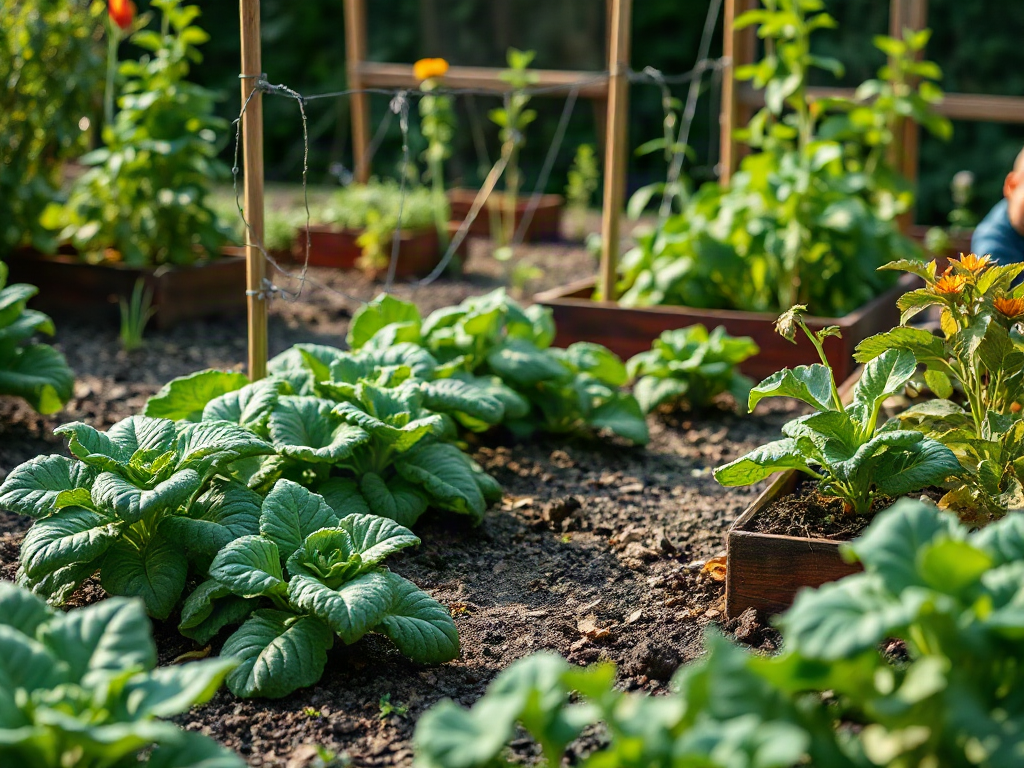
Choosing a first homestead garden size should match the food you actually eat, the hours available for watering and weeding, and your ability to preserve surplus. A compact garden of roughly 100 to 200 square feet is often more manageable for a beginner, while a larger plot may suit households that can irrigate reliably, protect crops, and process harvests. Measure usable sunlit ground rather than total property size, then reserve space for paths, compost, tools, and crop rotation. Planting too much before learning your soil, pests, and harvest workload commonly creates waste and discouragement; a smaller productive plot can be expanded after one full growing season.
Match Garden Area to Household Demand
A first garden should be sized around meals, not available land. A household that wants salad greens, herbs, tomatoes, and a few summer vegetables has a different requirement from a household hoping to store potatoes, beans, squash, and canned tomatoes for winter. Treating both situations as the same project leads to poor estimates because some crops produce repeatedly while others occupy ground for months.

Write down the vegetables your household buys most often and rank them by frequency, cost, and likelihood of being eaten fresh. That list is more useful than copying a generic planting chart. If tomatoes appear in meals several times a week, they deserve more space than an unfamiliar vegetable that looks productive in a seed catalog. Likewise, a family that rarely eats leafy greens should not devote a large bed to lettuce simply because it grows quickly.
Fresh-use gardens usually need less area than preservation gardens, but they demand succession planting. Radishes, salad greens, and bush beans may be sown more than once because a single planting can mature within a narrow window. Storage crops and canning tomatoes require a different calculation: the garden must support a concentrated harvest, and the household must have containers, freezer room, drying space, or time for processing.
A practical starting point is to choose one primary purpose and one secondary purpose. For example, a 120-square-foot plot might focus on fresh cooking with a smaller preservation trial, while a 250-square-foot plot could support frequent fresh vegetables plus a modest supply of tomatoes or beans. These figures are planning examples rather than promises of household self-sufficiency; climate, soil, spacing, crop choice, and gardening skill change the result.
The common mistake is measuring success by acreage instead of usable harvest. A sprawling bed filled with crops the household will not pick, cook, or preserve is less valuable than a smaller area planted with foods that fit existing meals. Readers comparing this approach with a large mixed garden should remember that variety increases scheduling, pest observation, and harvest decisions. Use the Choosing a First Homestead Garden Size decision as a food-use exercise first, then turn it into a layout.
Measure Usable Space and Daily Capacity
Usable garden space includes more than soil. Count the area that receives adequate sunlight, drains reasonably well, can be reached with a hose or watering can, and remains accessible during harvest. Subtract permanent obstacles, steep ground, dense tree shade, and narrow strips where roots compete with established plants. A 300-square-foot patch that is difficult to water may produce less than a smaller, convenient bed.
Sun exposure affects size decisions because many fruiting crops need strong light, while some leafy crops tolerate partial shade. Observe the proposed site at different times of day before marking beds. Notice where shadows move in spring and summer, especially near buildings, fences, and trees. The best-looking open area is not automatically the best garden site if water collects there or deer can reach it easily.
Time is the second measurement. A garden requires recurring attention rather than one large burst of labor. Watering, checking seedlings, tying plants, removing ripe produce, weeding pathways, and responding to pests all occur during the growing season. A busy household may manage a larger space with drip irrigation and mulch, but those systems require setup, maintenance, and reliable water access. A smaller hand-watered garden may be practical near the house, whereas a distant plot can become neglected even when its soil is excellent.
Include non-growing space in the design. Paths need enough room for a person, wheelbarrow, or harvest basket, and beds should be narrow enough to reach without stepping on soil. Add a place for hoses, stakes, row cover, compost, and temporary buckets. Ignoring these areas creates crowded beds that are hard to weed and harvest. Raised beds can simplify access, but their lumber, soil, and irrigation costs may make an in-ground plot more sensible for a low-budget first season.
Use this compact capacity check before purchasing seed:
- Water: Can every bed be reached during the hottest likely week?
- Attention: Who will inspect plants and harvest them on busy days?
- Protection: Can the plot be fenced or covered if animals become a problem?
- Processing: Where will excess produce be washed, cooled, stored, or preserved?
Overestimating available labor is a frequent first-year failure. A garden should fit ordinary weeks, not an ideal schedule with unlimited energy. If the site is far from the home or water source, reduce the planted area or improve access before adding crops. More information on Choosing a First Homestead Garden Size becomes useful only after these physical limits are honest.
Build a First-Year Crop Plan
A first-year crop plan should prioritize dependable uses, manageable maintenance, and information you can learn from. Begin with a short list of crops rather than filling every row. Tomatoes, peppers, cucumbers, beans, carrots, onions, herbs, and greens can create a useful mix, but each has different timing, spacing, harvest habits, and pest concerns. Select crops that fit your climate and the meals you already prepare.
Divide the garden into functional groups. One area can hold quick greens and radishes, another can support trellised cucumbers or peas, and a third can carry tomatoes or peppers. Root crops need workable soil free of stones and compacted layers. Vining crops may occupy more horizontal ground than expected unless trellised. Tomatoes also require support and regular harvesting, so their bed should not be placed where access is awkward.
Succession planting can increase usefulness without increasing the permanent footprint. After an early crop of spinach or peas finishes, the space may receive beans, fall greens, or a cover crop suited to the local season. The timing depends on frost dates, soil temperature, and remaining growing days. Planting a second crop without checking those conditions can leave seedlings exposed to heat or cold and may produce little before the season ends.

Plan for failure rather than assuming every row will perform. Reserve a small amount of space for replanting, and avoid putting every plant of one crop in one vulnerable location if disease or pests are common. Keep records of sowing dates, varieties, harvest quantities, watering problems, and pest damage. These notes make next year’s size decision more accurate than memory.
Compare a broad crop list with a focused plan. A broad list offers variety but spreads attention thin and may produce tiny amounts of many foods. A focused plan gives more meaningful harvests from fewer crops and makes it easier to identify what worked. For a beginner, it is often sensible to grow several familiar foods plus one or two experiments, not ten unfamiliar crops at once.
Spacing errors can make a correctly sized garden behave like an oversized one. Crowded plants compete for light and air, while excessive spacing wastes ground and increases bare soil where weeds establish. Follow the seed packet or reliable university extension guidance as a starting point, then adjust based on plant vigor and local conditions. A first garden is partly a production area and partly a site-specific experiment.
Use Harvest Results to Expand Carefully
Expansion should follow evidence from one growing season. Track planted bed area, harvest frequency, unharvested produce, pest losses, and the hours spent on routine work. A garden is ready for expansion when the current beds are consistently watered, harvested on time, and maintained without displacing essential household tasks. A lush crop left in the field until it becomes tough or overripe is a warning that capacity, not soil area, is the limiting factor.
Review each crop by usefulness rather than appearance. A vigorous zucchini plant may produce more than a household can eat, while a modest herb bed may replace frequent store purchases. Mark crops as expand, repeat, reduce, or remove. Expand foods that were eaten regularly and harvested at a comfortable pace. Reduce crops that created waste, required constant intervention, or occupied space without fitting meals.
Preservation changes the labor calculation. A larger tomato planting may appear efficient until washing, cutting, cooking, canning, freezing, or dehydrating is included. The same principle applies to beans, peppers, and fruit. If preservation is a goal, schedule harvest and processing capacity before adding plants. Otherwise, a bumper crop can become a time-sensitive problem rather than a benefit.
Soil fertility and rotation also limit how quickly a garden should grow. Repeating the same crop family in one area can increase disease pressure and nutrient demands, while heavy additions of unfinished compost can create uneven growing conditions. Expansion may require new beds, better soil preparation, or a rotation map rather than simply extending existing rows. Compost, mulch, and irrigation improvements often produce a larger practical gain than extra planting area.
Signs that expansion is premature include missed harvests, dry soil during routine checks, weeds setting seed, damaged supports, and produce accumulating in the refrigerator. Signs that a modest increase may be justified include spare time for maintenance, reliable water access, clear crop preferences, and a plan for surplus. Readers who are also developing Choosing a First Homestead Garden Size plans should change one variable at a time when possible, so a poor result can be traced to weather, variety, spacing, soil, or workload.
Frequently Asked Questions
Is 100 square feet enough for a first homestead garden?
It can be enough for a focused trial of herbs, greens, beans, and a few fruiting plants. It will not usually provide a broad household supply, especially if storage crops or preservation are included.
Should a beginner use raised beds?
Raised beds may improve access and drainage, but they are not required. An in-ground plot can cost less and provide more area, while raised beds require an investment in edging and suitable soil.
How much space should be reserved for paths?
Reserve enough room for comfortable walking, harvesting, and moving a hose or wheelbarrow. The exact share depends on bed shape, but narrow beds with accessible paths are usually more useful than densely packed rows.
What crops are sensible for a first garden?
Choose vegetables your household already eats and that suit the local growing season. Herbs, greens, beans, tomatoes, cucumbers, and carrots can be practical choices, provided the site and maintenance demands fit.
When should the garden be expanded?
Expand after the existing plot has been watered, weeded, harvested, and recorded successfully through a full season. Add crops that were useful and manageable rather than simply increasing every row.
Conclusion
The best first homestead garden size is the largest area you can maintain reliably, not the largest area you can mark on a property map. Base the decision on foods your household eats, available sunlight, water access, path space, daily labor, and the ability to use or preserve surplus. A focused plot gives you practical information about soil, pests, timing, and harvest workload without creating avoidable waste. Measure the site, choose a short crop list, leave room for access, and record what happens through the season. Expand only after the current garden is consistently productive and manageable. That measured approach turns the first garden into a useful foundation for future food production rather than an oversized project that depends on perfect conditions.