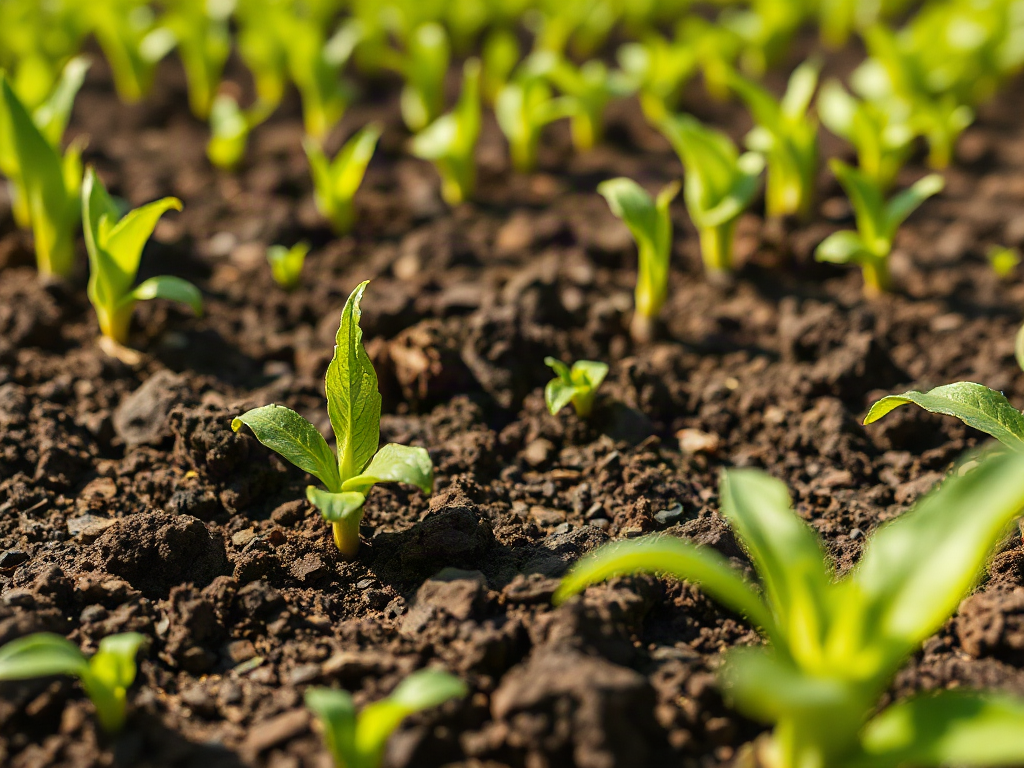
Dryland farming is crop production that relies on stored soil moisture and seasonal precipitation rather than routine irrigation, making it relevant to water-conscious growers in regions with limited or unreliable supplies. Its core methods include capturing rainfall, reducing runoff, suppressing weeds, choosing drought-adapted crops, and spacing plants according to available moisture. Benefits may include lower irrigation demand and greater resilience to water restrictions, but yields are often less predictable. Success depends on rainfall timing, soil depth, evaporation, and disciplined moisture conservation; dryland methods cannot compensate for a crop whose water needs exceed the site’s dependable supply.
What Qualifies as Dryland Farming
Dryland production treats precipitation as a limited annual budget rather than a dependable weekly input. The grower aims to retain rain or snowmelt in the crop root zone, then matches plant demand to that stored reserve. Fields may receive substantial precipitation during part of the year and still be managed as dryland if crops grow without routine irrigation during the production season.
The term is sometimes confused with farming in any dry climate. Climate matters, but management is the defining distinction. A vegetable plot in an arid location supplied by drip lines is irrigated agriculture. A grain field in a moderately dry region that depends on winter precipitation stored in deep soil is dryland agriculture. Supplemental water used occasionally to establish seedlings can blur the boundary, so growers should describe their system accurately rather than treating “dryland” as a purity standard.
Dryland methods also differ from simply withholding water from an ordinary garden. Standard vegetable spacing, shallow cultivation, thirsty varieties, and bare ground can exhaust moisture long before harvest. Deliberate dryland management usually involves wider spacing, fewer plants, drought-suited species, timely weed removal, runoff control, and soil practices that limit evaporation. Those choices trade maximum production per square foot for a better chance of producing a harvest within a fixed moisture budget.
A useful example is winter wheat planted into soil replenished by cool-season precipitation. Its roots can follow moisture downward as the surface dries. Lettuce planted densely in the same field during hot weather would face a much higher risk because it has a shallower effective root system, requires steady moisture for quality, and has little tolerance for prolonged stress. The label therefore applies to a system of crop, season, soil, and rainfall—not merely to the absence of sprinklers.
For a homestead-scale interpretation of the Dryland farming definition for water-conscious growers, focus first on whether natural precipitation can reasonably carry the selected crop through its critical growth stages. If not, water-saving irrigation may be more responsible than claiming a dryland approach and accepting repeated crop failure.
How Rainfall Becomes Stored Crop Moisture
Rainfall only benefits a crop when it enters the soil, remains within reach of roots, and is available when plant demand rises. Water that runs downhill, evaporates from an exposed surface, drains below a shallow root zone, or feeds weeds is no longer part of the useful crop reserve. Dryland management concentrates on those pathways because growers cannot replace losses on demand.
Infiltration begins at the surface. Soil protected by crop residue or a suitable mulch is less vulnerable to crusting and raindrop impact than bare, finely worked ground. Contour-oriented beds, shallow basins, and level planting areas can slow runoff where local soil and slope conditions permit. These features must safely release overflow, however. A basin that captures a gentle shower may drown roots or breach during a heavy storm if it lacks a stable outlet.
Storage capacity depends heavily on soil depth and texture. Deep loam or clay loam can hold more plant-available water than a shallow, stony profile, although compacted clay may accept rainfall slowly. Sandy ground absorbs water readily but retains less of it near roots. Adding organic matter may improve aggregation and infiltration over time, but compost does not create unlimited storage. A thin soil over bedrock remains a thin reservoir regardless of surface amendments.
Root access is equally important. Compaction, a restrictive layer, waterlogging, or abrupt changes in texture can keep roots shallow. Before planting, inspect a soil profile where practical and check whether roots from previous vegetation penetrate deeply. A digging fork, shovel, or soil probe can reveal dense layers, while a simple infiltration observation after rainfall shows whether water enters evenly or ponds and escapes.
Weeds are active water users, not just competitors for nutrients and light. Removing them while small generally consumes less soil moisture than waiting until they have built extensive root systems. Repeated deep tillage can also be counterproductive: it may break structure, expose moist soil to drying air, and stimulate another flush of weeds. Surface cultivation should be shallow and purposeful.
Mulch requires judgment rather than automatic application. Plant residue can reduce evaporation and moderate surface temperature, but heavy organic mulch may intercept light rain, harbor pests, or delay spring warming in cool regions. In windy, fire-prone, or very dry settings, residue management also carries operational risks. The better choice is the amount and material that protect the surface without creating a new hazard.
Choosing Crops, Planting Density, and Timing
Crop selection determines whether conserved moisture becomes a harvest or merely postpones failure. Drought tolerance is not a single trait: a plant may escape drought by maturing early, avoid stress through deep roots, or tolerate temporary dehydration. The useful trait must match the site’s rainfall pattern and the crop’s most sensitive stage.
Small grains, grain sorghum, some dry beans, chickpeas, cowpeas, sunflowers, and certain squash or melon varieties may fit dryland systems under suitable regional conditions. Their suitability is not universal. A crop that performs with summer rain may fail where most precipitation arrives in winter, and a long-season variety may encounter terminal drought before maturity. Local variety trials and university extension recommendations are more informative than broad claims that a species is “drought-proof.”
Plant population is a direct claim on the soil-water account. Dense stands cover the ground sooner and may suppress weeds, but they also create high combined demand. Wider spacing gives each plant access to a larger volume of soil and can reduce competition when moisture is scarce. The tradeoff is lower potential yield when rainfall is generous, along with more exposed ground early in the season. Dryland growers often accept that reduced ceiling in exchange for lower failure risk.
Timing can matter as much as total seasonal rain. Planting into a genuinely moist profile gives roots a chance to develop before the surface dries. Seeding into dust while hoping for a shower can produce uneven emergence if the first rain is too small to wet the seed zone consistently. Conversely, working wet ground can compact the profile and restrict later rooting. Check moisture at seeding depth and below it rather than judging by surface color alone.
A practical comparison is sweet corn versus grain sorghum. Corn has critical water needs around reproductive development, and stress then can sharply reduce ear formation. Sorghum is often better able to pause growth during dry periods and resume when moisture returns, though it still needs adequate water to produce grain. On a site with erratic midsummer rain, sorghum may present a more realistic dryland option; where household food preferences require sweet corn, limited drip irrigation or a smaller planting may be the sounder compromise.
Water-conscious growers should test a modest area before converting the whole garden or field. Record planting date, variety, spacing, rainfall, soil moisture observations, weed pressure, and harvest. That local record makes the Dryland farming definition for water-conscious growers operational: it shows which combinations survive the site’s actual dry intervals rather than its average annual rainfall.
A Practical Site-Assessment Checklist
A dryland decision should begin with the site’s usable water pattern, not a seed catalog’s drought-tolerance claim. Annual rainfall totals hide decisive details such as seasonality, storm intensity, long gaps between events, and the amount lost as runoff. Historical weather records provide context, but the field itself reveals how much of that precipitation becomes accessible moisture.
Use the following compact assessment before selecting acreage or committing scarce seed:
- Map water movement. Watch at least one substantial rain and note runoff paths, ponding, erosion, and areas that remain moist longer.
- Inspect the root zone. Check soil depth, texture changes, stones, compaction, and signs of poor drainage.
- Match the season. Compare likely planting and flowering dates with the periods when precipitation usually arrives.
- Set a realistic population. Reduce planted area or density if stored moisture cannot support a conventional stand.
- Plan weed control early. Decide how weeds will be removed without repeatedly drying or pulverizing the surface.
- Define a fallback. Establish whether emergency water is available and which crops receive priority if establishment fails.
The fallback deserves special attention. Emergency irrigation does not erase the value of water-conscious management. A small, targeted application at transplant establishment or flowering may protect food production while using far less water than routine irrigation. If no backup exists, growers should favor direct-seeded crops, conservative acreage, and varieties whose maturity fits the probable moisture window.
Signs of a workable system include rainfall soaking in without prolonged ponding, roots extending below the rapidly drying surface, limited weed regrowth, and plants maintaining growth through ordinary dry intervals. Warning signs include repeated midday wilting that persists into evening, leaf rolling or premature senescence, poor flowering, shallow roots, and sharply uneven emergence. Some midday wilting can be temporary heat response, so inspect again after temperatures fall and check moisture below the surface before reacting.
A common assessment error is relying on a single successful wet year. Dryland plans should be evaluated across variable seasons, with harvest quantity considered alongside seed cost, labor, and the opportunity cost of unused ground. Keeping one irrigated comparison row can help separate weather effects from variety or management effects. If both plots struggle, crop choice or soil conditions may be the primary limitation; if the irrigated row succeeds while the dryland row consistently fails, the site-crop combination probably exceeds the available moisture budget.
Benefits, Limits, and Warning Signs
Dryland systems can reduce dependence on pumps, wells, stored rainwater, and irrigation schedules, but lower water use does not automatically mean lower risk. Production remains tied to precipitation timing, and year-to-year yield variability can be substantial. Growers must judge success by dependable output under local constraints rather than by the largest harvest achieved in an unusually favorable season.
The approach is especially useful where land is available but irrigation capacity is limited, where field crops can exploit deep stored moisture, or where water restrictions make conventional production impractical. It can also encourage disciplined soil cover, runoff management, and crop selection. Those benefits may persist even if a grower later adds efficient irrigation.
Dryland production is a poor fit for every goal. Intensive market vegetables, closely spaced salad greens, newly planted fruit trees, and shallow containers usually require steadier moisture than precipitation alone supplies. High-value crops may justify drip irrigation because a small, accurately placed volume protects quality and establishment. Water consciousness should mean choosing the least wasteful system that can meet the crop’s biological needs, not refusing irrigation regardless of consequences.
Another weak assumption is that deeper tillage always stores more rain. Some fallow systems have historically used cultivation to control weeds and conserve moisture, but repeated disturbance may leave soil vulnerable to erosion and structure loss. The appropriate method depends on residue, equipment, soil type, wind exposure, weed species, and storm pattern. Reduced tillage can protect the surface, while strategic shallow cultivation may still be useful where weeds would otherwise consume scarce water.
Failure should prompt diagnosis rather than an immediate search for a tougher seed variety. Check whether rainfall infiltrated, whether weeds extracted moisture, whether the root zone was deep enough, and whether stress coincided with flowering or fruit set. If several drought-adapted crops fail at the same stage, the system may need lower density, earlier planting, runoff improvements, or supplemental water. If one crop fails while others remain productive, its rooting pattern or seasonal demand is the more likely mismatch.
The best next move is often a hybrid plan: reserve dependable water for establishment and critical stages, devote the driest ground to crops proven under local conditions, and expand only after records show acceptable performance. That approach preserves the central logic of Dryland farming definition for water-conscious growers while recognizing that household food production may justify selective irrigation.
Frequently Asked Questions
Is dryland farming the same as drought farming?
The terms are sometimes used interchangeably, but dryland farming more precisely describes planned crop production based on precipitation and stored soil moisture. Drought farming may also refer broadly to producing crops under unusually dry conditions.
Can a dryland farm use any irrigation?
Occasional establishment or emergency watering may be compatible with a mostly dryland system, although it is more accurate to describe the practice as supplemental irrigation. Clear terminology helps growers compare water use and results.
Which soil is best for dryland growing?
Deep, well-structured soil with useful water-holding capacity is generally favorable. Texture alone is not decisive; infiltration, compaction, drainage, rooting depth, slope, and stone content all influence how much moisture crops can access.
Does mulch always improve dryland results?
No. Suitable mulch can limit evaporation and crusting, but excessive material may intercept small showers, delay warming, harbor pests, or increase fire concerns. Match the material and depth to climate and crop.
How can a grower test dryland methods safely?
Begin with a small plot and an irrigated comparison row. Record rainfall, variety, spacing, weed pressure, visible stress, and harvest so expansion is based on local performance rather than one favorable season.
Conclusion
Effective dryland production begins by treating soil moisture as a measurable, finite resource. Inspect infiltration and rooting depth, identify when precipitation normally arrives, and select crops whose growth cycle fits that window. Conservative spacing, early weed control, surface protection, and runoff management can preserve more of each storm, but none can manufacture water that the site never receives.
Start with a limited test area and keep records through both favorable and difficult seasons. Compare results with a small irrigated planting when possible, then adjust crop choice, population, and timing before expanding. If plants repeatedly fail during establishment or reproduction, targeted drip irrigation or a different crop may use land and water more responsibly. The practical goal is not strict avoidance of irrigation; it is dependable production with no more water than the crop and site genuinely require.