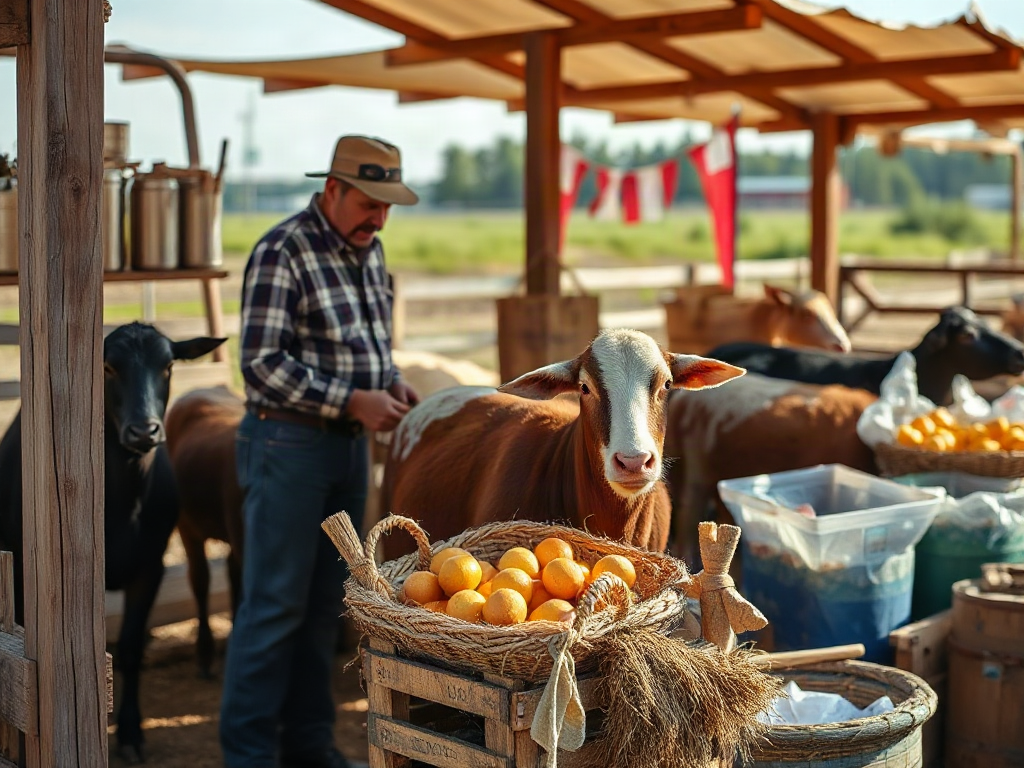
Choose a Stand Format That Fits the Surplus
The size and predictability of the harvest should determine the selling format. A permanent roadside structure may look appealing, but it creates unnecessary expense when only a few baskets of tomatoes, cucumbers, herbs, or eggs are available each week. A folding table beneath a canopy, a rolling cart near the driveway, or a scheduled pickup shelf can handle a modest harvest with far less setup.
A staffed table suits short selling windows and products that benefit from explanation. Someone can answer questions about an unfamiliar squash variety, weigh loose beans, or suggest how to use a large bunch of herbs. The drawback is labor: spending three hours beside a table may not make sense when the entire inventory is worth little more than the time required to staff it.
A self-serve stand trades personal contact for flexibility. It works particularly well for pre-portioned products with obvious prices, such as one basket of cherry tomatoes for a set amount or three zucchini for another. Place the stand where customers can pull over or walk up safely without blocking a road, gate, mailbox, or farm entrance. A cash box, payment QR code, or both can make checkout easy, although weak cellular service may affect electronic payments.
Pickup arrangements offer another practical option. A grower with six extra salad bags and several bunches of radishes could post the available quantity to a neighborhood group, accept reservations, and leave labeled orders at a designated collection point. Preorders reduce waste, but they require accurate counts and prompt communication when weather or pests change the harvest.
Before opening any format, check county or municipal rules concerning roadside access, signs, home-based sales, zoning, taxes, and permitted products. Whole, uncut produce is commonly treated differently from baked, canned, refrigerated, or processed food, but requirements vary by location. Eggs, meat, dairy products, cut melons, washed salad mixes, and homemade preserves may involve additional rules. A useful first step is to ask the local planning office and relevant agriculture or health agency which requirements apply to the exact products and site.
Select Products and Quantities That Will Sell
A compact stand benefits from recognizable products, useful quantities, and visible freshness. Buyers can quickly decide whether they need a cucumber, a pint of berries, or a bunch of carrots. An overloaded table containing tiny amounts of many unrelated items can look disorganized and makes pricing, replenishment, and quality control harder.
Begin with two or three dependable products rather than displaying every edible item from the property. Tomatoes, sweet peppers, summer squash, cucumbers, herbs, flowers, and seasonal fruit are straightforward when clean and properly handled. Less familiar varieties can still sell, but a short label should explain what they are and how they are commonly used. “Lemon cucumber—mild, crisp, use like a slicing cucumber” is more useful than a variety name alone.
Package size should reflect how households actually cook. A customer may happily buy two medium zucchini but pass over a large box containing eight. Conversely, a discounted sauce box can attract a canner or batch cook when ripe tomatoes accumulate quickly. These two formats can coexist: offer attractive individual tomatoes at the standard price and clearly label softer, blemished but sound tomatoes for prompt cooking at a lower bundle price.
Sort produce before it reaches the table. Keep bruised, split, moldy, insect-damaged, or leaking items out of the display. Cosmetic variation is acceptable when the food remains sound, but customers should be able to see what they are buying. Do not hide damaged pieces beneath better specimens. That practice may complete one sale, but it undermines repeat business.
Harvest timing affects both appearance and shelf life. Leafy greens and herbs generally need cooler handling than winter squash or cured onions. Pick during a cooler part of the day when practical, move the harvest out of direct sun, and use clean containers suitable for food contact. Avoid assuming that rinsing automatically improves a product; washing can spread contamination or shorten storage life if water, equipment, drying, and refrigeration are poorly managed. Follow the handling requirements that apply locally and use sound produce-safety practices.
The product mix should also match the stand’s level of supervision. Durable vegetables are easier to manage at an unattended table than fragile berries or greens on a hot afternoon. Readers comparing more Farm stand ideas for selling a small surplus should treat temperature control and time away from the display as primary selection criteria, not afterthoughts.
Set Clear Prices Without Complicating the Table
Simple prices shorten the buying decision and reduce mistakes at self-serve stands. Price by the item, bunch, basket, bag, or box whenever those units are reasonably consistent. Loose products can be sold by weight, but that approach may require an appropriate scale and compliance with local weights-and-measures rules. Pre-portioned containers are usually easier for a very small operation.
Check nearby farm stands, farmers markets, grocery stores, and local online listings to understand the current range for comparable products. Comparisons should account for quantity and condition. A pint of carefully sorted cherry tomatoes is not directly comparable to a larger container of mixed, very ripe tomatoes. The goal is not automatically to charge less than everyone else; a price should cover packaging, payment fees, stand supplies, and selling effort while remaining credible for the local market.
Use one large sign for payment instructions and separate labels for each product. A sign reading “Cucumbers $1 each; basil $2 per bunch; mixed squash 3 for $5” is easier to interpret than several handwritten notes with different abbreviations. State whether tax is included when applicable, identify accepted payment methods, and provide exact change instructions for unattended sales. Never assume customers will know whether a basket, crate, or jar belongs to the stand or is included with the purchase.
Bundles are most useful when they solve a quantity problem without confusing the regular price. Three peppers for a set amount can move a flush of produce, while a “salsa bag” might combine tomatoes, peppers, and onions in a practical household portion. The bundle must still contain sound products; calling a box a bargain does not excuse poor quality. Heavy discounting can also train customers to wait for markdowns, so reserve it for genuine abundance, irregular sizes, or produce best used soon.
A compact pricing checklist keeps the system manageable:
- Choose a unit: item, bunch, pint, bag, or clearly defined box.
- Compare locally: match the same product, quantity, season, and condition.
- Count selling costs: include packaging, signage, fees, and staffed time.
- Make change easy: favor whole-dollar or otherwise convenient totals.
- Record results: note the quantity offered, sold, discounted, and discarded.
Prices are working when customers can pay without asking for clarification and most sound inventory sells within its intended window. Repeated questions, abandoned selections, or frequent payment discrepancies point to unclear units or signage. Adjust one variable at a time so the sales record shows whether price, package size, or product demand caused the difference.
Build a Clean, Convenient Display
A useful farm stand display protects food while making choices easy to scan. It does not need decorative fixtures, but it does need shade, stability, clean surfaces, readable labels, and safe customer access. Produce left in full sun can wilt, soften, or become unappealing long before the day ends, even when it was harvested that morning.
Use shallow baskets or crates so customers can see the available quantity without digging through deep piles. Keep containers off bare ground, secure lightweight signs against wind, and prevent a canopy or umbrella from tipping. If the stand is near vehicle traffic, position the table far enough from moving cars and provide a sensible place to stop. Visibility is valuable only when the approach and departure are safe.
Arrange products by how customers shop rather than by where they grew. Salad ingredients can sit together, while cooking tomatoes can be placed beside peppers and onions. A small recipe suggestion may help move an unfamiliar product, but lengthy descriptions create visual clutter. Product name, price, unit, and one relevant use are usually enough.
Containers should match the produce. Ventilated baskets may suit firm vegetables, while delicate items need shallow packaging that prevents crushing. Food-contact surfaces and reusable containers should be cleaned appropriately, and packaging must not have previously held chemicals, fuel, animal feed, or other contaminants. Decorative antique crates may provide visual character, but line or replace them if their condition makes hygienic use questionable.
Plan for weather rather than reacting after food is exposed. Strong heat may justify a morning-only schedule, smaller restocks, or a cooler holding area away from customers. Rain calls for a covered display and packaging that will not collapse when damp. Fragile or temperature-sensitive products may be better offered through preorders than left unattended.
Evaluate the stand from the road or sidewalk and then from the payment position. Customers should be able to identify that produce is for sale, find the prices, select items, and locate payment instructions without opening gates or entering private work areas. For additional Farm stand ideas for selling a small surplus, prioritize a smooth buying path before adding chalkboards, decorations, or elaborate shelving.
Test Demand and Reduce Unsold Inventory
A small stand becomes more reliable when each selling day is treated as a measured test. Record what was displayed, the opening time, weather conditions, prices, sales, and leftovers. A simple notebook is sufficient. After several comparable selling periods, patterns emerge: basil may move Friday afternoon, cucumbers may sell better in pairs, or an evening location may outperform a full unattended day.
Start with less inventory than the harvest could provide and restock if possible. A small, fresh display is preferable to a large pile that deteriorates outdoors. Keep reserve produce in suitable shaded or cooled storage rather than placing everything on the table at once. If the stand repeatedly sells out too early, increase the next offering modestly instead of doubling it.
Unsold inventory needs a plan before it becomes waste. Sound produce might return to household use, preservation, livestock feed where appropriate, composting, or a lawful donation channel. Processing leftovers into salsa, pickles, jam, baked goods, or cut produce for sale is not simply an extension of selling whole vegetables; those products may trigger different kitchen, labeling, refrigeration, permitting, and tax requirements. Verify the rules before offering them.
Promotion should remain proportional to supply. A roadside sign and a short neighborhood post may be enough for ten baskets of produce. Advertising broadly and then disappointing visitors with an empty table can weaken trust. State the selling window, general location, payment methods, and that availability lasts while supplies remain. Remove or update online notices when the stand sells out.
Signs of a healthy setup include repeat buyers, low spoilage, accurate payments, and inventory that clears without constant discounts. Warning signs include produce warming or wilting on the table, customers asking what containers cost, cash totals that do not match expected sales, and large leftovers across several comparable days. Each symptom suggests a specific correction: shorten the selling window, improve shade, simplify units, change payment instructions, reduce harvest quantities, or move to preorder pickup.
The strongest version of Farm stand ideas for selling a small surplus is usually the one that earns repeat purchases without creating another full-time chore. Expand hours, product range, or infrastructure only after records show consistent demand.
Frequently Asked Questions
What can I sell at a small farm stand?
Whole, uncut fruits, vegetables, herbs, and flowers are common starting products. Rules for eggs, meat, dairy, baked goods, canned foods, cut produce, and refrigerated items vary, so confirm requirements with local planning, agriculture, tax, and health authorities.
How much produce should I put out at first?
Display a modest quantity that can remain fresh through the planned selling window, then restock from properly stored reserves. Record sales and leftovers before increasing the next offering.
Is a self-serve farm stand a good idea?
It can work well for clearly priced, pre-portioned, durable products in a safe location. Use visible payment instructions and avoid leaving heat-sensitive produce outside longer than its quality and handling needs allow.
Should farm stand prices be lower than grocery store prices?
Not automatically. Compare equivalent quantities and quality, then account for packaging, fees, labor, and local demand. Clear, credible pricing matters more than being the cheapest seller.
What should I do with produce that does not sell?
Remove it before quality declines. Depending on condition and local options, use it at home, preserve it for personal use, donate it through an appropriate channel, feed suitable items to livestock, or compost it.
Conclusion
A profitable-looking structure is less valuable than a modest setup that matches the actual harvest. Choose a table, cart, self-serve station, or preorder shelf based on available volume, product durability, safe access, and the time you can devote to selling. Keep the selection focused, use household-sized portions, post unmistakable prices, and protect every item from sun, contamination, and rough handling.
Begin with one short selling window and record what customers buy, ignore, or ask about. Those observations reveal whether to change the package size, price, location, or harvest quantity. Check local requirements before selling regulated or processed products, and avoid expanding until repeat demand justifies the added work. A small stand succeeds by moving fresh surplus efficiently, not by imitating a full farmers market.