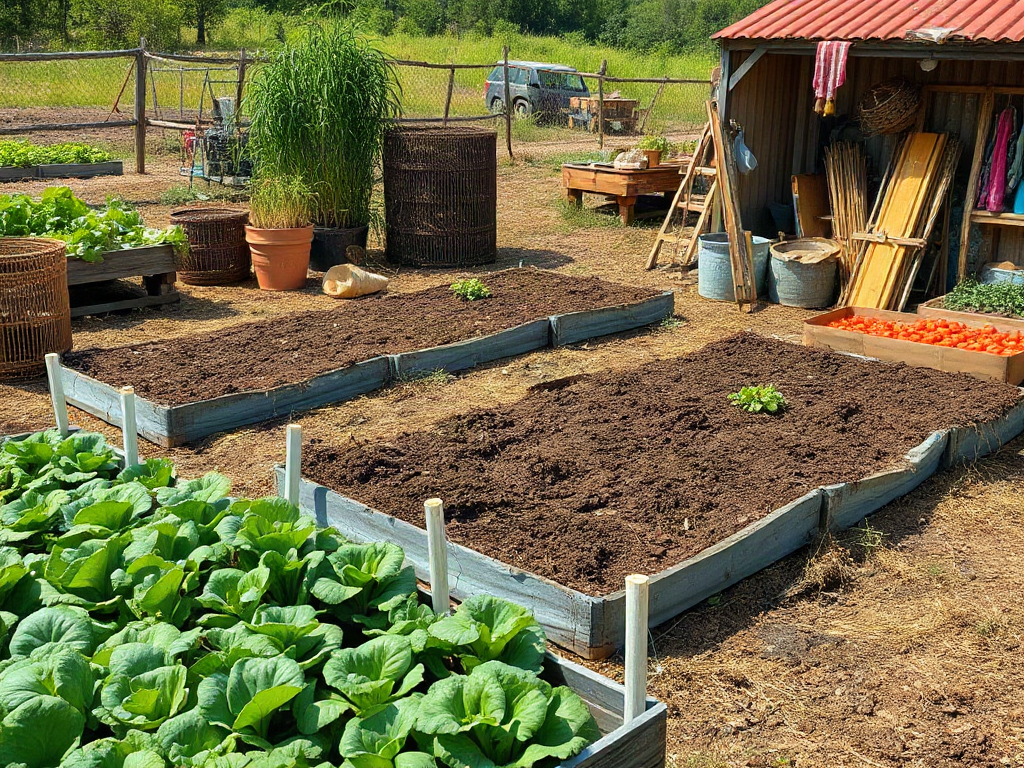
Aztec farming methods offer useful homestead lessons by showing how raised planting areas, nutrient-rich organic matter, controlled irrigation, and crop diversity can turn constrained land into productive growing space. Chinampas kept roots above saturated ground while canals supplied moisture and reusable sediment. On modern homesteads, the practical adaptation is usually a well-drained raised bed enriched with compost, not a literal floating garden. Pairing maize, beans, squash, chiles, and other suitable plants can spread harvest risk, but spacing and local climate still govern results.
What Chinampas Actually Were
Chinampas were constructed growing plots associated especially with the shallow-water landscape of the Basin of Mexico. They are often described as floating gardens, but established chinampas did not drift on the water. Farmers formed long, narrow plots by accumulating mud, vegetation, and other material in wet or shallow areas, then stabilized the edges with vegetation and trees. Canals between plots provided access and helped manage moisture.
The arrangement worked because it joined several functions in one managed landscape. Elevated root zones reduced the danger of keeping crops directly in saturated mud. Nearby canals supplied water during dry periods, while excavated canal sediment could be returned to the plots as mineral-rich soil material. The narrow shape also kept much of the cultivated surface within practical reach of a canal edge. Fertility, water, transport, and bed construction were therefore connected rather than treated as separate jobs.
That context matters when translating Aztec farming methods with useful homestead lessons to a present-day property. A dry upland homestead cannot reproduce the hydrology of a shallow lake simply by digging trenches around beds. Nor should a gardener assume that any mound surrounded by standing water is a chinampa. Without steady water levels, suitable soils, and a way to prevent stagnant conditions, such a copy may produce mosquitoes, slumped bed edges, or waterlogged roots instead of reliable vegetables.
The transferable principle is landscape integration. A modern grower can place an elevated bed near stored rainwater, return pond sediment only after checking its source and quality, compost plant residues, and choose a bed width that permits cultivation without stepping on the root zone. These choices imitate the functional relationships of chinampa agriculture without pretending that a suburban yard has the same ecology as the Basin of Mexico.
A useful comparison is a conventional raised bed supplied by a hose. That bed may provide excellent drainage, but water and fertility arrive from outside the growing system. A chinampa-inspired design asks whether roof runoff, clean ditch water, leaves, crop residues, or accumulated organic material can be safely captured and reused. The historical lesson is not a particular bed shape; it is the deliberate cycling of local resources.
Adapting Raised Growing Areas Without Building a Swamp
Raised root zones are the most practical chinampa-related feature for many homesteads, especially where seasonal saturation, compacted ground, or heavy soil restricts planting. Elevation creates a deeper layer of aerated soil, allowing roots to occupy ground that would otherwise remain cold or wet. The bed still needs a stable foundation and an outlet for excess water. Height alone does not correct poor drainage if runoff collects against a wall or has nowhere to go.
Begin by watching the proposed site after heavy rain. Mark where water enters, how long puddles remain, and where it naturally exits. A low area that drains within a reasonable period may suit a modest raised bed, whereas a site that remains flooded can require a swale, diversion, subsurface drainage, or a different location. Avoid redirecting runoff toward a building, septic area, neighboring property, or wellhead.
Bed dimensions should follow access rather than historical imitation. A width that lets the gardener reach the center from a path prevents repeated foot traffic from compressing the soil. Use locally appropriate, untreated materials for permanent edges if edges are necessary, but remember that unframed beds are easier to reshape and less expensive. On a wet site, coarse woody debris at the bottom is not an automatic solution: buried wood may settle unevenly, temporarily tie up nitrogen near its surface, or create voids. A stable mineral-soil base topped with mature compost is more predictable for annual vegetables.
Canals should be adapted cautiously. A shallow infiltration path or water-harvesting basin may slow runoff, but it should not hold stagnant water beside vegetable beds indefinitely. Where rainfall is scarce, a lined pond or tank may conserve water better than an unlined trench. Where rain is abundant, open drainage may be more valuable than storage. The right choice comes from the property’s water balance, not from the visual appeal of an ancient layout.
Signs that the design is working include soil that remains evenly moist beneath the surface, beds that hold their shape, vigorous roots, and paths that stay usable after rain. Sour odors, gray or black anaerobic soil, algae-covered standing water, collapsing edges, and yellow plants point to excessive saturation or inadequate aeration. Correct those conditions before adding more compost or fertilizer; extra nutrients cannot compensate for oxygen-starved roots.
Recycling Fertility Through Compost, Sediment, and Plant Residues
Aztec cultivation depended on returning useful material to intensively managed ground rather than expecting a finite bed to remain fertile on its own. Chinampa soils could be renewed with organic residues and material removed from canals. For a homesteader, the closest safe equivalents are finished compost, chopped disease-free crop remains, fallen leaves, aged manure from known sources, and clean pond sediment assessed before use.
Each material behaves differently. Mature compost improves aggregation and contributes a broad range of nutrients, but it is not necessarily a complete fertilizer for every crop. Leaf mold is particularly useful for moisture retention and soil structure, yet it usually supplies nutrients slowly. Fresh manure may burn plants, introduce weed seeds, or create food-safety concerns. Sediment from a roadside ditch, urban stream, treated pond, or unknown watershed may contain contaminants and should not be spread on food beds merely because historical farmers reused canal mud.
A conservative approach is to build fertility in layers over time rather than burying large volumes of raw material immediately before planting. Apply finished compost to the bed surface, mix it lightly into the upper soil when needed, and cover exposed ground with a clean organic mulch. Leave substantial roots in place after healthy crops finish; decomposing roots create channels and feed soil organisms. Remove diseased foliage and persistent weed seed heads instead of returning them blindly.
Crop performance provides useful clues, but appearance alone cannot identify every deficiency. Pale leaves might reflect low nitrogen, waterlogged roots, cold soil, root damage, or an unsuitable pH. Before increasing amendments, inspect drainage, rooting depth, and recent weather. A soil test from a reputable laboratory is more informative than repeatedly adding manure or wood ash. Excess phosphorus and salts can accumulate in intensively composted beds, and wood ash can raise pH more than intended.
The strongest lesson from the historic system is that fertility management was linked to maintenance. Clearing a water channel yielded material for the planting surface; tending the plot also renewed it. A modern version might pair pond-edge maintenance with careful sediment evaluation, leaf collection with compost production, or chicken bedding with properly managed composting. Readers considering Aztec farming methods with useful homestead lessons should prioritize safe nutrient cycling over trying to reproduce every traditional input.
Combining Crops, Water Control, and Seasonal Observation
Diverse plantings can distribute risk and use vertical space more fully, but diversity works only when neighboring plants have compatible needs. Maize, beans, squash, chiles, tomatoes, amaranth, and herbs were among crops cultivated in Mesoamerica, although practices varied by place and period. A homestead should treat that history as a source of design questions, not as a universal planting recipe.
Maize can provide vertical structure, beans can contribute biologically fixed nitrogen to the system, and squash can shade portions of the ground. Yet the familiar claim that beans automatically feed neighboring maize during the same season is too simple. Much of the nitrogen fixed by legumes remains in their tissues and roots until residues break down. Vigorous climbing beans may also pull down short or weak corn, while sprawling squash can cover paths and suppress young plants if everything is sown at once.
A practical polyculture therefore requires spacing and timing. In a short-season climate, transplanting squash after corn is established may reduce early competition. In humid areas, wider spacing can improve airflow and make leaf disease easier to manage. In arid locations, closer ground cover may reduce surface evaporation, but plants still compete for limited stored moisture. Separate blocks may outperform mixed planting where mechanical cultivation, drip-line layout, pest netting, or harvest access matters more than maximum diversity.
Water placement deserves equal attention. Supplying moisture near the soil surface and root zone wastes less than spraying broad paths, while mulch reduces rapid evaporation and soil splash. Check moisture below the mulch before irrigating; the surface can look dry while the root zone remains damp. Conversely, thick mulch over saturated clay can delay drying. The useful target is consistent root-zone moisture with enough air space for roots, not permanently wet soil.
Keep brief records of sowing dates, bed location, rainfall or irrigation, pest pressure, and harvest quality. These observations reveal whether a mixture is complementary or merely crowded. Strong stalks, accessible harvests, covered soil, and steady growth suggest that the arrangement is functioning. Repeated mildew, tangled access, undersized ears, or plants stretching for light indicate that density should be reduced. Historical ingenuity becomes practical only after it is adjusted to local frost dates, rainfall, sunlight, and labor.
A Practical Homestead Trial Plan
A small controlled trial is safer than reshaping an entire garden around an unfamiliar system. Choose one manageable bed where drainage, irrigation, and crop performance can be compared with an existing plot. The objective is to test resource cycling and moisture control under local conditions, not to construct an archaeological replica.
- Map water movement. Observe runoff after rain and identify safe storage, infiltration, and overflow routes.
- Create an accessible root zone. Form a stable, well-drained bed that can be worked from the edges without compaction.
- Add measured fertility. Use tested soil and mature compost rather than unknown mud or large amounts of fresh manure.
- Select a limited crop combination. Try two or three compatible plants before attempting a dense maize-bean-squash mixture.
- Record moisture and growth. Compare irrigation frequency, plant vigor, disease, labor, and yield quality with a conventional bed.
For example, a homesteader with heavy clay might shape a slightly elevated bed beside a mulched access path that also receives overflow from a rain tank. Compost is applied at the surface, and corn is planted with a restrained number of climbing beans rather than a bean at every stalk. A squash plant is placed at the sunny outer edge where it can trail away from the path. The overflow has a protected exit, so one storm cannot turn the bed into an impoundment.
Compare that design with a low, densely planted bed in the same soil. The lower plot may stay saturated after storms, while the crowded canopy may slow leaf drying. If the raised trial needs less rescue irrigation, remains workable, and produces healthy plants without nutrient excess, expanding it may be justified. If it dries too quickly, requires constant rebuilding, or creates troublesome standing water, modify the height, mulch, or water route before repeating it.
Budget and labor should influence the decision. Purchased lumber, imported topsoil, pond liners, pumps, and excavation can turn a resource-efficient idea into an expensive project. Existing contour, hand-shaped beds, gravity-fed tank overflow, and home-produced compost often preserve more of the original logic. The best application of Aztec farming methods with useful homestead lessons is a system that reduces wasted water and nutrients without creating a maintenance burden the household cannot sustain.
Frequently Asked Questions
Were Aztec chinampas really floating gardens?
No. Mature chinampas were constructed plots built up in shallow wet areas and separated by canals; they were stabilized rather than left to float freely.
Can a homesteader build a chinampa in a pond?
A pond-edge growing area may borrow chinampa principles, but altering a pond can affect drainage, habitat, water quality, and local requirements. A raised bed near captured water is usually a simpler first trial.
Is canal or pond mud safe for vegetable beds?
Only when its source and quality are known. Sediment receiving roadway runoff, chemicals, sewage, or contaminated upstream water should not be applied to food-growing soil.
Do corn, beans, and squash always grow well together?
No. The combination can work, but variety height, planting sequence, spacing, moisture, airflow, and season length determine whether the plants cooperate or compete.
What is the easiest Aztec-inspired method to try?
Test one narrow raised bed supplied by captured rainwater, amended with finished compost, mulched, and planted with a modest crop mixture suited to the local climate.
Conclusion
Chinampa agriculture is most useful to homesteaders as a model of connected resource management. Elevated planting surfaces, nearby moisture, recovered organic matter, narrow access, and varied crops worked together within a particular wetland environment. Copying the appearance without that environmental logic can produce stagnant water, contaminated inputs, unstable beds, or overcrowded plants.
Start with one observable problem: seasonal saturation, wasted runoff, declining organic matter, or inefficient bed access. Build a small trial that addresses that problem, provide a safe overflow route, use known compost inputs, and compare its performance with a conventional plot. Expand only after records show steadier moisture, healthy roots, practical harvest access, and manageable labor. That measured approach respects the ingenuity behind Aztec cultivation while producing a system suited to the land actually available.